The honored plan of Yuletide for a proper sort of bard
Has always been to pen a Christmas poem.
The hoary old conventional is never very hard,
The rhymes are very simple if you know ’em.
The editors demand it, though they never read the same,
They seem to feel that poems are expected.
So some of it is weary and the most of it is lame,
Though seldom is a Christmas verse rejected.
The styles in hats, in motor cars, in cigarettes, in war,
And even styles in one’s vocabulary
Are yearly changed to something that we never had before.
But styles in Christmas poems never vary.
So, yearly all the holly stuff is polished up anew,
And all the bards from Greenland to the Isthmus
Get out their stylographics, with the happy thought in view,
Of writing some immortal lines to Christmas.
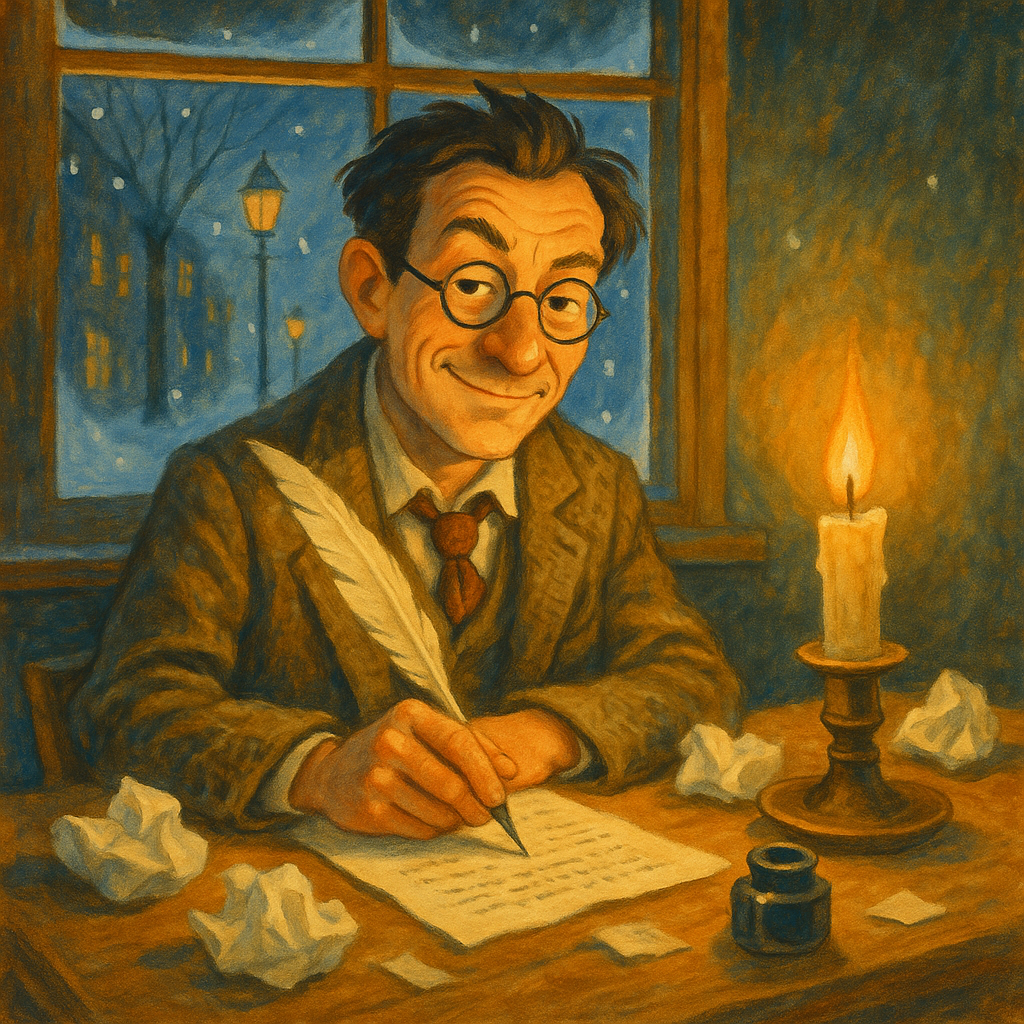
And who am I to change the plan, to sing another song
Than what has been conventional for ages?
The public would denounce the thing as blasphemous and wrong,
And spend itself on white, indignant rages.
A Merry, Merry Christmas and the Happiest New Year
Would seem to be the thing to set in print-type.
Ring out, Sweet Bards, in Christmas rhyme, and never have a fear—
No novel stuff from me! Not on your tintype.