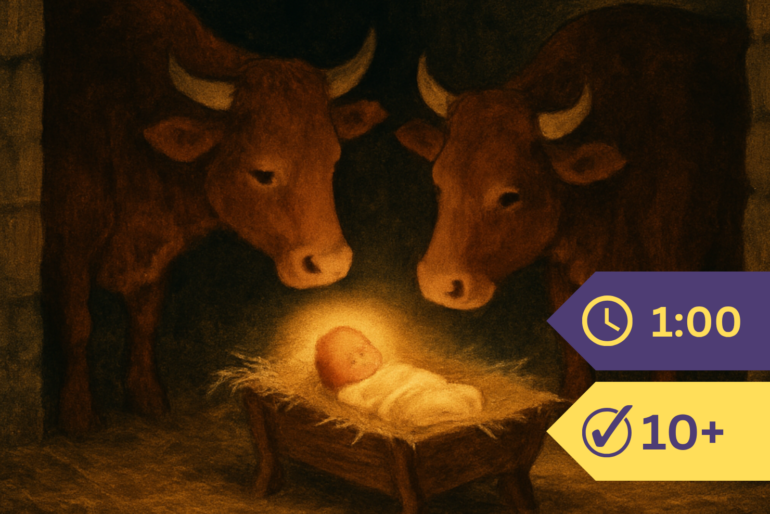
I saw a stable, low and very bare

Summary


"I Saw a Stable, low and very bare" is a six-line nativity poem that captures the startling mystery of Christ's birth in a single, compressed vision. A lone speaker glimpses a bare stable where a child lies in a manger, tended by oxen yet unknown to humankind. Coleridge builds to a quietly stunning paradox: the one who holds the safety of the entire world sleeps exposed and unrecognised, the world's greatest hope and its greatest danger sharing the same breath.

Read Online

I saw a stable, low and very bare,
A little child in a manger.
The oxen knew Him, had Him in their care,
To men He was a stranger.
The safety of the world was lying there,
And the world’s danger.
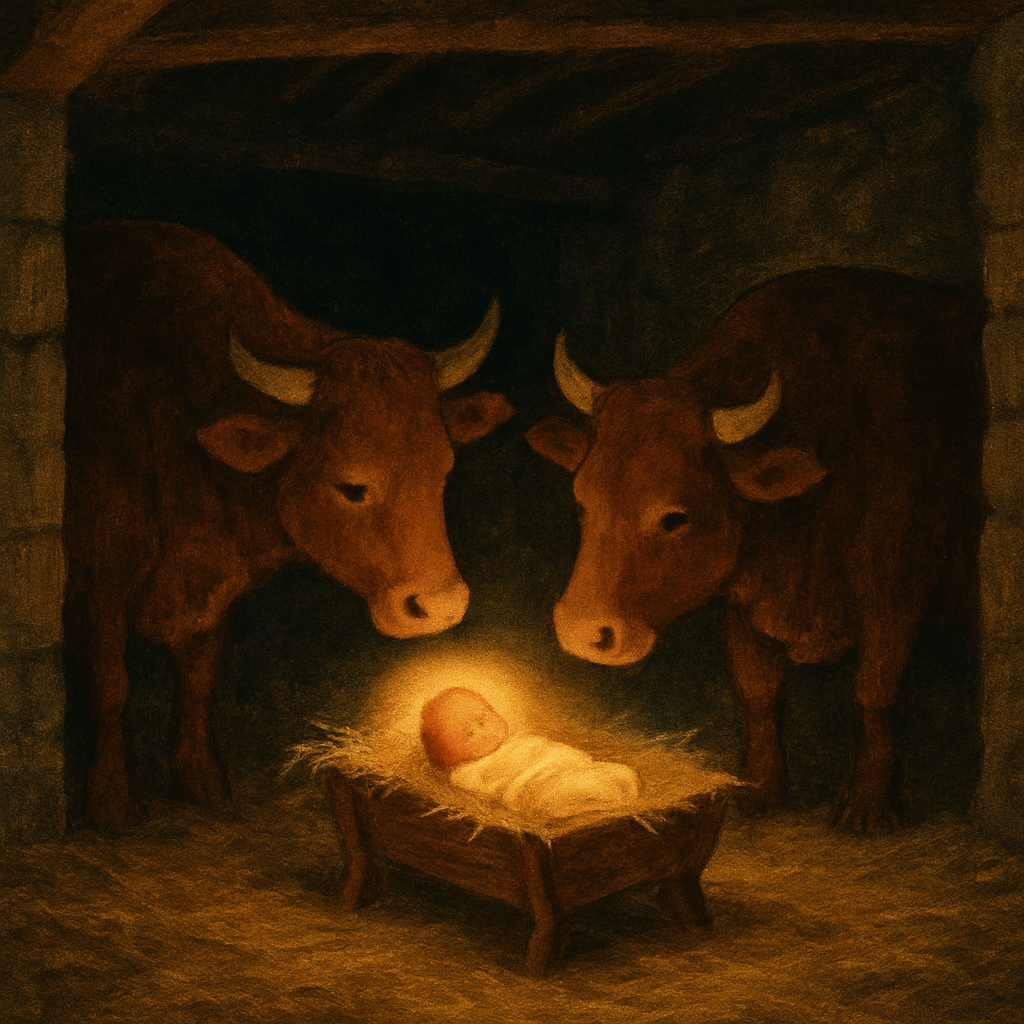

A newborn in a manger flanked by two oxen in a bare stable — illustration for "I Saw a Stable" by Mary Elizabeth Coleridge.

Credits

Mary Elizabeth Coleridge was a Victorian English poet and novelist, grandniece of Samuel Taylor Coleridge, known for her lyrical intensity and gift for compression. This poem distils the nativity into six lines, ending on one of the most economical paradoxes in English devotional verse.