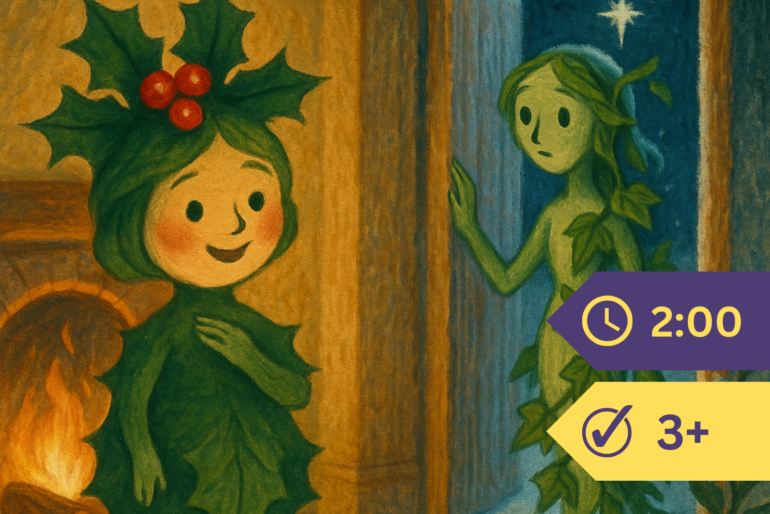
Holly standeth in the house
When that Noël draweth near;
Evermore at the door
Standeth Ivy, shivering sore,
In the night wind bleak and drear.
“Sister Holly,” Ivy quoth,
“What is that within you see?
To and fro doth the glow
Of the yule-log flickering go;
Would its warmth did cherish me!
Where thou bidest, is it warm?
I am shaken of the storm.”
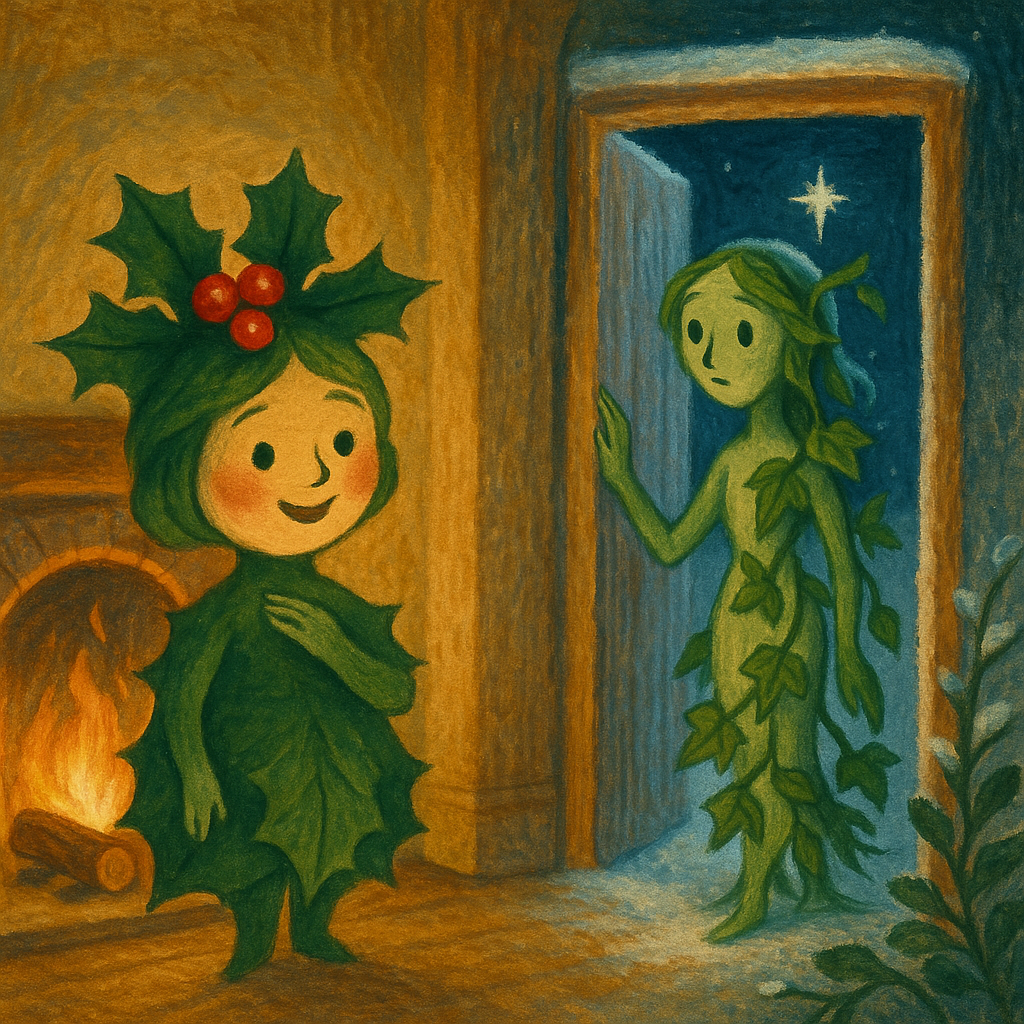
“Sister Ivy,” Holly quoth,
“Brightly burns the yule-log here,
And love brings beauteous things,
While a guardian angel sings
To the babes that slumber near;
But, O Ivy! tell me now,
What without there seest thou?”
“Sister Holly,” Ivy quoth,
“With fair music comes the Morn,
And afar burns the Star
Where the wondering shepherds are,
And the Shepherd King is born:
‘Peace on earth, good will to men,’
Angels cry, and cry again.”
Holly standeth in the house
When that Noël draweth near;
Clambering o’er yonder door,
Ivy standeth evermore;
And to them that rightly hear,
Each one speaketh of the love
That outpoureth from Above.