Cradle Song of the Virgin

Summary


"Cradle Song of the Virgin" is a lullaby poem in which the Virgin Mary calls upon angels and the swaying palm-groves of Bethlehem to hush their branches so her newborn Son may sleep. Against a backdrop of moaning winds and cold blasts, she cradles a Child she knows must suffer, asking nature itself to gentled its fury — just for one quiet moment. The poem holds grief and tenderness in the same breath, giving voice to a mother's helplessness before her child's destined pain.

Read Online

Angels! ye holy
Who fly through the palm-groves,
Hold quiet the branches —
My Babe is asleep.

Palm-groves of Bethlehem
That sway in the tempest,
The winds are loud moaning
As through you they sweep;
Restrain your wild fury,
Move gently above us;
Hold quiet your branches —
My Babe is asleep.
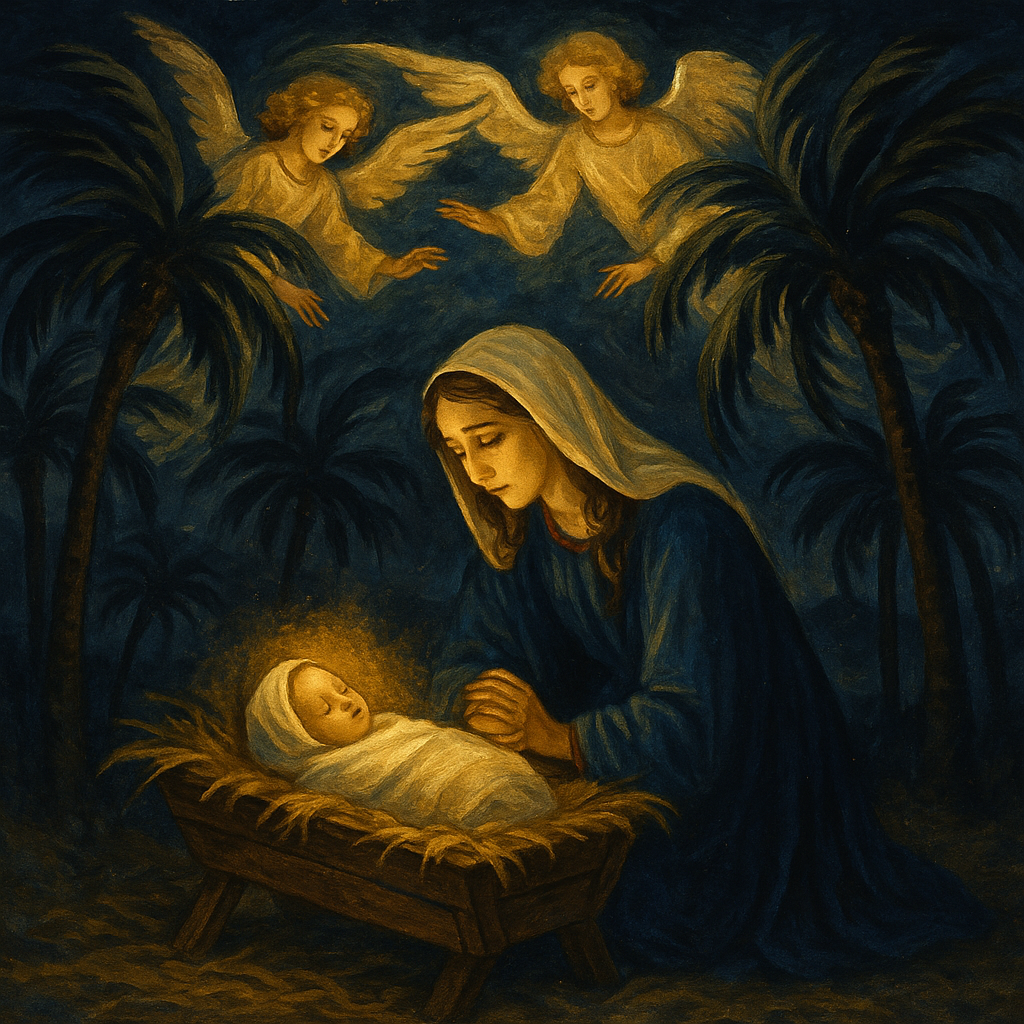
The Virgin Mary kneels beside the infant Jesus in a windswept Bethlehem palm grove, in Cradle Song of the Virgin.

My Child, My divine One,
Who came down from Heaven,
What pangs He must suffer!
What tears He must weep!
Oh! let Him one moment
Forget all His anguish,
Hold quiet your branches —
My Babe is asleep.

The tempests blow ’round Him;
You see that I have not
Wherewith from my Darling
The cold blasts to keep.
O angels! ye holy
Who o’er us are flying,
Hold quiet the branches —
My Babe is asleep.

Add Ririro as a Preferred Source on Google


Credits

Lope de Vega (1562–1635) was a Spanish Golden Age playwright and poet, one of the most prolific writers in literary history, credited with founding the comedia genre. This cradle song, tender in its simplicity, stands apart from his dramatic works, revealing a deeply personal devotional lyricism rarely seen in his more theatrical output.