
Church Decking at Christmas

Summary


"Church Decking at Christmas" is a Christmas poem by William Wordsworth that mourns the loss of rich religious customs stripped away by overly austere forebears. Wordsworth laments how barren ceremony leaves memory and hope impoverished, warning that cold rationalist "light" can blight the soul. He turns instead to a joyful image: a church dressed in fresh holly at Christmas, its pews so alive with greenery that a linnet or thrush might perch and sing — a scene of warmth and reverence pushing back against winter's discomfort.

Listen to audio


Read Online

Would that our scrupulous sires had dared to leave
Less scanty measure of those graceful rites
And usages, whose due return invites
A stir of mind too natural to deceive;
Giving the memory help when she could weave
A crown for Hope! — I dread the boasted lights
That all too often are but fiery blights,
Killing the bud o’er which in vain we grieve.
Go, seek, when Christmas snows discomfort bring,
The counter Spirit found in some gay church
Green with fresh holly, every pew a perch
In which the linnet or the thrush might sing,
Merry and loud, and safe from prying search,
Strains offered only to the genial spring.
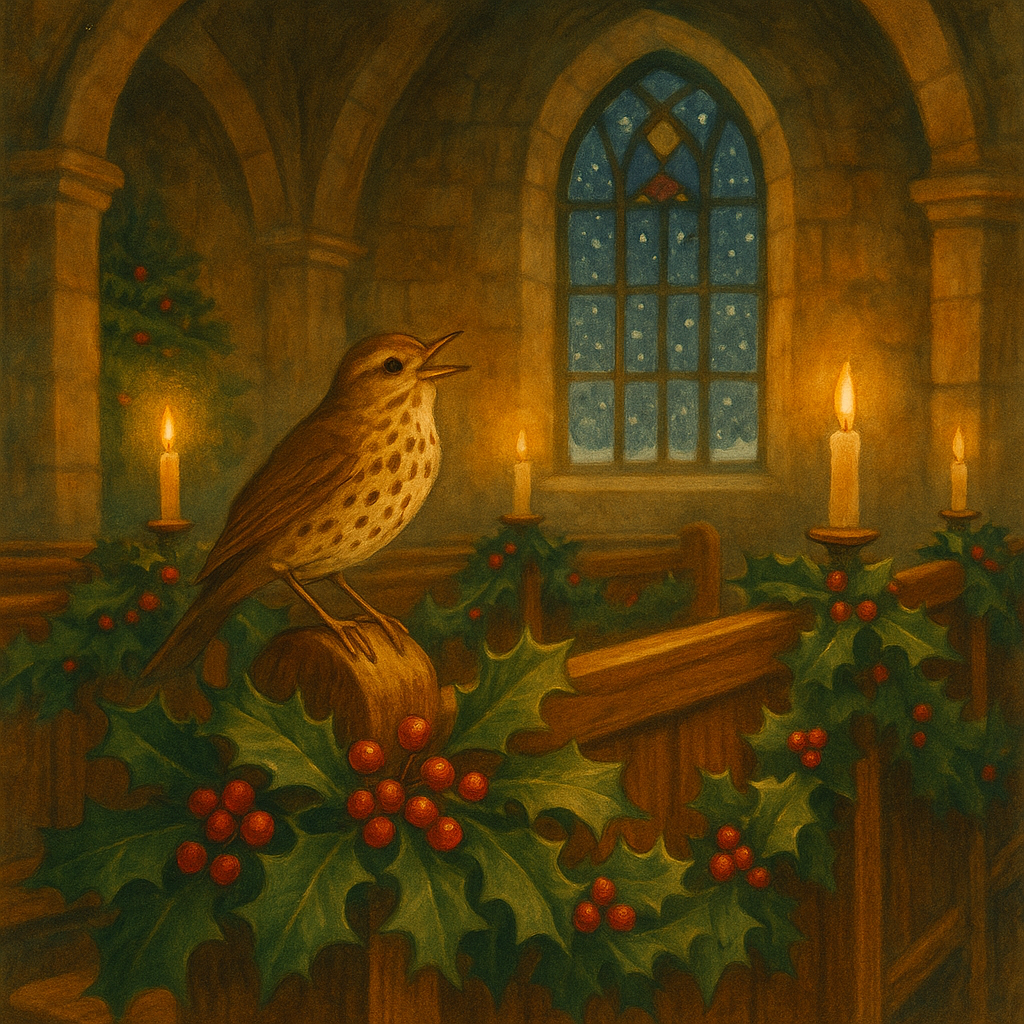

A holly-decked church interior at Christmas with a thrush perched on a pew, illustrating Wordsworth's poem.

Credits

William Wordsworth was an English Romantic poet (1770–1850), best known for co-authoring Lyrical Ballads with Samuel Taylor Coleridge and for his magnum opus The Prelude. This sonnet reflects his later, more conservative Anglican sympathies, championing traditional church ritual as a source of communal and spiritual vitality.