The wintry blast goes wailing by,
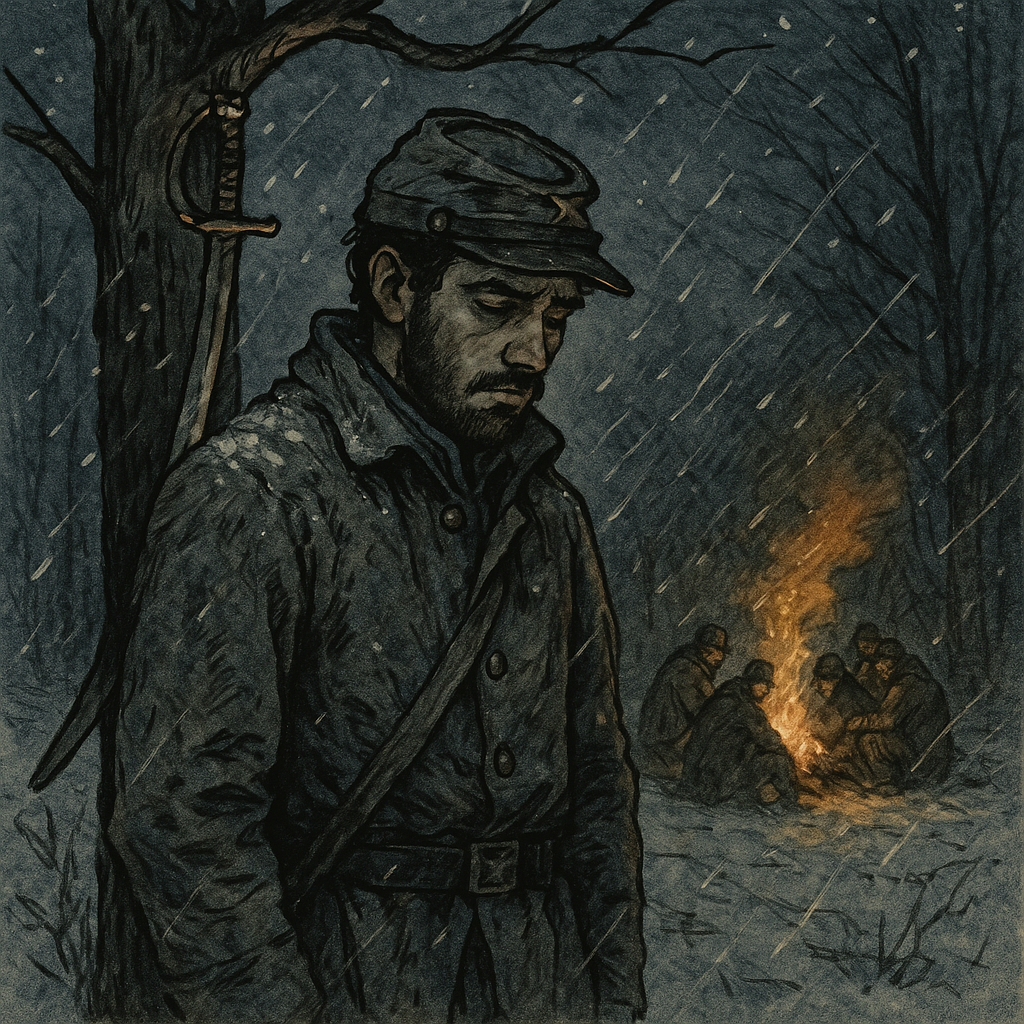
the snow is falling overhead;
I hear the lonely sentry’s tread,
and distant watch-fires light the sky.
Dim forms go flitting through the gloom;
The soldiers cluster round the blaze
To talk of other Christmas days,
And softly speak of home and home
My saber swinging overhead,
gleams in the watch-fire’s fitful glow,
while fiercely drives the blinding snow,
and memory leads me to the dead.
My thoughts go wandering to and fro,
vibrating ‘twixt the Now and Then;
I see the low-browed home again,
the old hall wreathed in mistletoe.
And sweetly from the far off years
comes borne the laughter faint and low,
the voices of the Long Ago!
My eyes are wet with tender tears.
I feel again the mother kiss,
I see again the glad surprise
That lighted up the tranquil eyes
And brimmed them o’er with tears of bliss
As, rushing from the old hall-door,
She fondly clasped her wayward boy –
Her face all radiant with they joy
She felt to see him home once more.
My saber swinging on the bough
Gleams in the watch-fire’s fitful glow,
while fiercely drives the blinding snow
aslant upon my saddened brow.
Those cherished faces are all gone!
Asleep within the quiet graves
where lies the snow in drifting waves, –
And I am sitting here alone.
There’s not a comrade here tonight
but knows that loved ones far away
on bended knees this night will pray:
“God bring our darling from the fight.”
But there are none to wish me back,
for me no yearning prayers arise
the lips are mute and closed the eyes –
My home is in the bivouac.