Christmas Day

Summary


"Christmas Day" by Hartley Coleridge opens with a searching question: was Christ truly born in the depths of winter, when the natural world lay bare and desolate? Coleridge draws a quiet but powerful parallel between the frozen earth and the human soul at its lowest ebb — both waiting, unknowing, for renewal. The poem turns on the image of a seed stirring beneath snow, suggesting that beauty, goodness, and grace take root precisely in moments of emptiness and despair.

Listen to audio


Read Online

WAS it a fancy, bred of vagrant guess,
Or well-remember’d fact, that He was born
When half the world was wintry and forlorn,
In Nature’s utmost season of distress?
And did the simple earth indeed confess
Its destitution and its craving need,
Wearing the white and penitential weed,
Meet symbol of judicial barrenness?
So be it; for in truth ’tis ever so,
That when the winter of the soul is bare,
The seed of heaven at first begins to grow,
Peeping abroad in desert of despair.
Full many a floweret, good, and sweet, and fair,
Is kindly wrapp’d in coverlet of snow.
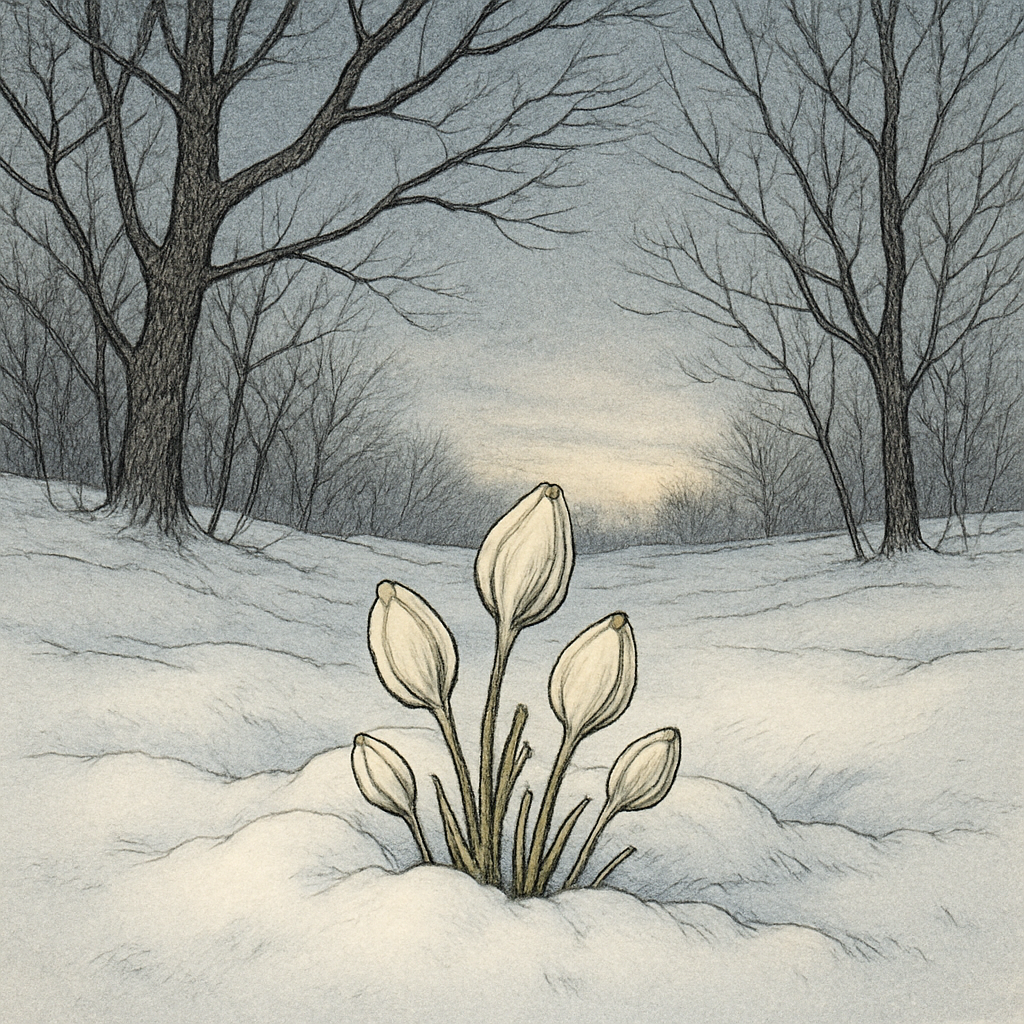

Pale flowers pushing through snow in winter light, illustrating the poem Christmas Day by Hartley Coleridge.

Credits

Hartley Coleridge was an English poet of the early 19th century, the eldest son of Samuel Taylor Coleridge, and known for his introspective sonnets that blend natural imagery with spiritual questioning. "Christmas Day" is a fine example of his sonnet craft, meditating on the theological significance of the Nativity through the lens of winter and inner desolation.