Christmas-day, 1878

Summary


"Christmas-day, 1878" is a meditative poem in which a weary speaker wrestles with the risk of growing numb to Christmas, a day that returns with relentless sameness year after year. The speaker's only remedy is the daily presence of the divine — not a once-yearly encounter, but an unbroken relationship. Structured in three stanzas of quiet, aching longing, the poem builds toward a striking vision: the speaker as a brother to the Eternal Son, endlessly reborn through that closeness.

Read Online

I think I might be weary of this day
That comes inevitably every year,
The same when I was young and strong and gay,
The same when I am old and growing sere—
I should grow weary of it every year
But that thou comest to me every day.

I shall grow weary if thou every day
But come to me, Lord of eternal life;
I shall grow weary thus to watch and pray,
For ever out of labour into strife;
Take everlasting house with me, my life,
And I shall be new-born this Christmas-day.
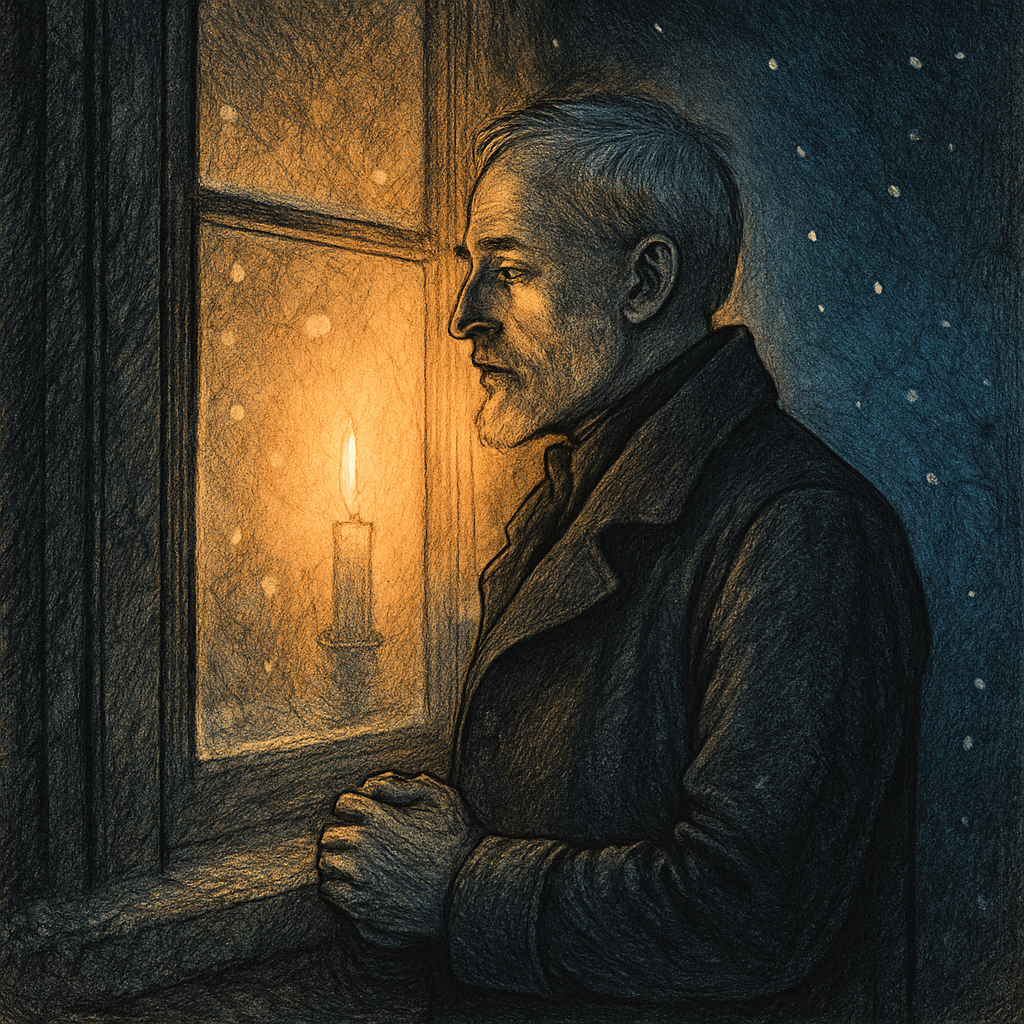
A solitary man gazes from a frost-covered window by candlelight, illustrating George MacDonald's poem Christmas-day, 1878.

Thou art the Eternal Son, and born no day,
But ever he the Father, thou the Son;
I am his child, but being born alway—
How long, O Lord, how long till it be done?
Be thou from endless years to years the Son—
And I thy brother, new-born every day.


Credits

George MacDonald was a Scottish Victorian author, poet, and Christian minister, widely regarded as a foundational influence on C.S. Lewis and J.R.R. Tolkien. Written on Christmas Day 1878, this poem reflects the spiritual restlessness that runs throughout his later work — a longing not just for seasonal celebration but for continuous divine renewal.