Christmas Day, 1850

Summary


"Christmas Day, 1850" is a sonnet in which the speaker wrestles with how to honour a radiant winter day worthy of a great story. He searches through images of pale winter light and cold beauty, only to find that no invented tale can match what Christmas already holds: the birth of Christ, Mary's child, whose arrival brings joy as deep as any sorrow. The poem moves from creative inadequacy to quiet spiritual certainty, finding its resolution in the Nativity itself.

Read Online

Beautiful stories wed with lovely days
Like words and music:—what shall be the tale
Of love and nobleness that might avail
To express in action what this sweetness says—

The sweetness of a day of airs and rays
That are strange glories on the winter pale?
Alas, O beauty, all my fancies fail!
I cannot tell a story in thy praise!
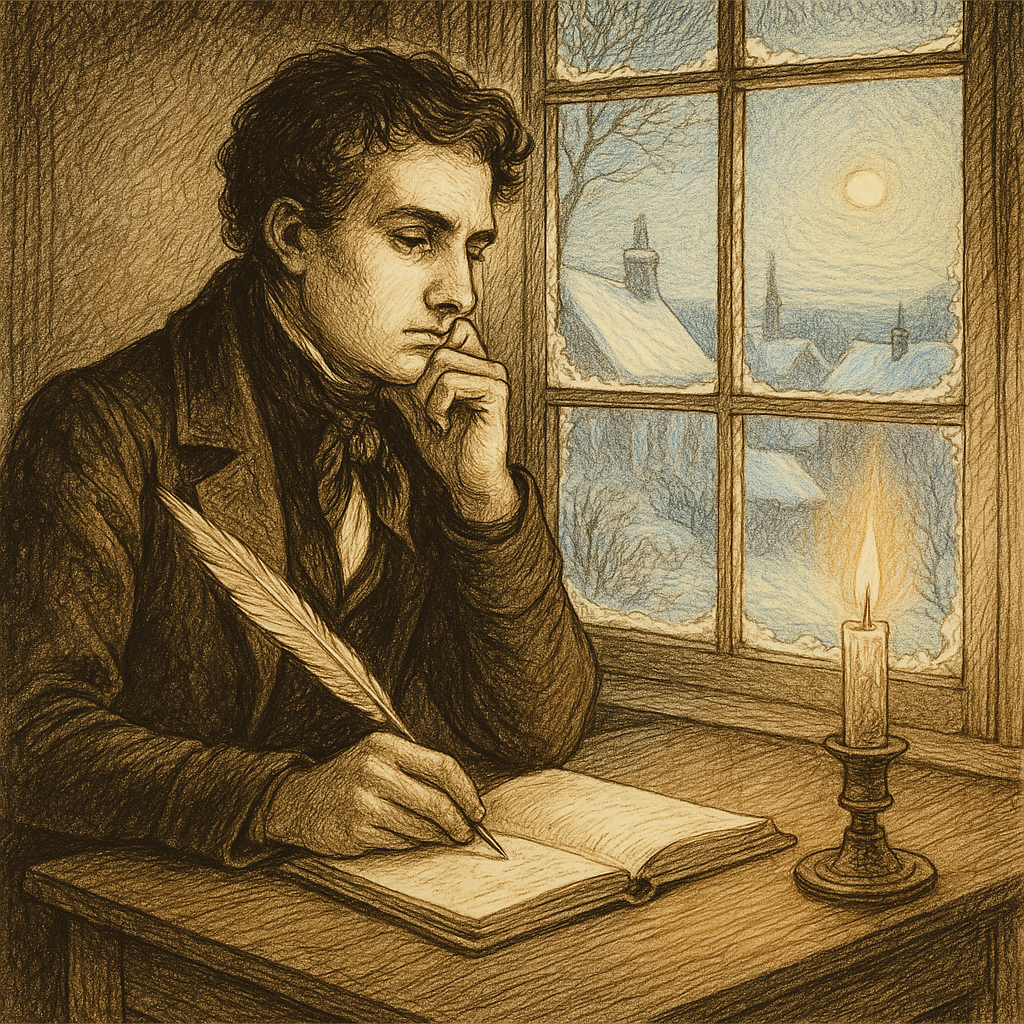
A Victorian poet sits writing by candlelight beside a frosty winter window, illustrating Christmas Day, 1850.

Thou hast, thou hast one—set, and sure to chime
With thee, as with the days of “winter wild;”
For Joy like Sorrow loves his blessed feet
Who shone from Heaven on Earth this Christmas-time
A Brother and a Saviour, Mary’s child!—
And so, fair day, thou hast thy story sweet.


Credits

George MacDonald was a Scottish Victorian author and poet, widely regarded as a pioneering voice in fantasy and spiritual literature, whose work influenced C.S. Lewis and J.R.R. Tolkien. Written in 1850, this sonnet is an early piece from MacDonald's career, composed in the traditional Petrarchan form and reflecting his deep Christian faith.