Christmas Carol (Poem)

Summary


"Christmas Carol" by Paul Laurence Dunbar is a jubilant poem that rings out like a hymn, calling all of nature — rocks, stones, earth, and heavens — to erupt in song at the birth of Christ. Dunbar moves through images of darkness giving way to dawn, silent hills suddenly filled with music, and a lone star blazing over the land. The poem builds in urgency with each stanza, pressing readers to abandon mourning and join a chorus that spans earth and sky.

Listen to audio


Read Online

Ring out, ye bells!
All Nature swells
With gladness at the wondrous story,—
The world was lorn,
But Christ is born
To change our sadness into glory.

Sing, earthlings, sing!
To-night a King
Hath come from heaven’s high throne to bless us.
The outstretched hand
O’er all the land
Is raised in pity to caress us.

Come at his call;
Be joyful all;
Away with mourning and with sadness!
The heavenly choir
With holy fire
Their voices raise in songs of gladness.

The darkness breaks
And Dawn awakes,
Her cheeks suffused with youthful blushes.
The rocks and stones
In holy tones
Are singing sweeter than the thrushes.
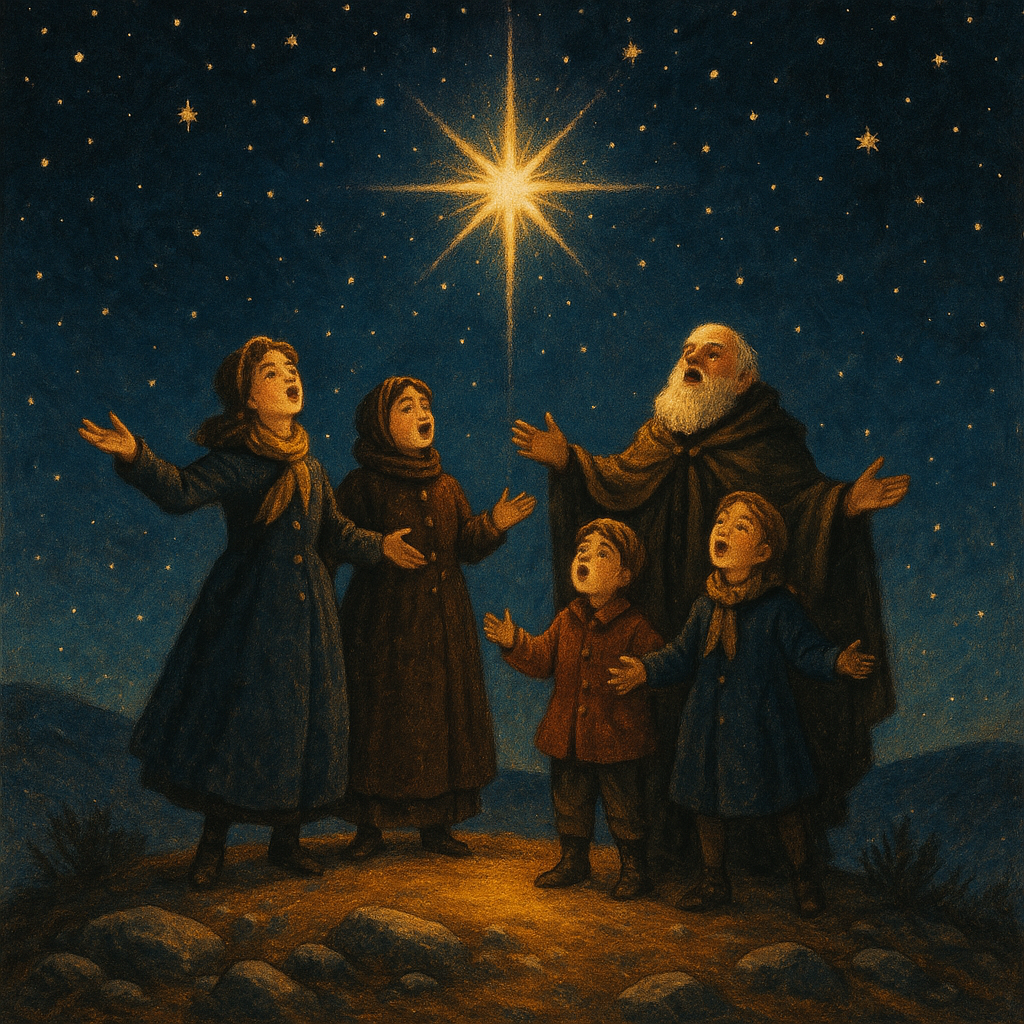
Figures on a glowing hilltop singing beneath a blazing star — illustration for Christmas Carol by Dunbar

Then why should we
In silence be,
When Nature lends her voice to praises;
When heaven and earth
Proclaim the truth
Of Him for whom that lone star blazes?

No, be not still,
But with a will
Strike all your harps and set them ringing;
On hill and heath
Let every breath
Throw all its power into singing!

Credits

Paul Laurence Dunbar was an African American poet and novelist from Dayton, Ohio, widely regarded as one of the first Black writers to achieve national literary prominence in the United States. Writing in the late 19th century, Dunbar published poetry in both standard English and dialect verse. "Christmas Carol" reflects his recurring themes of faith, communal joy, and the transformative power of song.