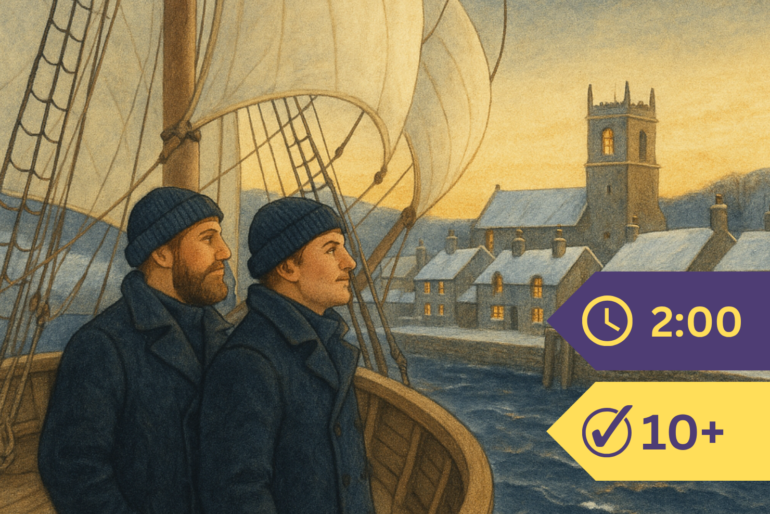
O, the sea breeze will be steady, and the tall ship’s going trim,
And the dark blue skies are paling, and the white stars burning dim;
The long night watch is over, and the long sea-roving done,
And yonder light is the Start Point light, and yonder comes the sun.
O, we have been with the Spaniards, and far and long on the sea;
But there are the twisted chimneys, and the gnarled old inns on the quay.
The wind blows keen as the day breaks, the roofs are white with the rime,
And the church-bells ring as the sun comes up to call men in to Prime.
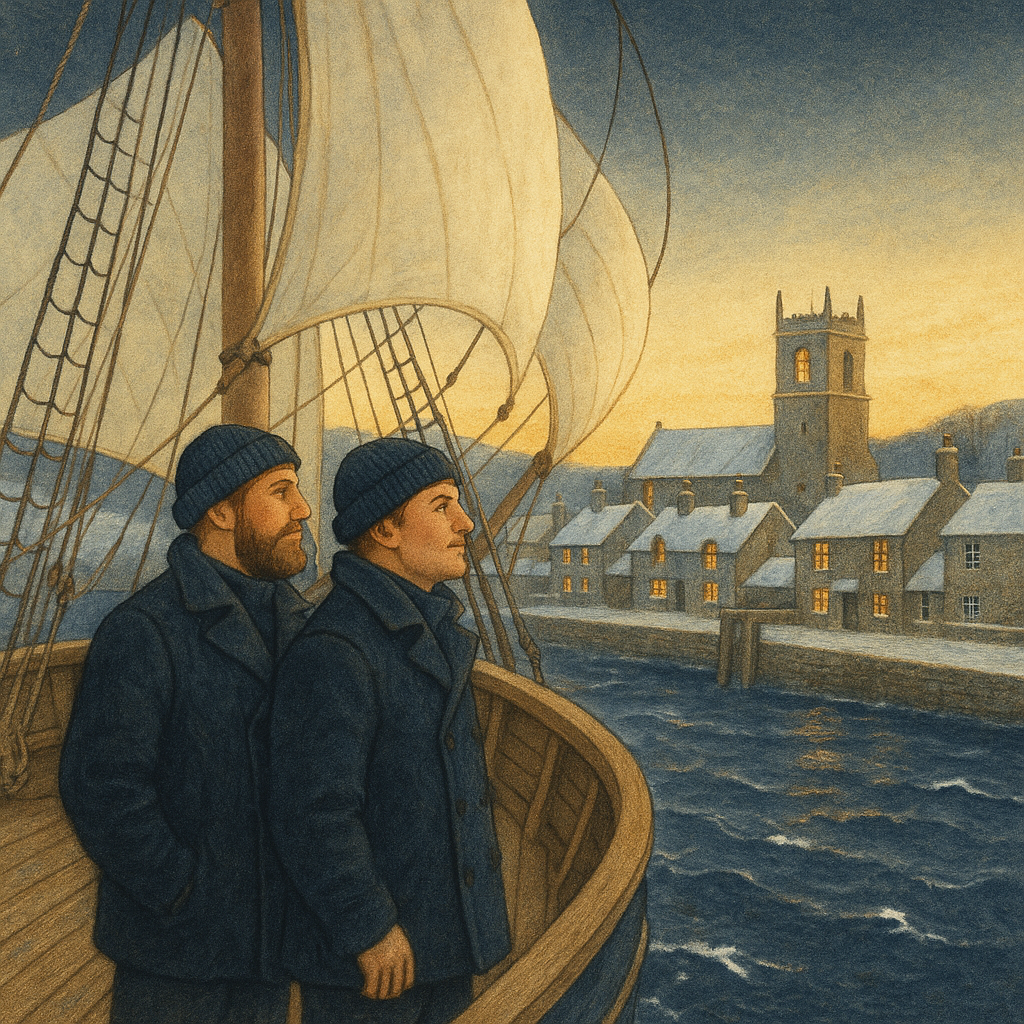
The church-bells rock and jangle, and there is peace on the earth.
Peace and good will and plenty and Christmas games and mirth.
O, the gold glints bright on the wind-vane as it shifts above the squire’s house,
And the water of the bar of Salcombe is muttering about the bows.
O, the salt sea tide of Salcombe, it wrinkles into wisps of foam,
And the church-bells ring in Salcombe to ring poor sailors home.
The belfry rocks as the bells ring, the chimes are merry as a song,
They ring home wandering sailors who have been homeless long.