Summary


"Christmas" by Paul Laurence Dunbar crackles with the energy of a holiday gathering in full swing — fiddles playing, fires roaring, and a table heavy with possum and warm drinks. The speaker urges everyone to dance and feast through the cold night, brushing off biting frost and whistling winds with laughter and togetherness. Through vivid dialect verse, Dunbar captures a specific, joyful African American holiday scene where Mammy nearly faints from the smell of something baking, and the whole community presses in, hungry and alive.

Read Online

Step wid de banjo an’ glide wid de fiddle,
Dis ain’ no time fu’ to pottah an’ piddle:
Fu’ Christmas is comin’, it’s right on de way,
An’ dey’s houahs to dance ‘fo’ de break o’ de day.

What if de win’ is taihin’ an’ whistlin’?
Look at dat fiah how hit’s spittin’ an’ bristlin’!
Heat in de ashes an’ heat in de cindahs,
Ol’ mistah Fros’ kin des look thoo de windahs.

Heat up de toddy an’ pas’ de wa’m glasses,
Don’ stop to shivah at blowin’s an’ blas’es,
Keep on de kittle an’ keep it a-hummin’,
Eat all an’ drink all, dey’s lots o’ a-comin’.
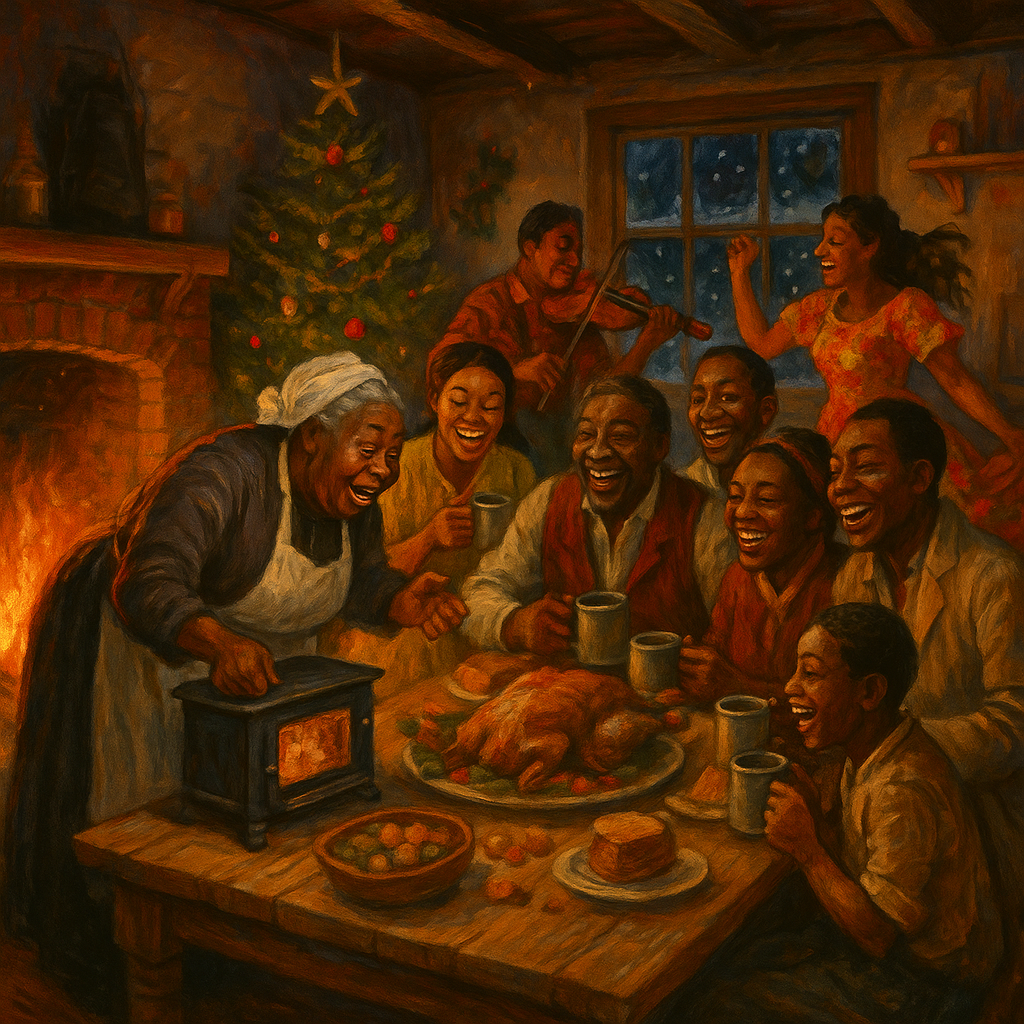
A festive fireside feast scene from the Christmas poem by Paul Laurence Dunbar, with dancing and holiday food.

Look hyeah, Maria, don’t open dat oven,
Want all dese people a-pushin’ an’ shovin’?
Res’ f’om de dance? Yes, you done cotch dat odah,
Mammy done cotch it, an’ law! hit nigh flo’d huh;

‘Possum is monst’ous fu’ mekin’ folks fin’ it!
Come, draw yo’ cheers up, I’s sho’ I do’ min’ it.
Eat up dem critters, you men folks an’ wimmens,
‘Possums ain’ skace w’en dey’s lots o’ pu’simmons.


Credits

Paul Laurence Dunbar was a pioneering African American poet from Dayton, Ohio, widely celebrated for his use of dialect verse to capture the rhythms of Black Southern life in the late 19th century. "Christmas" is a fine example of his warmly observed community portraits, written in the vernacular voice that made him one of the most popular poets of his era.