Christmas, 1873

Summary


"Christmas, 1873" is a short Christmas poem by George MacDonald that meditates on the tension between childlike wonder and the cold cynicism of adulthood. As Christmas returns each year, MacDonald asks whether it still carries its original warmth and renewal — or whether the world grows older and harder with each passing age. The poem's heart lies in a plea to Christ himself: to drive away the spiritual weariness of parents and draw all souls back to the innocence and faith of childhood.

Read Online

Christmas-Days are still in store:—
Will they change—steal faded hither?
Or come fresh as heretofore,
Summering all our winter weather?

Surely they will keep their bloom
All the countless pacing ages:
In the country whence they come
Children only are the sages!

Hither, every hour and year,
Children come to cure our oldness—
Oft, alas, to gather sear
Unbelief, and earthy boldness!
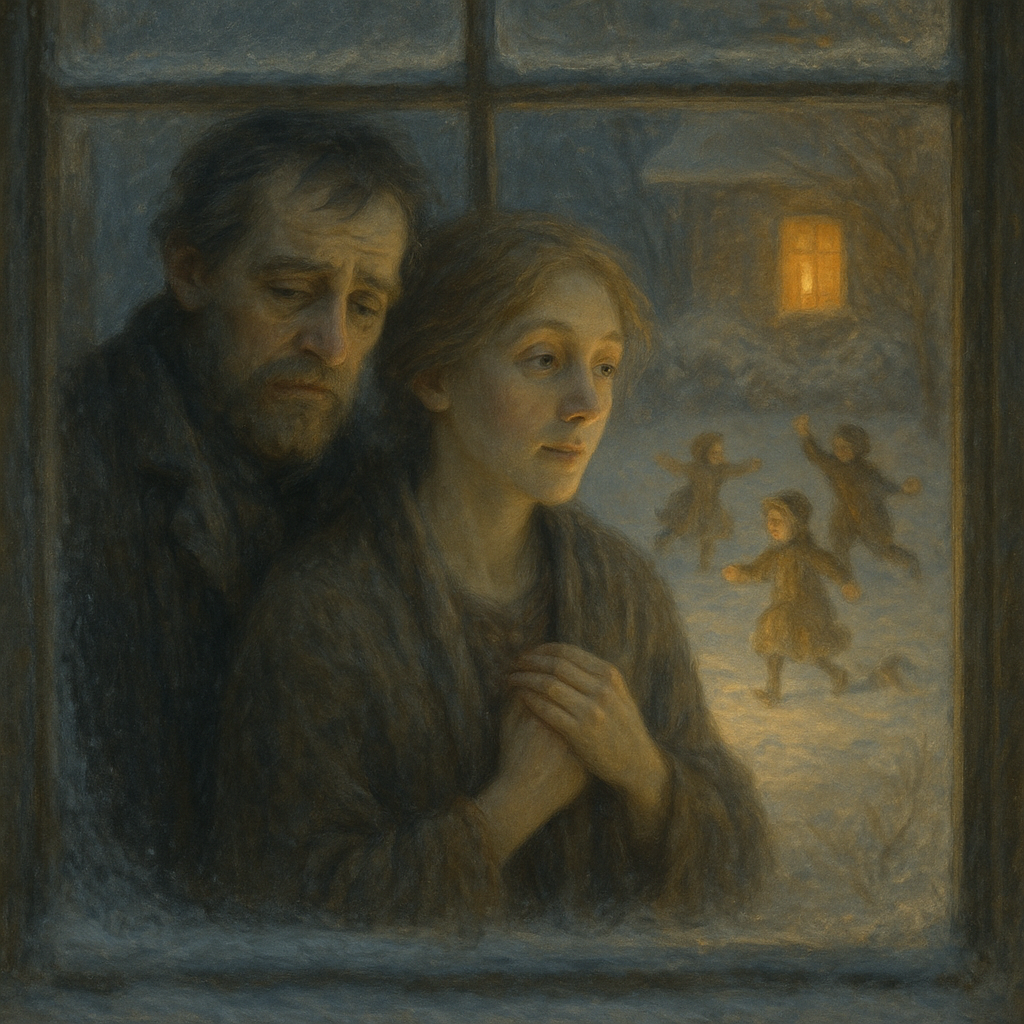
A weary couple gazes through a frosted window at children playing in snow — inspired by Christmas, 1873

Men they grow and women cold,
Selfish, passionate, and plaining!
Ever faster they grow old:—
On the world, ah, eld is gaining!

Child, whose childhood ne’er departs!
Jesus, with the perfect father!
Drive the age from parents’ hearts;
To thy heart the children gather.

Send thy birth into our souls,
With its grand and tender story.
Hark! the gracious thunder rolls!—
News to men! to God old glory!


Credits

George MacDonald was a Scottish Victorian author, poet, and Christian minister whose writing profoundly influenced C.S. Lewis and J.R.R. Tolkien. Published in 1873, this poem reflects MacDonald's lifelong conviction that childlike faith is not immaturity but the truest form of wisdom.