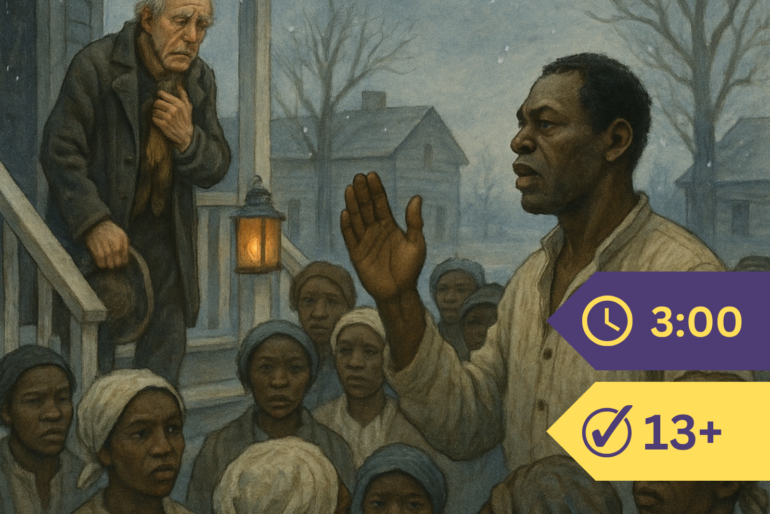
It was Chrismus Eve, I mind hit fu’ a mighty gloomy day—
Bofe de weathah an’ de people—not a one of us was gay;
Cose you ‘ll t’ink dat ‘s mighty funny ‘twell I try to mek hit cleah,
Fu’ a da’ky ‘s allus happy when de holidays is neah.
But we wasn’t, fu’ dat mo’nin’ Mastah ‘d tol’ us we mus’ go,
He ‘d been payin’ us sence freedom, but he couldn’t pay no mo’;
He wa’n’t nevah used to plannin’ ‘fo’ he got so po’ an’ ol’,
So he gwine to give up tryin’, an’ de homestead mus’ be sol’.
I kin see him stan’in’ now erpon de step ez cleah ez day,
Wid de win’ a-kind o’ fondlin’ thoo his haih all thin an’ gray;
An’ I ‘membah how he trimbled when he said, “It’s ha’d fu’ me,
Not to mek yo’ Chrismus brightah, but I ‘low it wa’n’t to be.”
All de women was a-cryin’, an’ de men, too, on de sly,
An’ I noticed somep’n shinin’ even in ol’ Mastah’s eye.
But we all stood still to listen ez ol’ Ben come f’om de crowd
An’ spoke up, a-try’n’ to steady down his voice and mek it loud:—
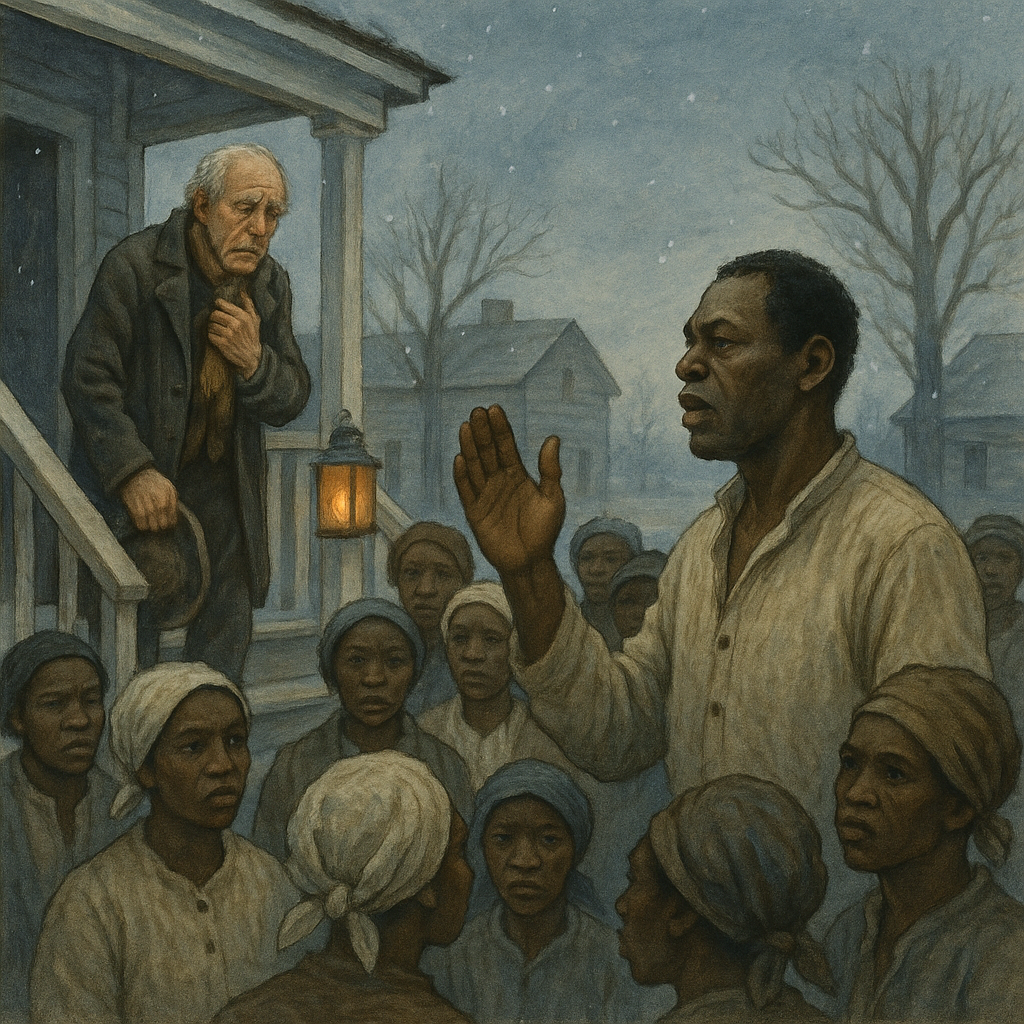
“Look hyeah, Mastah, I ‘s been servin’ you fu’ lo! dese many yeahs,
An’ now, sence we ‘s got freedom an’ you ‘s kind o’ po’, hit ‘pears
Dat you want us all to leave you ’cause you don’t t’ink you can pay.
Ef my membry has n’t fooled me, seem dat whut I hyead you say.
“Er in othah wo’ds, you wants us to fu’git dat you ‘s been kin’,
An’ ez soon ez you is he’pless, we ‘s to leave you hyeah behin’.
Well, ef dat ‘s de way dis freedom ac’s on people, white er black,
You kin jes’ tell Mistah Lincum fu’ to tek his freedom back.
“We gwine wo’k dis ol’ plantation fu’ whatevah we kin git,
Fu’ I know hit did suppo’t us, an’ de place kin do it yit.
Now de land is yo’s, de hands is ouahs, an’ I reckon we ‘ll be brave,
An’ we ‘ll bah ez much ez you do w’en we has to scrape an’ save.”
Ol’ Mastah stood dah trimblin’, but a-smilin’ thoo his teahs,
An’ den hit seemed jes’ nachul-like, de place fah rung wid cheahs,
An’ soon ez dey was quiet, some one sta’ted sof an’ low:
“Praise God,” an’ den we all jined in, “from whom all blessin’s flow!”
Well, dey was n’t no use tryin’, ouah min’s was sot to stay,
An’ po’ ol’ Mastah could n’t plead ner baig, ner drive us ‘way,
An’ all at once, hit seemed to us, de day was bright agin,
So evahone was gay dat night, an’ watched de Chrismus in.