Bones a-gittin’ achy,
Back a-feelin’ col’,
Han’s a-growin’ shaky,
Jes’ lak I was ol’.
Fros’ erpon de meddah
Lookin’ mighty white;
Snowdraps lak a feddah
Slippin’ down at night.
Jes’ keep t’ings a-hummin’
Spite o’ fros’ an’ showahs,
Chrismus is a-comin’
An’ all de week is ouahs.
Little mas’ a-axin’,
“Who is Santy Claus?”
Meks it kin’ o’ taxin’
Not to brek de laws.
Chillun ‘s pow’ful tryin’
To a pusson’s grace
Wen dey go a pryin’
Right on th’oo you’ face
Down ermong yo’ feelin’s;
Jes’ ‘pears lak dat you
Got to change you’ dealin’s
So ‘s to tell ’em true.
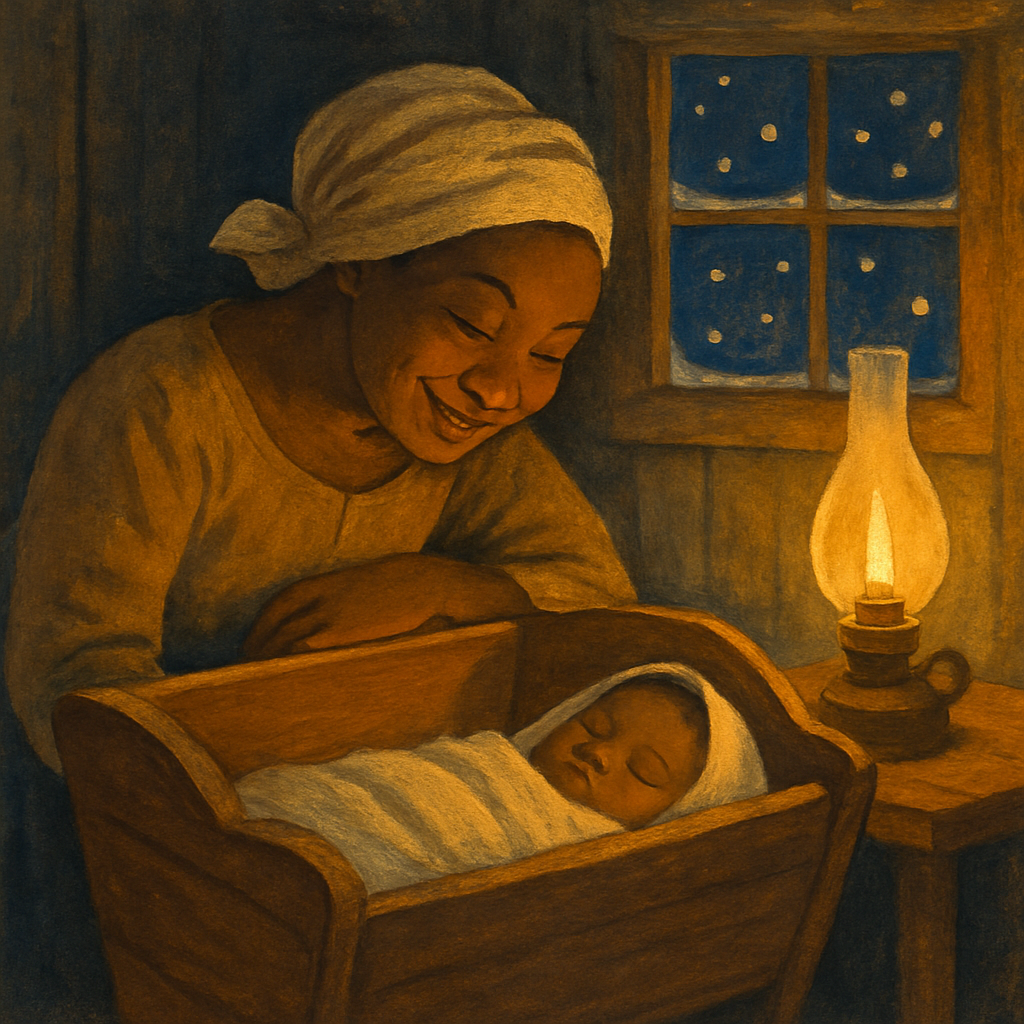
An’ my pickaninny—
Dreamin’ in his sleep!
Come hyeah, Mammy Jinny,
Come an’ tek a peep.
Ol Mas’ Bob an’ Missis
In dey house up daih
Got no chile lak dis is,
D’ ain’t none anywhaih.
Sleep, my little lammy,
Sleep, you little limb,
He do’ know whut mammy
Done saved up fu’ him.
Dey ‘ll be banjo pickin’,
Dancin’ all night thoo.
Dey ‘ll be lots o’ chicken,
Plenty tukky, too.
Drams to wet yo’ whistles
So ‘s to drive out chills.
Whut I keer fu’ drizzles
Fallin’ on de hills?
Jes’ keep t’ings a-hummin’
Spite o’ col’ an’ showahs,
Chrismus day ‘s a-comin’,
An’ all de week is ouahs.