
Summary


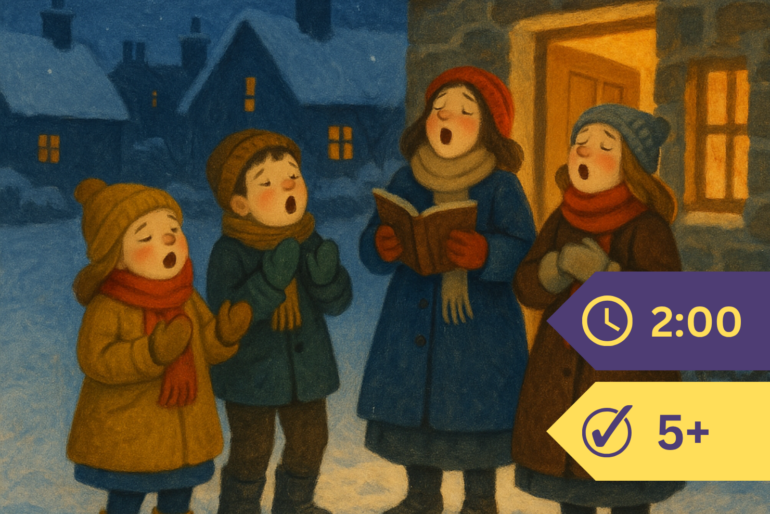
"Carol" by Kenneth Grahame is a festive Christmas poem told in the voice of wassailers singing in the cold outside warm village doors, asking to be welcomed in by the fire. Verse by verse it moves from the frosty street to a starlit stable, where Joseph and Mary find shelter and the animals in the straw are the very first to cry Nowell. The poem builds a mood of communal warmth and wonder, weaving together the streets, the star, and the manger into a single joyful refrain.

Listen to audio


Read Online

Villagers all, this frosty tide,
Let your doors swing open wide,
Though wind may follow, and snow beside,
Yet draw us in by your fire to bide;
Joy shall be yours in the morning!

Here we stand in the cold and the sleet,
Blowing fingers and stamping feet,
Come from far away you to greet—
You by the fire and we in the street—
Bidding you joy in the morning!
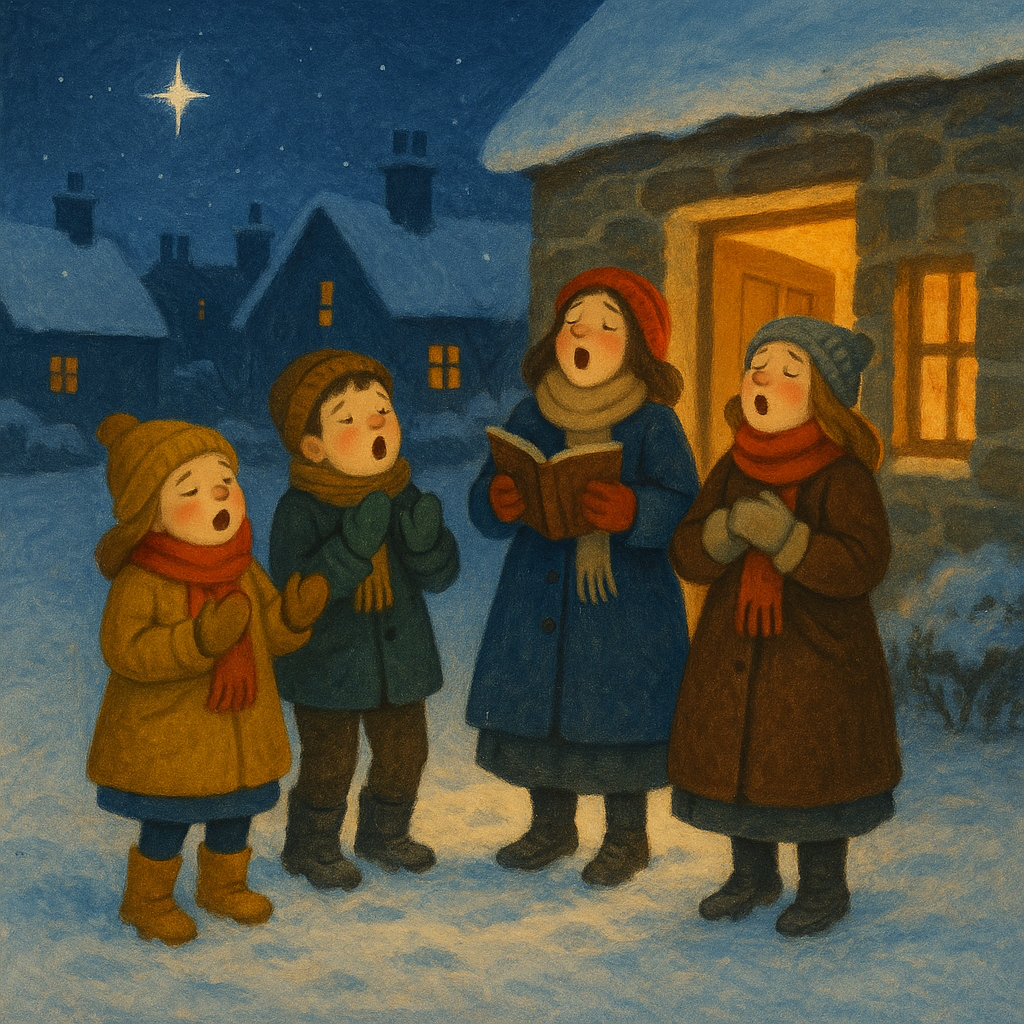
Carol singers in the snow outside a warm cottage at night, illustrating Kenneth Grahame's Christmas poem "Carol"

For ere one half of the night was gone,
Sudden a star has led us on,
Raining bliss and benison—
Bliss to-morrow and more anon,
Joy for every morning!

Goodman Joseph toiled through the snow—
Saw the star o’er a stable low;
Mary she might not further go—
Welcome thatch, and litter below!
Joy was hers in the morning!

And then they heard the angels tell
“Who were the first to cry NOWELL?
Animals all, as it befell,
In the stable where they did dwell!
Joy shall be theirs in the morning!”

Credits

Kenneth Grahame was a Scottish author best known for his beloved classic *The Wind in the Willows* (1908). Though celebrated for prose fiction, Grahame also wrote poetry, and this carol — with its refrain of joy greeting each morning — captures the same pastoral warmth and delight in simple, sheltered pleasures that runs through all his work.