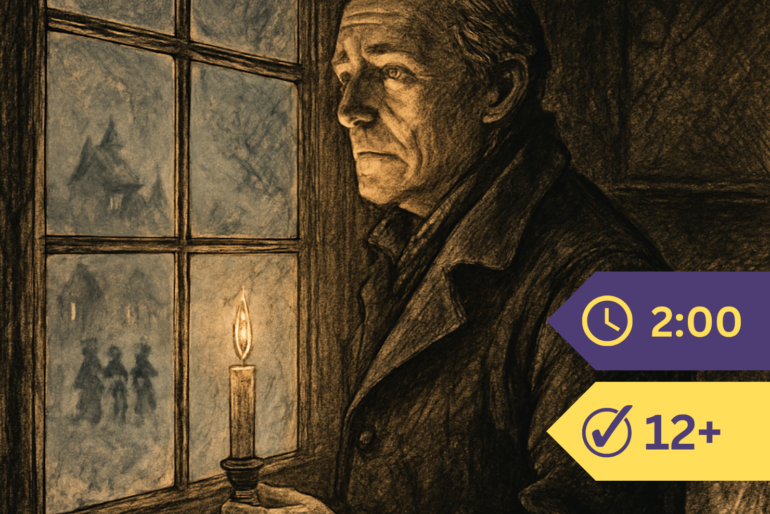
Between the moonlight and the fire
In winter twilights long ago,
What ghosts we raised for your desire,
To make your merry blood run slow!
How old, how grave, how wise we grow!
No Christmas ghost can make us chill,
Save those that troop in mournful row,
The ghosts we all can raise at will!
The beasts can talk in barn and byre
On Christmas Eve, old legends know.
As year by year the years retire,
We men fall silent then, I trow,
Such sights hath memory to show,
Such voices from the silence thrill,
Such shapes return with Christmas snow,—
The ghosts we all can raise at will.
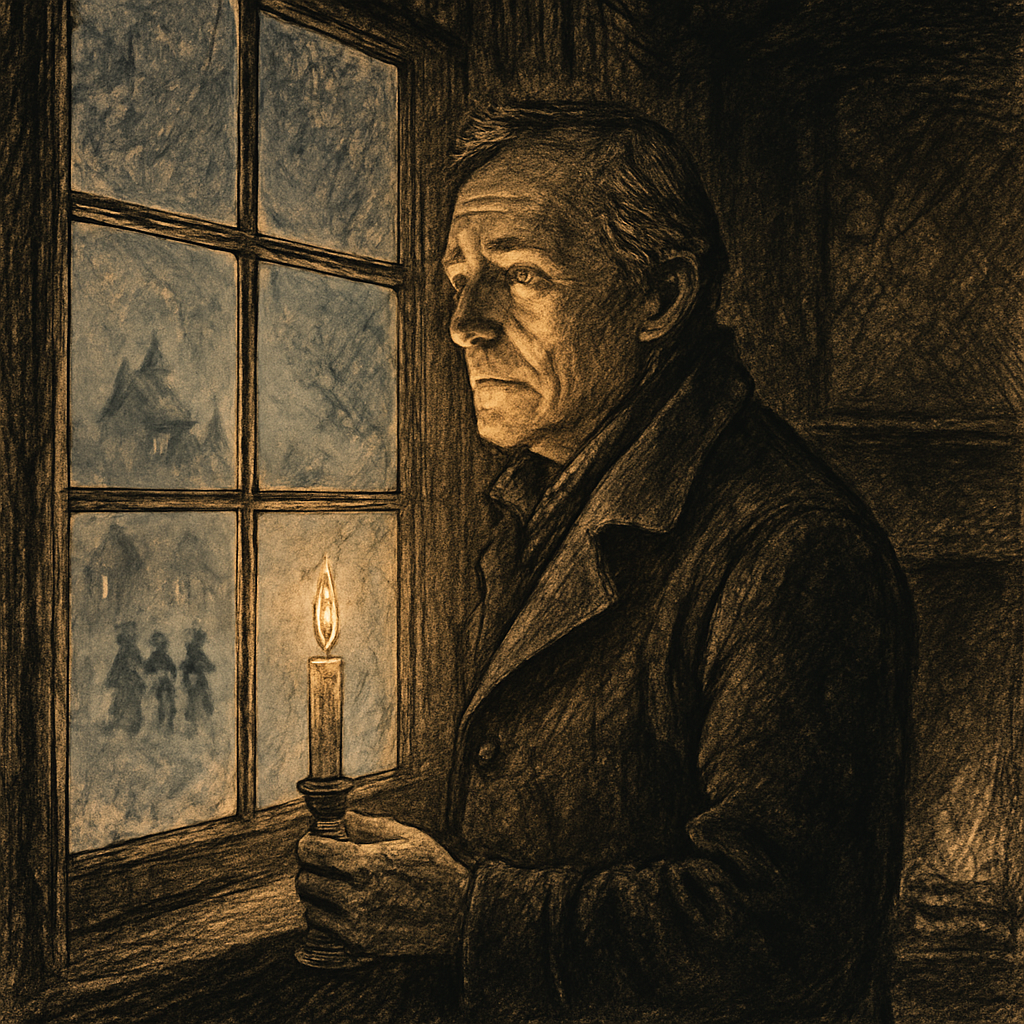
Oh, children of the village choir,
Your carols on the midnight throw,
Oh, bright across the mist and mire,
Ye ruddy hearths of Christmas glow!
Beat back the dread, beat down the woe,
Let’s cheerily descend the hill;
Be welcome all, to come or go,
The ghosts we all can raise at will.
Envoy
Friend, sursum corda, soon or slow
We part, like guests who’ve joyed their fill;
Forget them not, nor mourn them so,
The ghosts we all can raise at will.