Autumn Fashions

Summary


Autumn Fashions is a short poem in which the woods decide they are tired of wearing green. The Maple, feeling shabby, starts a fashion craze, and the Oak, Beech and Chestnut soon follow, each copying a favorite flower: tulip, sunflower, marigold or dark gillyflower. Only the solemn Hemlock refuses to join in. With playful personification and a lively, rhyming rhythm, the poem turns the grove into a gossiping dressing room and shows how October's colors might come to be.

Listen to audio


Read Online

The Maple owned that she was tired of always wearing green,
She knew that she had grown, of late, too shabby to be seen!
The Oak and Beech and Chestnut then deplored their shabbiness,
And all, except the Hemlock sad, were wild to change their dress.

“For fashion-plate we’ll take the flowers,” the rustling Maple said,
“And like the Tulip I’ll be clothed in splendid gold and red!”
“The cheerful Sunflower suits me best,” the lightsome Beech replied;
“The Marigold my choice shall be,” the Chestnut spoke with pride.
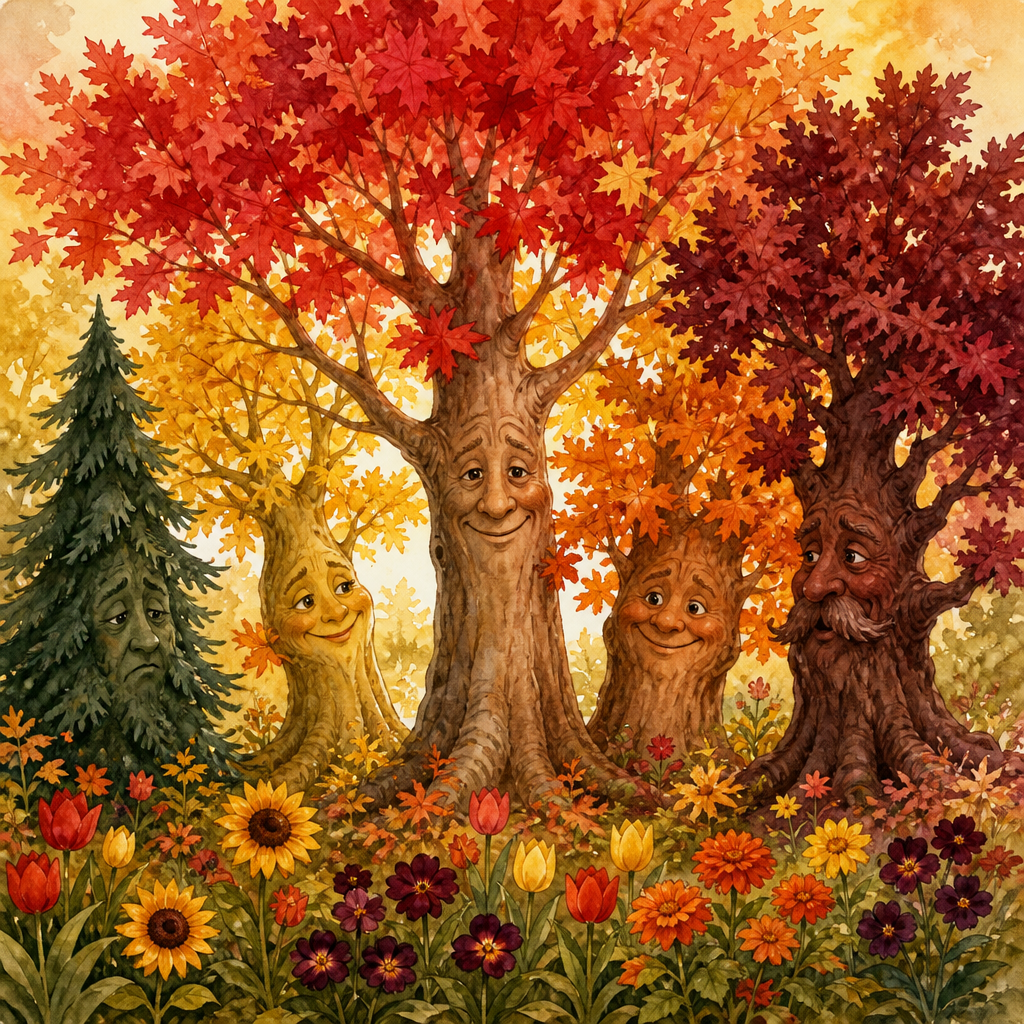
Maple, beech, chestnut and oak trees in bright autumn colors beside a green hemlock, illustrating Autumn Fashions.

The sturdy Oak took time to think—”I hate such glaring hues;
The Gillyflower, so dark and rich, I for my model choose.”
So every tree in all the grove, except the Hemlock sad,
According to its wish ere long in brilliant dress was clad.

And here they stayed through all the soft and bright October days;
They wished to be like flowers—indeed, they look like huge bouquets!

Add Ririro as a Preferred Source on Google


Credits

Edith M. Thomas was an American poet of the late 19th and early 20th centuries, known for her nature verse and her graceful, classical style. In this poem she gives each tree its own voice and personality, so that the Maple's vanity and the Oak's restraint read like portraits of people.