You merry folk, be of good cheer,
For Christmas comes but once a year.
From open door you’ll take no harm
By winter if your hearts are warm.
So ope the door, and hear us carol
The burthen of our Christmas moral.
Be ye merry and make good cheer,
For Christmas comes but once a year;
Scrape the fiddle and beat the drum,
And bury the night ere morning come.
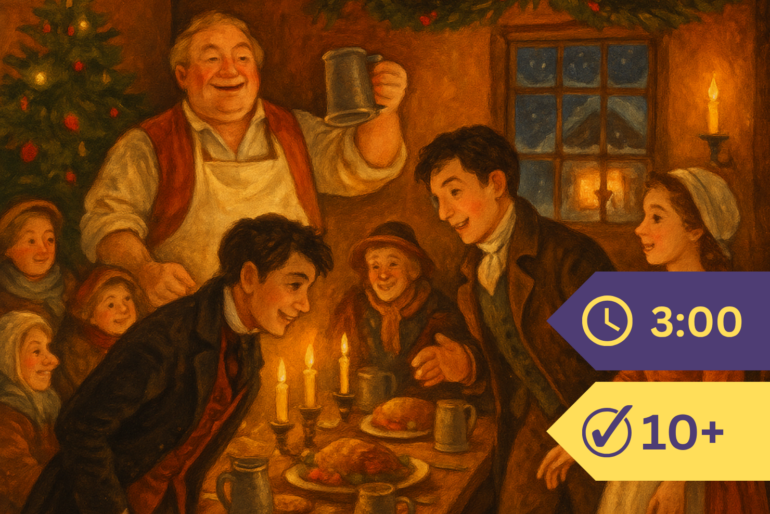
There was an inn beside a track,
As it might be, the Jolly Jack;
Upon a night, whate’er its name,
There kept they Christmas all the same.
They sit in jovial round at table,
While Christ was lying in the stable.
They make merry and have good cheer,
For Christmas comes but once a year;
They scrape the fiddle and beat the drum,
And they’ll bury the night ere morning come.
The jolly landlord stands him up,
And welcomes all to bite and sup;
He has a hearty face and red,
He knows not Who lies in his shed.
What harm, if he be honest and true,
That he may be Christ’s landlord too?
So he makes merry and has good cheer,
For Christmas comes but once a year;
He scrapes his fiddle and beats his drum,
And he’ll bury the night ere morning come.
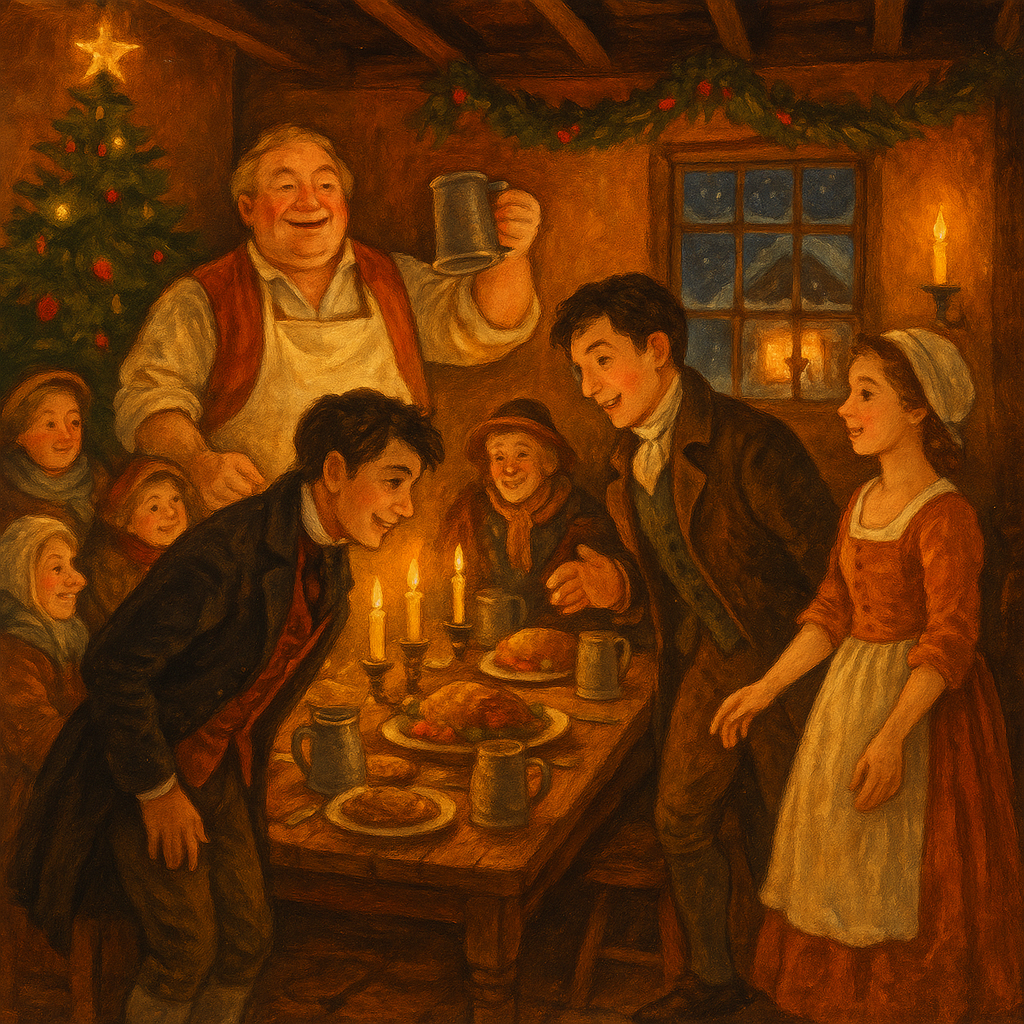
The landlord’s son sits in his place,
He bows his head and says his grace;
He leads his partner to the dance,
And the light of love is in his glance.
If his thoughts are handsome as his face,
What matter if Christ be in the place?
So he makes merry and has good cheer,
For Christmas comes but once a year;
He scrapes his fiddle and beats his drum,
And he’ll bury the night ere morning come.
Of all the folk that night, I ween,
Some were honest and some were mean;
If all were honest, ’twas well for all,
For Christ was sleeping in the stall.
But never may Englishmen so fare
That they at Christmas should forbear —
To make them merry and have good cheer,
For Christmas comes but once a year;
To scrape the fiddle and beat the drum,
And bury the night ere morning come.