We had been busy talking, for hours, Christmas eve,
Of all the great improvements until — will you believe? —
I felt quite dull and drowsy, and said, ‘twixt yawn and sigh,
“Oh! anything old-fashioned had best pass out and die!”
And then I leaned back smiling and quite self-satisfied,
And closed my eyelids slowly, when, lo! they opened wide
In sheer amaze and wonder, and would you know the cause?
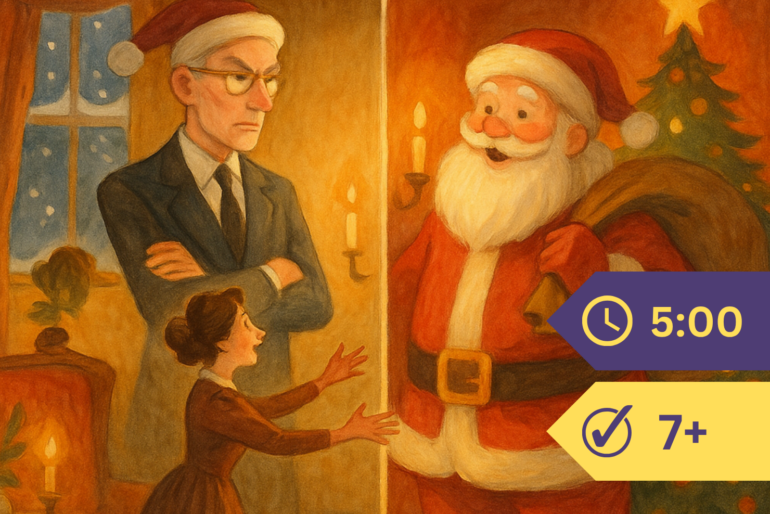
I saw before me standing, the form of Santa Claus.
But, oh! so strange and altered! In clothes of latest style,
And not at all the Santa I’d dreamed of all the while.
But still I recognized him, and said: “I didn’t see
You come out from the chimney — ‘t was very dull of me.”
“The chimney?” said he gruffly, “I beg of you to know
I clamber down no chimneys; I stopped that long ago!”
I said, “Your load was heavy, you’re tired: won’t you rest?”
“Oh, no,” he answered grandly, “my goods were all expressed!”
“You must have found it pleasant — the sleighing, sir, I mean.
The roofs are much more snowy than I have ever seen.”
“Indeed!” — his air was lofty — “‘t is not the present mode
To drive a sleigh. I travel by the elevated road.”
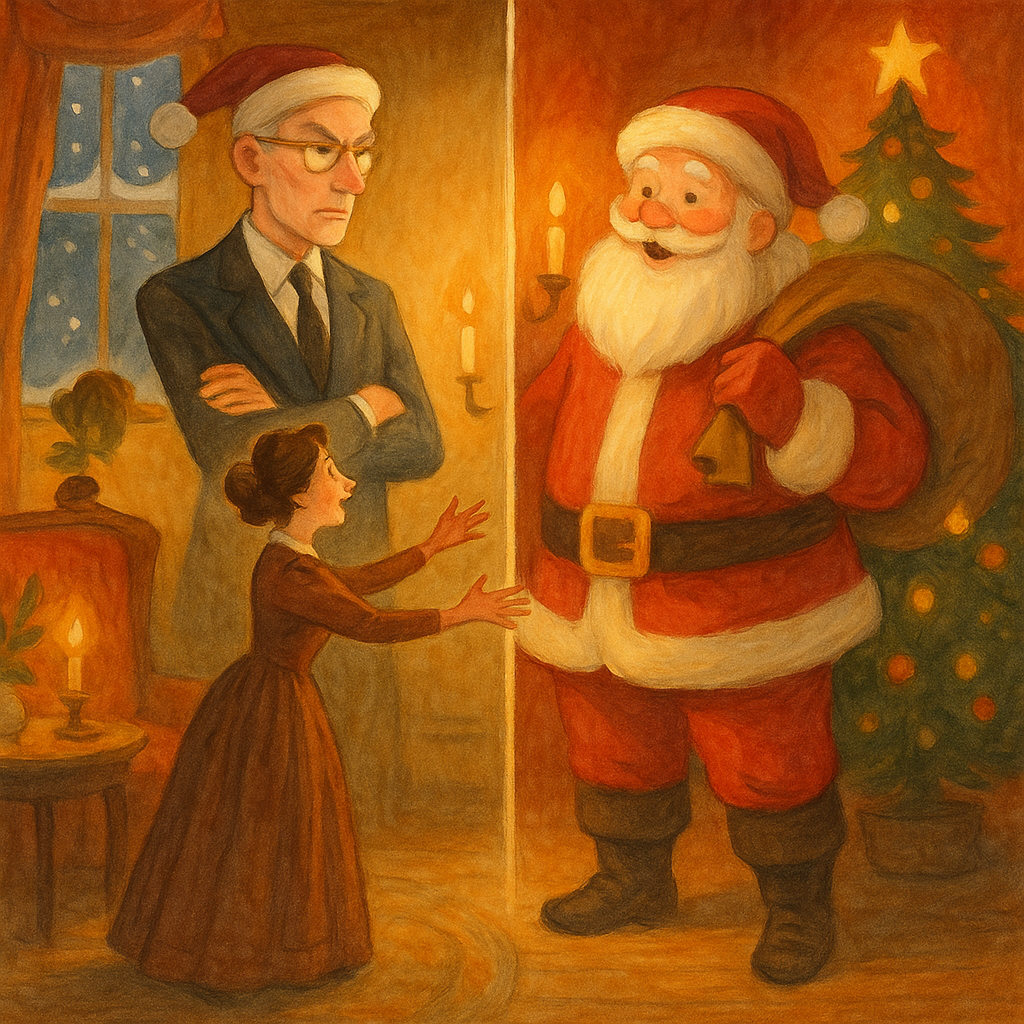
‘T was all so strange it chilled me, but still I said, “Now, please,
You won’t forget to send us one of your Christmas-trees.
The children love you dearly and try to be so good.”
He said: “No trees hereafter, I’d have it understood.
In fact, the time is over for Christmas. I should say
Those very old-time customs have really passed away.
We want the very latest, dear madam, you and I,
And peace, good will, and Christmas are of a time gone by.”
And then he seemed preparing to take his leave and go.
But do you think I let him? I called out bravely, “No!”
I ran to him and begged him, between my sobs and tears,
To leave us blessed Christmas, just as in former years.
To change no little custom; to take no part away;
To leave us dear old-fashioned, beloved Christmas day.
And then, for just an instant, my eyes were very dim
With tears, and when I cleared them, I saw a change in him:
His face, ‘t was round and jolly, his clothes were as of old,
He had a pack upon his back as full as it could hold.
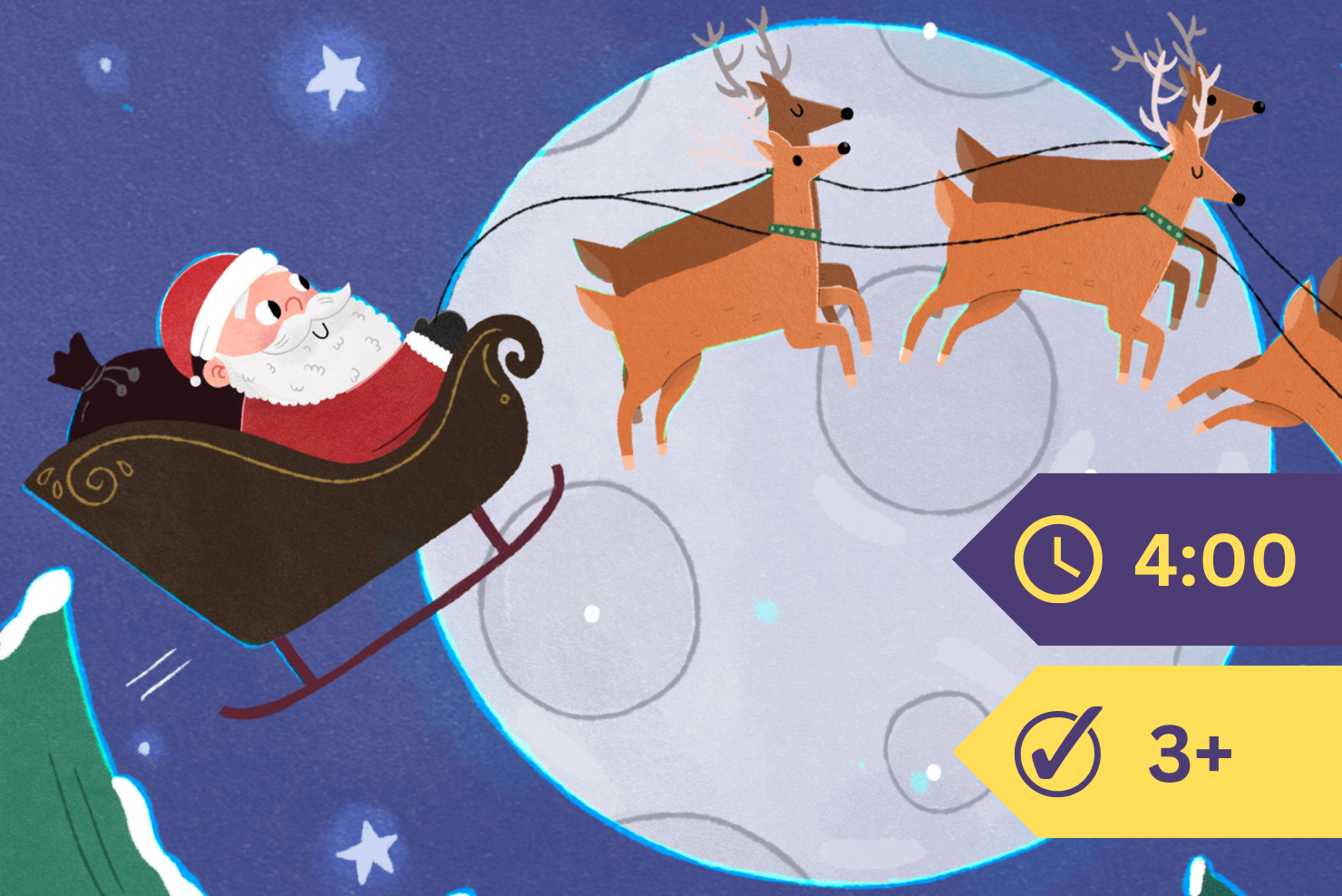
And as he beamed upon me I heard his reindeer prance,
Then sly old Santa gave me a smile and roguish glance.
“I wish you Merry Christmas!” I thought I heard him say,
And when I tried to answer him, he’d vanished quite away!
But though they say I dreamed it, I know we shall have still
Our dear old-fashioned Christmas, bringing “Peace on earth, good will!”