A Meditation for Christmas Day

Summary


"A Meditation for Christmas Day" is a devotional poem that calls the soul to pause and reflect on the full weight of Christmas morning. Through four resonant stanzas, Selwyn Image moves from wonder at the Incarnation to a stark reckoning with what humanity would have faced without it — and then upward to joy, urging the reader to contemplate the infant Christ lying in a manger, whose innocent eyes will one day close in suffering so that love might reign. The poem builds to a world-spanning call to worship.

Listen to audio


Read Online

Consider, O my soul, what morn is this!
Whereon the eternal Lord of all things made
For us, poor mortals, and our endless bliss,
Came down from heaven; and, in a manger laid,
The first, rich offerings of our ransom paid.
Consider, O my soul, what morn is this!

Consider what estate of fearful woe
Had then been ours had He refused this birth;
From sin to sin tossed vainly to and fro,
Hell’s playthings, o’er a doomed and helpless earth!
Had He from us withheld His priceless worth,
Consider man’s estate of fearful woe!

Consider to what joys He bids thee rise,
Who comes, Himself, life’s bitter cup to drain!
Ah! look on this sweet Child, whose innocent eyes,
Ere all be done, shall close in mortal pain,
That thou at last Love’s Kingdom may’st attain:
Consider to what joys He bids thee rise!
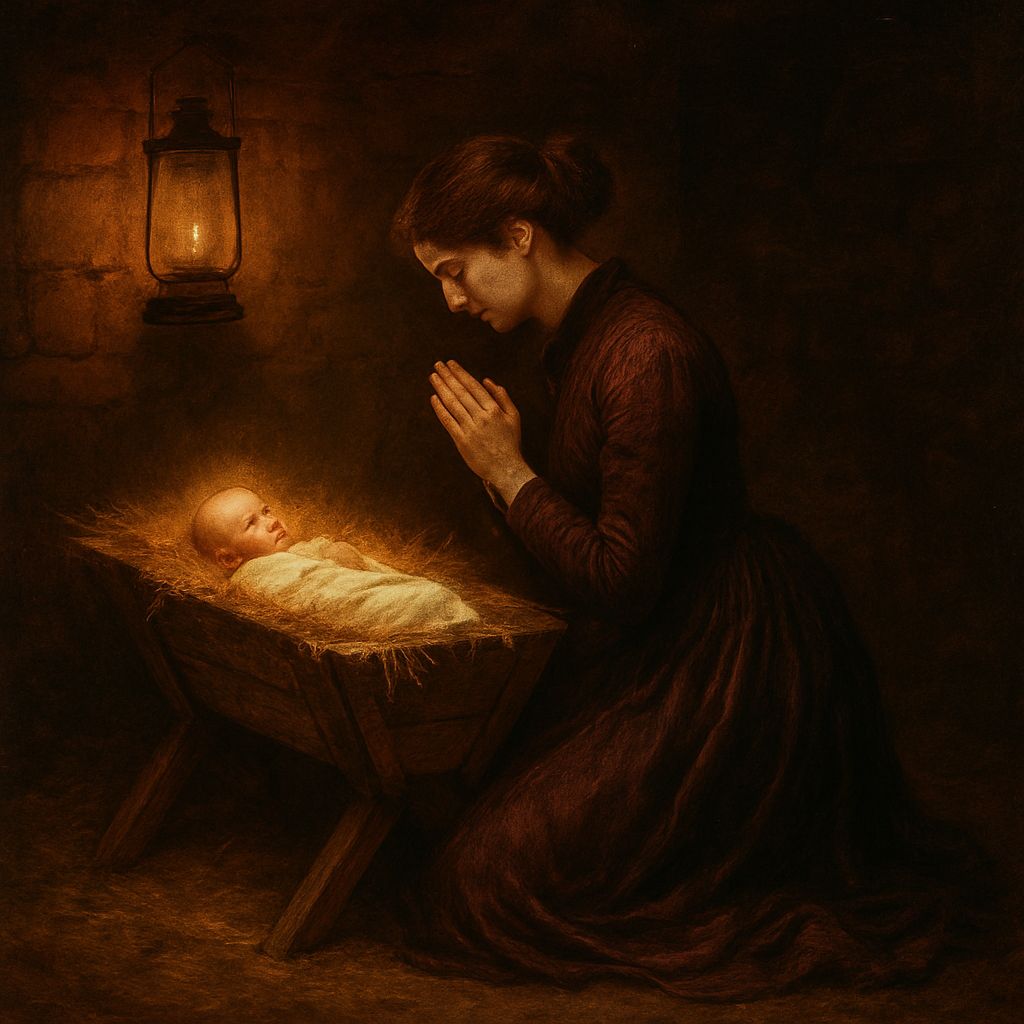
A woman kneels in reverent prayer before the infant Christ in a manger, illustrating A Meditation for Christmas Day.

Consider all this wonder, O my soul:
And in thine inmost shrine make music sweet!
Yea, let the world, from furthest pole to pole,
Join in thy praises this dread birth to greet!
Kneeling to kiss thy Saviour’s infant feet!
Consider all this wonder, O my soul!


Credits

Selwyn Image was a late-Victorian English poet, artist, and designer closely associated with the Arts and Crafts movement and the aesthetic circles of the 1890s. He was a co-founder of the influential periodical *The Hobby Horse* and was later appointed Slade Professor of Fine Art at Oxford. This poem's structured, refrain-driven form reflects his deep Anglican faith and his eye for crafted, ceremonial beauty.