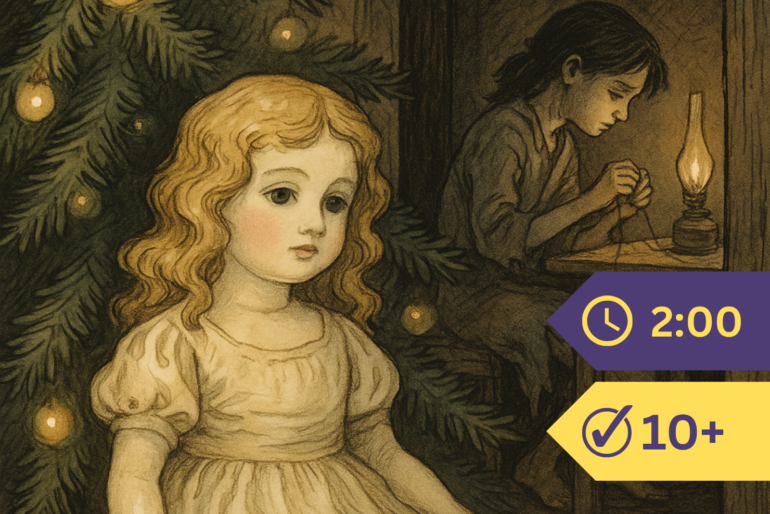
Smiling dolly with the eyes of blue,
Was it lovely where they fashioned you,
Were there laughing gnomes, and did the breeze
Toss the snow along the Christmas trees?
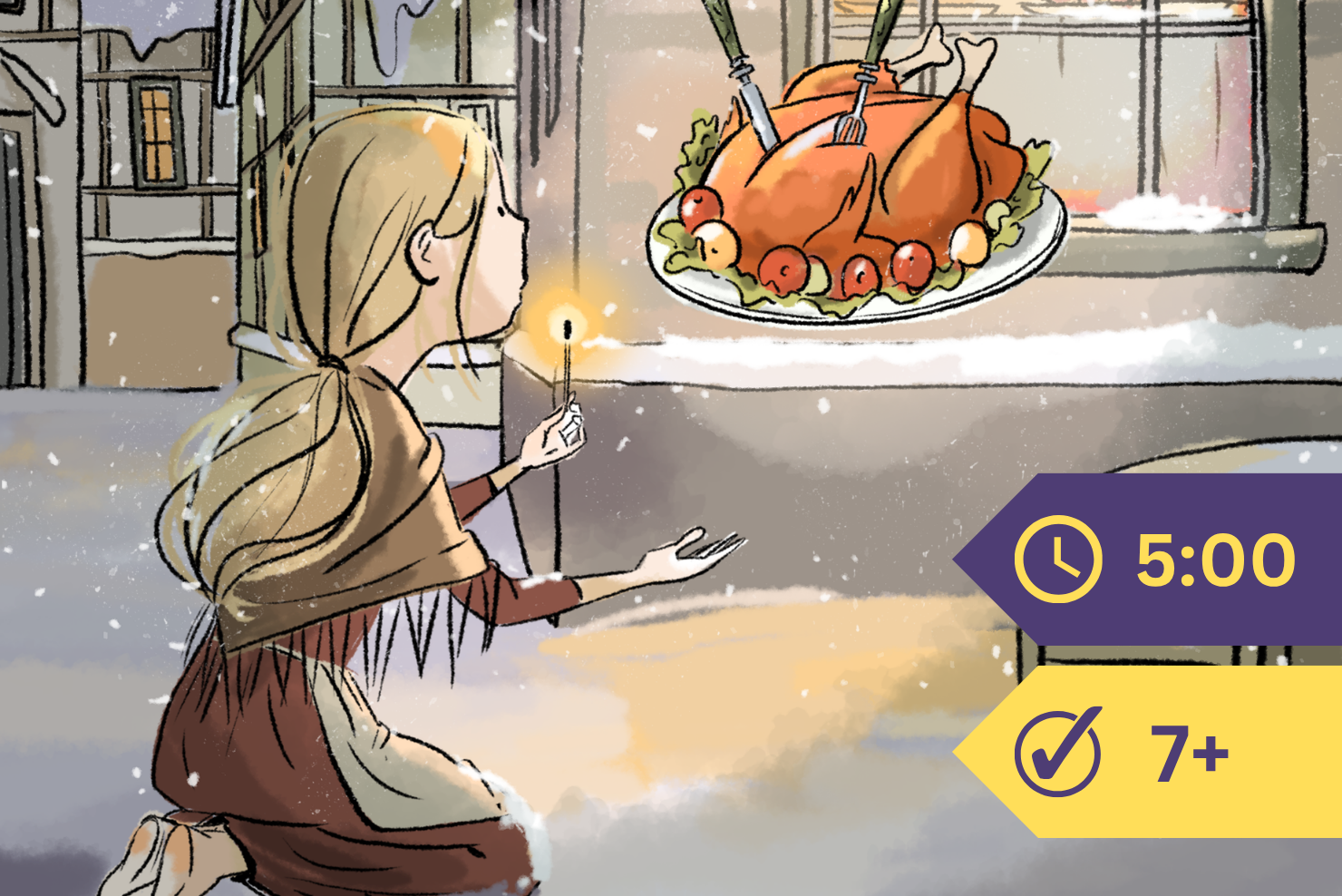
Tiny hands and chill, and thin rags torn,
Faces drawn with waking night and morn,
Eyes that strained until they could not see,
Little mother, where they fashioned me.
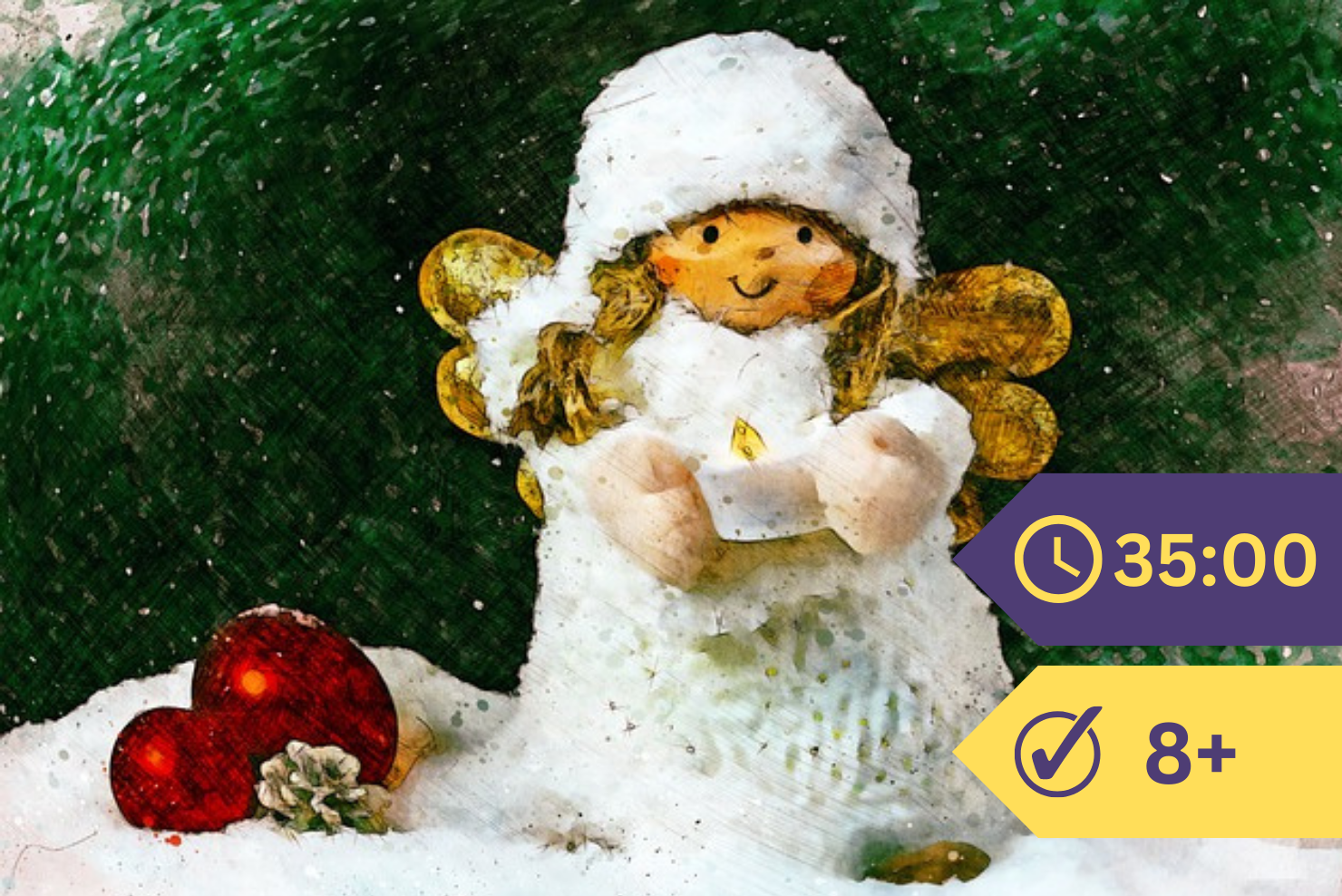
Gold-haired dolly in the silken dress,
Tell me where you found your loveliness,
Were they fairy-folk who clad you so,
Gold wands quivering and wings aglow?
Narrow walls and low, and tumbled bed,
One dim lamp to see to knot the thread,
This was all I saw till dark came down,
Little mother, where they sewed my gown.
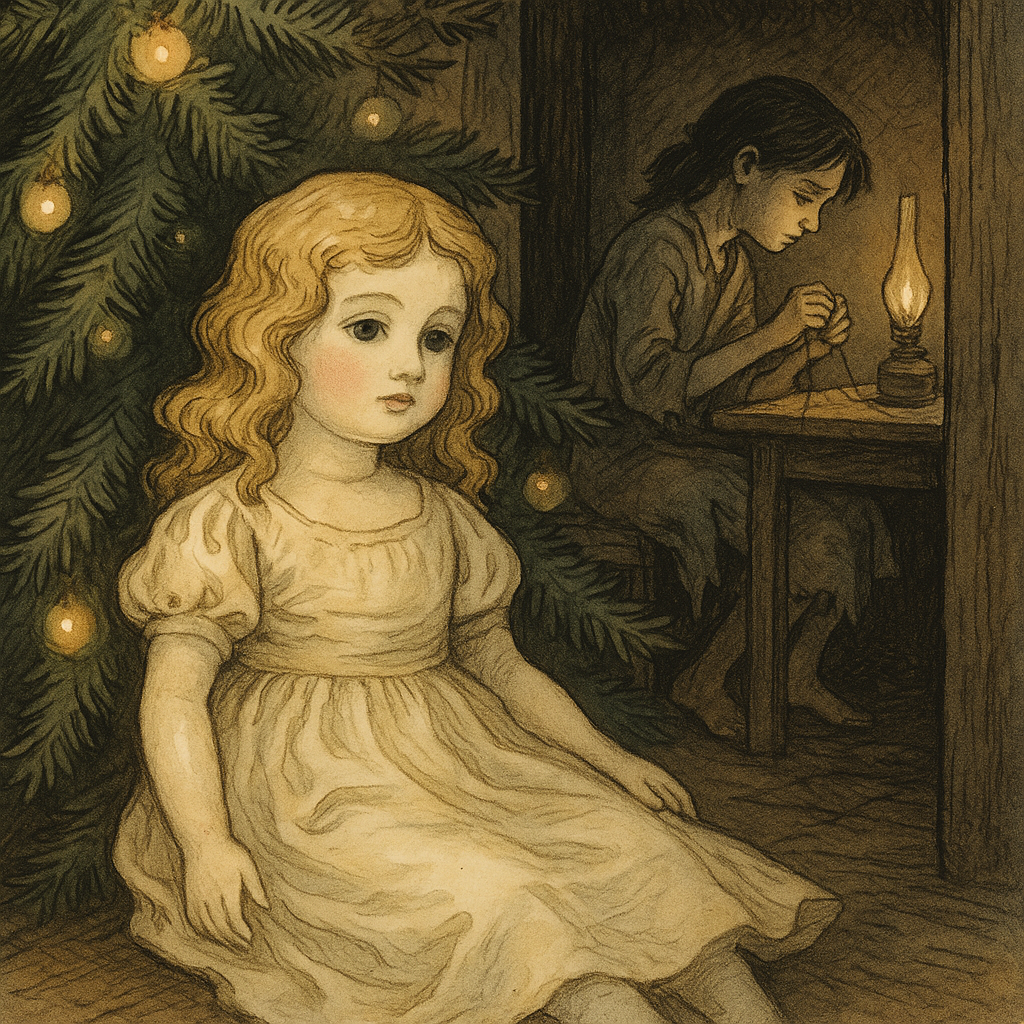
Rosy dolly on my Christmas tree,
Tell the lovely things you saw to me,
Were there golden birds and silver dew
In the fairylands they brought you through?
Weary footsteps all and weary faces
Serving crowds within the crowded places,
This was all I saw the Christ-eve through,
Little mother, ere I came to you.
Smiling dolly in the Christmas-green,
What do all these cruel stories mean?
Are there children, then, who cannot say
Thanks to Christ for this his natal day?
Ay, there’s weariness and want and shame,
Pain and evil in the good Lord’s name,
Things the peasant Christ-child could not know
On his quiet birthday long ago