A Christmas Carol

Summary


"A Christmas Carol" by George MacDonald captures an intimate nativity moment: Mary cradles the infant Jesus, singing a lullaby in which she envisions the golden crown already glowing in his hair. Her song moves between tender mother-love and awe at the child's divine destiny — she kisses his hands and feet, prophesying that men will worship him. Yet when the baby opens his eyes wide and looks up at her, her song falters and she falls silent, overcome by something she cannot say aloud.

Read Online

Babe Jesus lay in Mary’s lap,
The sun shone in his hair;
And this was how she saw, mayhap,
The crown already there.

For she sang: “Sleep on, my little king;
Bad Herod dares not come;
Before thee sleeping, holy thing,
The wild winds would be dumb.”
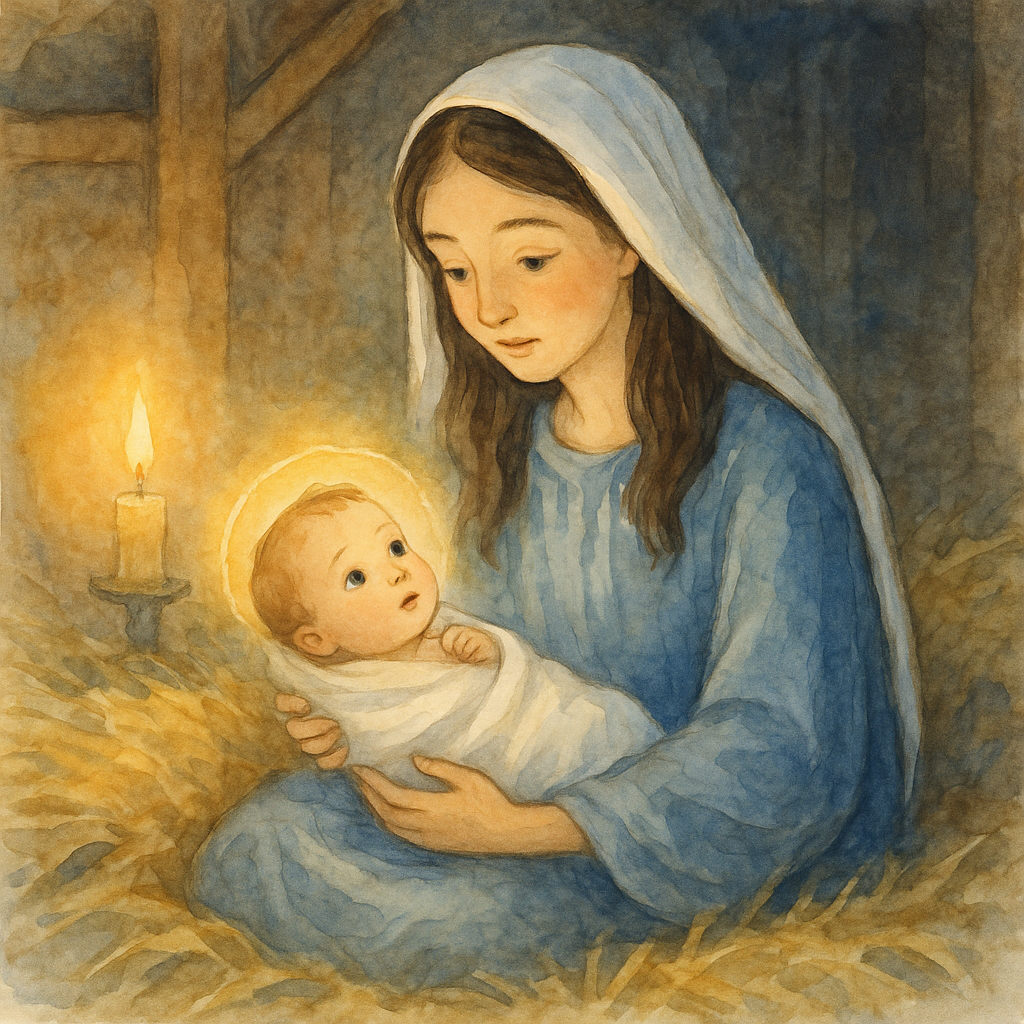
Mary cradles the infant Jesus in a glowing stable, illustration for A Christmas Carol by George MacDonald.

“I kiss thy hands, I kiss thy feet,
My child, so long desired;
Thy hands will never be soiled, my sweet;
Thy feet will never be tired.”

“For thou art the king of men, my son;
Thy crown I see it plain!
And men shall worship thee, every one,
And cry, Glory! Amen!”

Babe Jesus he opened his eyes wide—
At Mary looked her lord.
Mother Mary stinted her song and sighed;
Babe Jesus said never a word.

Credits

George MacDonald was a 19th-century Scottish author, poet, and Christian minister, widely regarded as a founding father of modern fantasy literature and a key influence on C.S. Lewis and J.R.R. Tolkien. This brief carol reflects his characteristic blending of domestic tenderness with deep theological feeling, giving Mary's lullaby an almost prophetic weight.