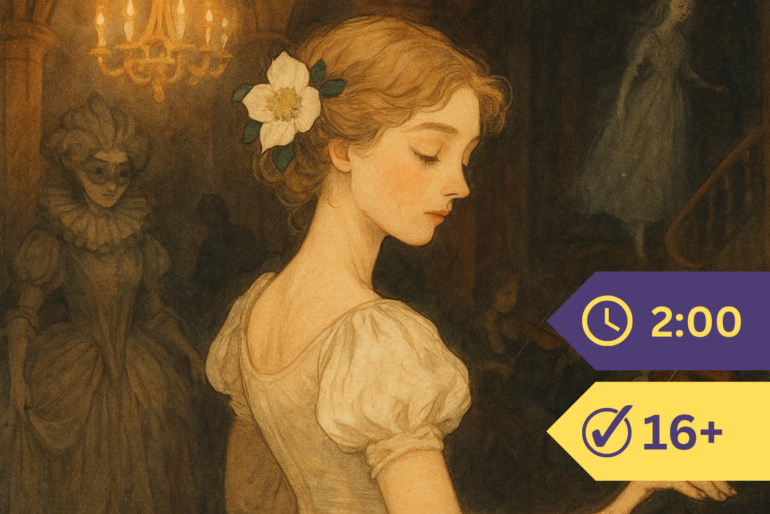
Who is it stands on the polished stair,
A merry, laughing, winsome maid,
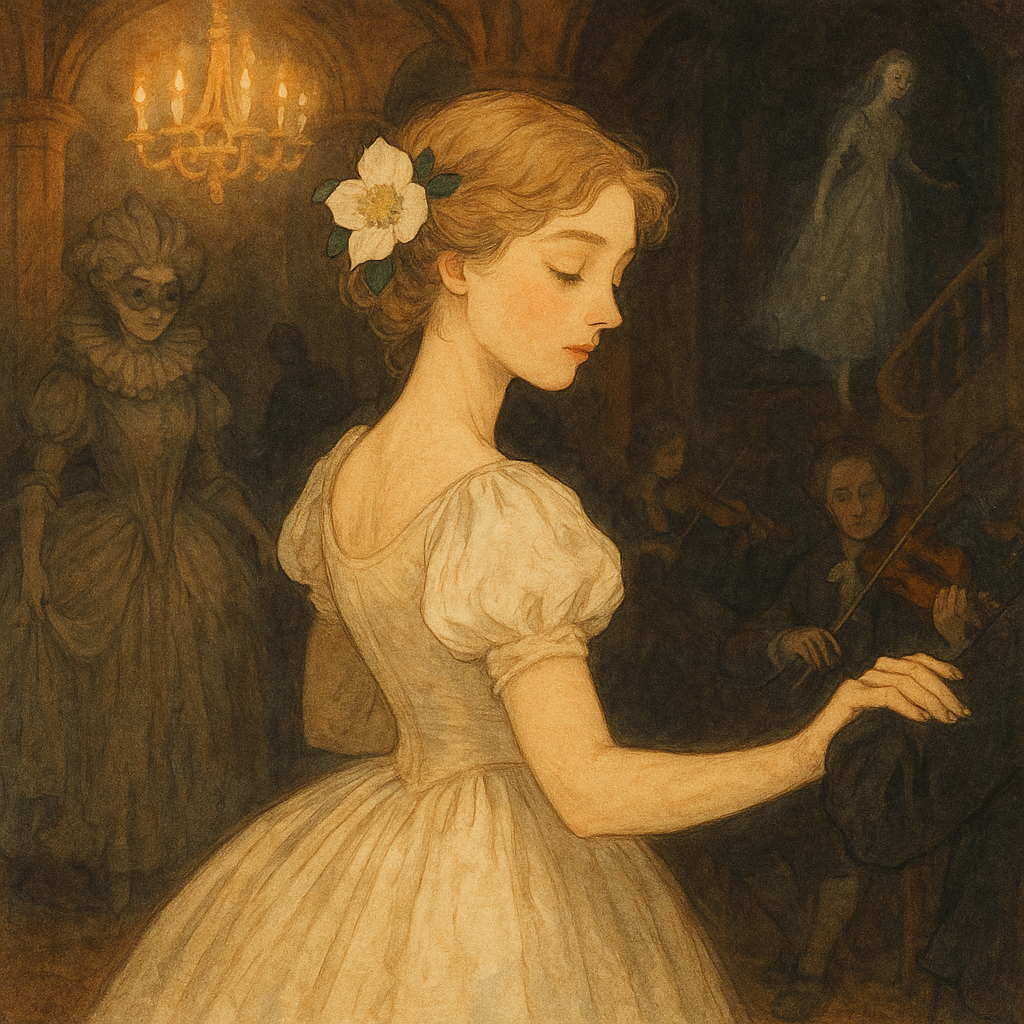
From the Christmas rose in her golden hair
To the high-heeled slippers of spangled suede?
A glance, half daring and half afraid,
Gleams from her roguish eyes downcast;
Already the vision begins to fade —
‘Tis only a ghost of a Christmas Past.
Who is it sits in that high-backed chair,
Quaintly in ruff and patch arrayed,
With a mockery gay of a stately air
As she rustles the folds of her old brocade —
Merriest heart at the masquerade?
Ah, but the picture is passing fast
Back to the darkness from which it strayed —
‘Tis only a ghost of a Christmas Past.
Who is it whirls in a ball-room’s glare,
Her soft white hand on my shoulder laid,
Like a radiant lily, tall and fair,
While the violins in the corner played
The wailing strains of the Serenade?
Oh, lovely vision, too sweet to last —
E’en now my fancy it will evade —
‘Tis only a ghost of a Christmas Past.
L’ENVOI
Rosamond! look not so dismayed.
All of my heart, dear love, thou hast —
Jealous, beloved? Of a shade? —
‘Tis only a ghost of a Christmas Past.