The Sparrow and the Hare

Summary


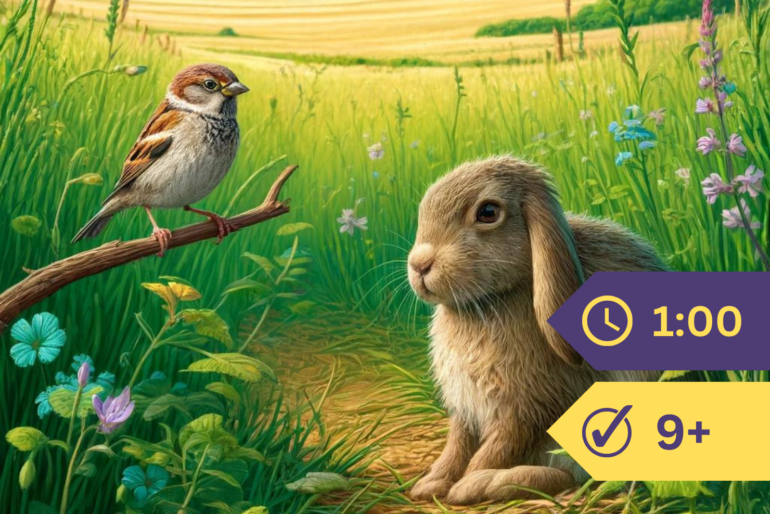
"The Sparrow and the Hare" is one of Aesop's sharp, compact fables about the danger of mocking another's misfortune. When a hawk seizes a Hare, a smug Sparrow taunts her for failing to outrun her fate — only to be snatched by a hawk moments later. The dying Hare finds grim comfort in the Sparrow's sudden end, reminding us that no one is as safe as they believe when they laugh at another's suffering.


Read Online

A Hare pounced upon by an eagle sobbed very much and uttered cries like a child. A Sparrow upbraided her and said, “Where now is thy remarkable swiftness of foot? Why were your feet so slow?” While the Sparrow was thus speaking, a hawk suddenly seized him and killed him. The Hare was comforted in her death, and expiring said, “Ah! you who so lately, when you supposed yourself safe, exulted over my calamity, have now reason to deplore a similar misfortune.”



Credits

Aesop was an ancient Greek storyteller, believed to have lived around 620–564 BCE, whose fables have been retold across cultures for over two millennia. "The Sparrow and the Hare" is a particularly terse example of his style — delivering its moral through ironic reversal in just a few lines, with no wasted words.