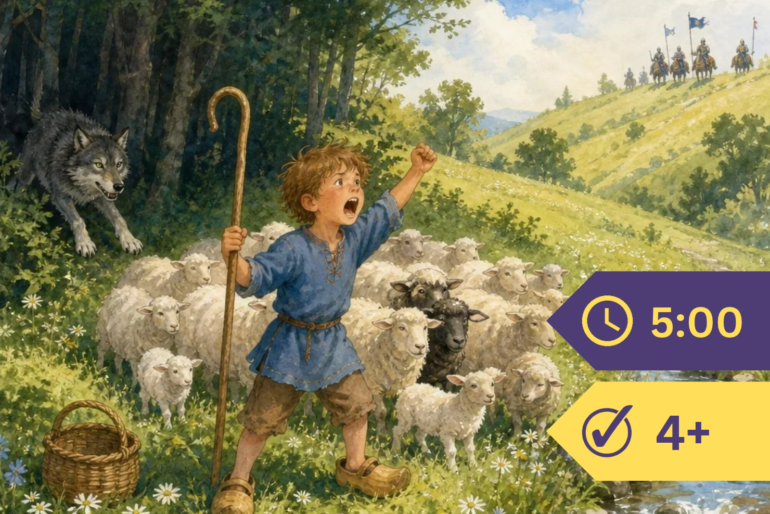
The shepherd was sick, and his wife looked out from the doorway with anxious eyes. “Who will take the sheep to the pastures today?” she said to her little boy, Jean.
“I will!” cried Jean. “I will — Mother, let me!”
Jean lived with his father and mother long ago, in a sunny land across the sea, where flowers bloom and birds sing and shepherds lead their flocks through green valleys. Every morning, as soon as it was light, Jean’s father was up and away with his sheep. He had never missed a single morning before, and now the sheep were bleating in the fold as if to say, “Don’t forget us today!”
The sheep were Jean’s playmates. There was nothing he loved more than wandering with them through the pleasant meadows, and already they knew his voice and came when he called.
“Let the boy go,” said his old grandfather. “When I was no older than he, I watched my own father’s flock.”
Jean’s father agreed, so his mother hurried to get the little boy ready.
“Eat your dinner when the shadows lie straight across the grass,” she said, kissing him goodbye.
“And keep the sheep away from the forest paths,” called his sick father.
“And keep watch,” said the old grandfather, “for it’s when the shepherd isn’t watching that the wolf comes to the flock.”
“Never fear,” said little Jean. “The wolf shall not have a single one of my white lambs.”
There were white sheep and black sheep and frolicking lambs in the shepherd’s flock, and every one had a name of its own. There was Babette, and Nanette, and Pierrot, and Jeannot — I can’t tell you them all, but Jean knew every single name.
“Come, Bettine and Marie. Come, Pierrot and Croisette. Come, pretty ones, all of you,” he called as he led them from the fold that day. “I’ll take you to the meadows where the daisies grow.”
“Baa,” answered the sheep contentedly, following him down the king’s highway and over the hill to the pastures.
The other shepherds were already there with their flocks, so Jean wasn’t lonely. He watered his sheep at the dancing brook that ran through the flowers, led them along its shady banks, and out into the sunny fields beyond — and not one lamb strayed off toward the forest paths.
The forest lay dim and shadowy along one side of the pastures. The deer lived there, and the wild boars that fed on acorns, and many other creatures that loved the deep woods. There had once been wolves in that forest, but the king’s knights had driven them away, and the shepherds feared them no longer. Only the old men, like Jean’s grandfather, and the little boys, like Jean, still talked about them.
But Jean wasn’t afraid — oh, no. There wasn’t a lamb in all the flock so merry and fearless as he. He sang with the birds and raced with the brook and laughed until the echoes laughed back at him, watching the sheep from early morning until noon — when the shadows fell straight across the grass, and it was time to eat his dinner.
There were little cakes in Jean’s dinner basket. He had watched his mother pack them. But he hadn’t tasted a single one when, out on the king’s highway beyond the hill, he heard the sound of pipes and drums, and the tramp, tramp, tramp of many marching feet.
The other shepherds heard it too, and they began to stare and point and run. “The king and his knights are coming!” they cried. “Come, let’s watch them go by!”
“But who will take care of the sheep?” asked Jean. Nobody answered. So he too left his dinner and ran with the rest, up the hillside path toward the highway.
“How pleased my mother will be when I tell her I’ve seen the king,” he said to himself. He was hurrying over the hilltop when, all at once, he remembered the forest, and the wolf, and his grandfather’s words.
“Come on!” the others called.
“I have to stay with the sheep,” Jean answered. And he turned and went back down the hill — though the pipes and the drums seemed to call after him, “This way! Come this way!” He could hardly keep from crying as he listened.
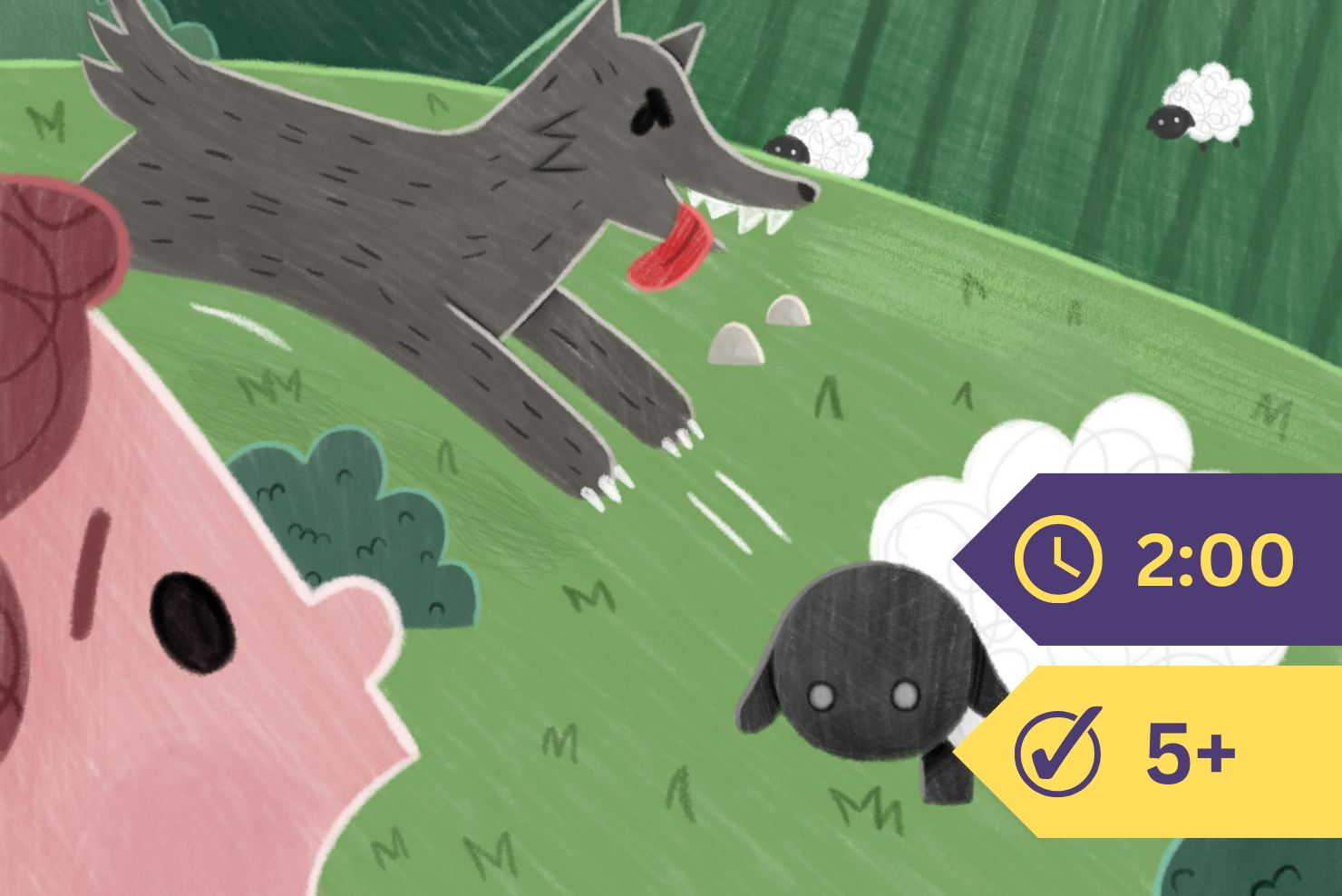
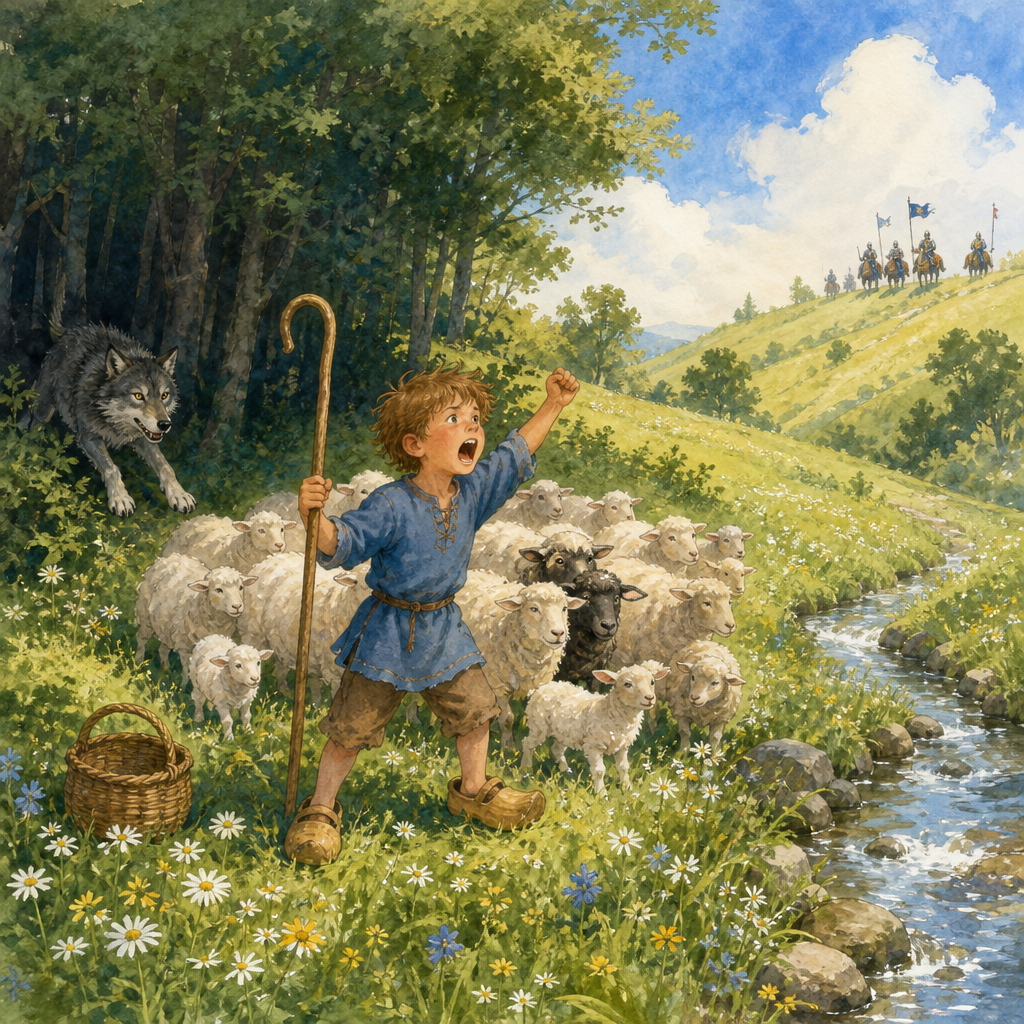
There was nothing in sight to harm the sheep, and the pastures lay quiet and peaceful. But into the forest that very day, a hungry grey wolf had come. His eyes were bright, his ears were sharp, and his four feet were soft as velvet as he came creeping, creeping, creeping through the underbrush. He poked out his nose and sniffed the air. He poked out his head and spied the sheep, all alone in the meadow. “Now’s my chance,” he said — and out he sprang, just as little Jean came racing down the hill.
“Wolf! Wolf! Wolf!” shouted Jean. “Wolf! Wolf! Wolf!” He was only a little boy, but he was brave, and his voice rang out clear as a bugle across the valley and over the hill. “Wolf! Wolf! Wolf!”
The shepherds and the knights and the king himself came running and riding to answer his cry. And as for the grey wolf — he didn’t even stop to look behind him as he fled back into the forest shadows. He ran so fast and so far that he was never seen in the king’s country again, though the shepherds watched for him day after day.
At evening, Jean led his flock home — white sheep and black sheep and frolicking lambs — and not one was missing.
“Was the day long?” asked his mother, watching in the doorway.
“Are the sheep all safely in?” called his father.
“Did the wolf come?” asked the old grandfather.
But I don’t need to tell you what Jean said to that. You can imagine it for yourself.