There was a group of young men in Rome who were a nuisance to everyone — always into some mischief, and worse when the mood took them. One of them, though, was not quite as far gone as the rest. He had one habit left from his mother’s teaching: whenever he saw a coffin carried past in the street, he stopped and said a De Profundis for the soul.
This small habit worried his companions. What if he reformed? What if he turned on them? They decided to get rid of him. He sensed the plot and got up early one morning and rode out of Rome before they could act.
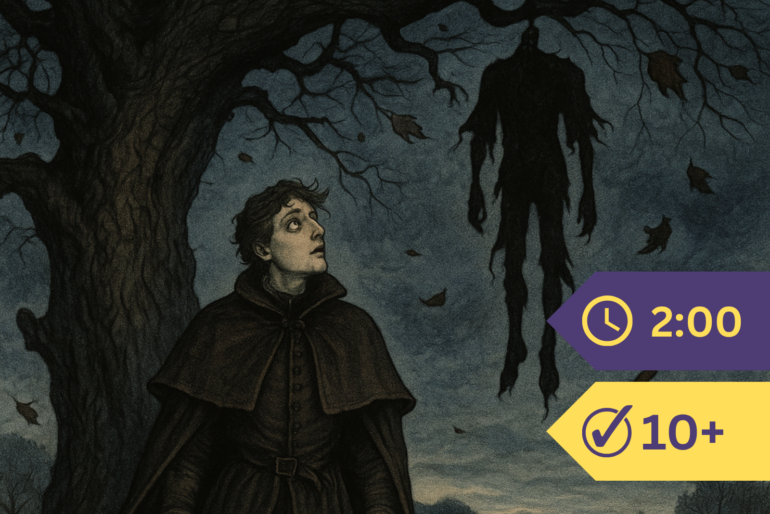
He rode on and on until Rome was many miles behind him. Then in the road ahead he saw, hanging in an oak-tree, the body of a man torn to pieces among the branches.
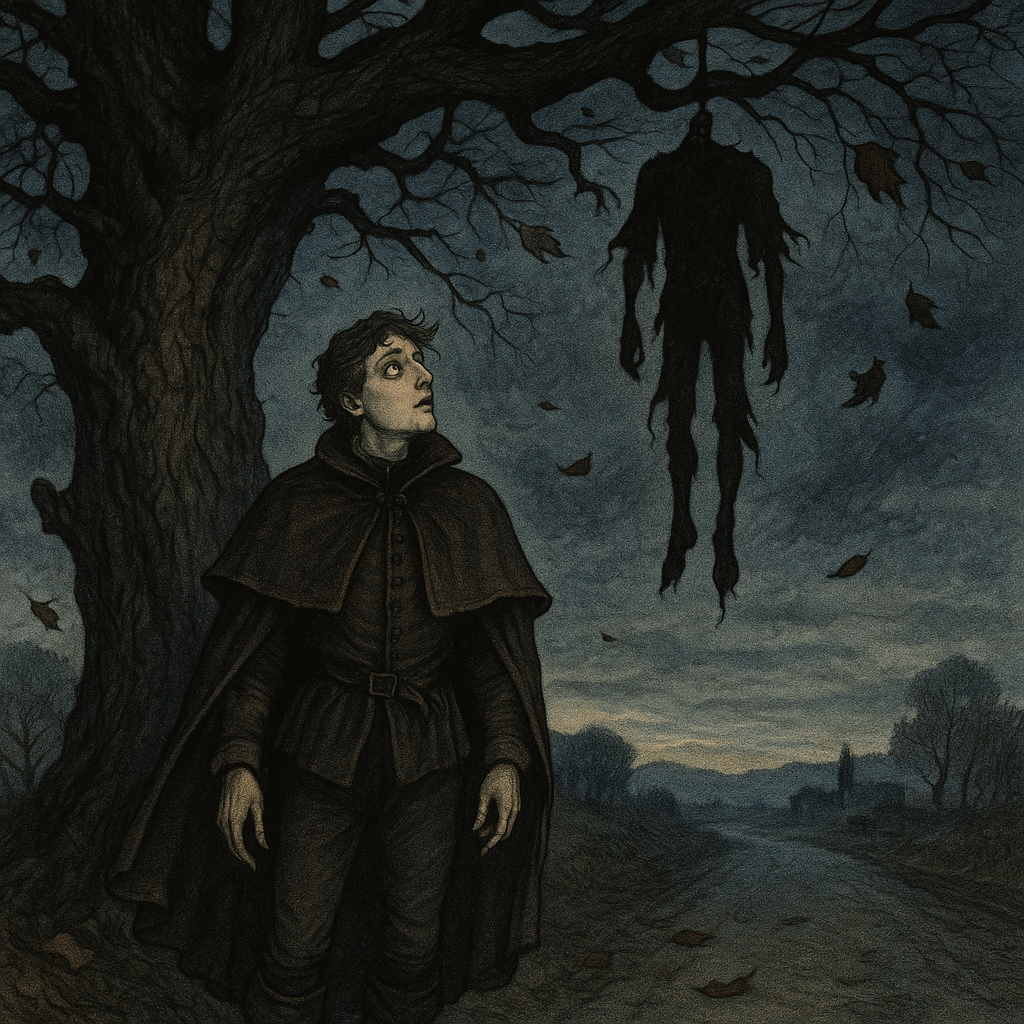
He was shocked, but he did not forget his habit. He stopped and said the De Profundis.
The moment the psalm was finished, the pieces came down from the branches one by one and fitted themselves together until a dead man stood before him in the road.
The young man would have ridden away, but he could not move. And then the corpse took hold of his bridle.
“Don’t be afraid,” it said, in a voice like something calling up from underground. “Only change places with me for a little while. You go up into the tree, and lend me your horse.”
Without understanding why, the young man climbed down, and climbed into the tree, and watched the corpse ride away down the road toward Rome.
Five minutes later he heard four shots.
Looking in the direction of the sound, he saw his four companions — who had fired their weapons into the figure on his horse. They stole up to look at what they had hit, and then ran screaming.
As soon as they had fled, the corpse turned the horse around and came quietly back.
“I have done you this good turn,” it said, dismounting, “because you said a prayer for me. But such help does not come twice. Turn your life around before something worse finds you.”
Then, piece by piece, it went back up into the tree.
The young man rode on, thoughtful, and found a monastery where he asked to stay. He lived there a good life, and died a peaceful death.