When Saint Nicholas was Bishop of Myra, there were among his people three beautiful maidens, daughters of a nobleman. Their father was so poor that he could not afford to give them dowries, and as in that land no maid might marry without a dowry, so these three maidens could not wed the youths who loved them.
At last the father became so very poor that he no longer had money with which to buy food or clothes for his daughters, and he was overcome by shame and sorrow. As for the daughters they wept continually, for they were both cold and hungry.
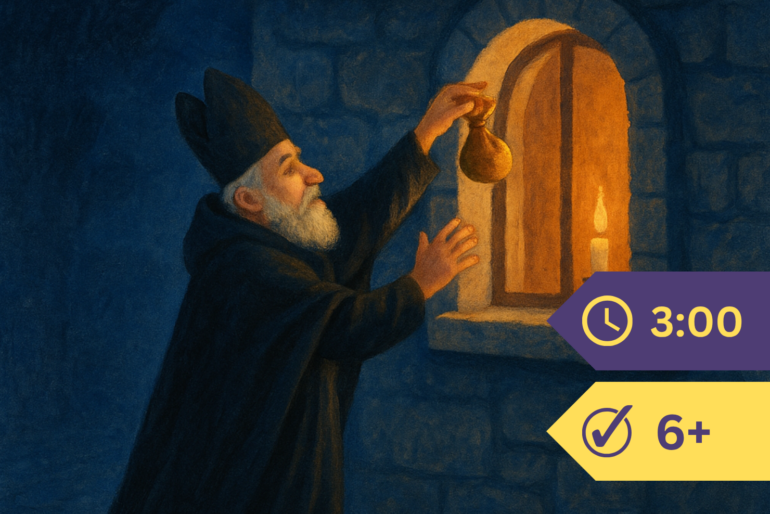
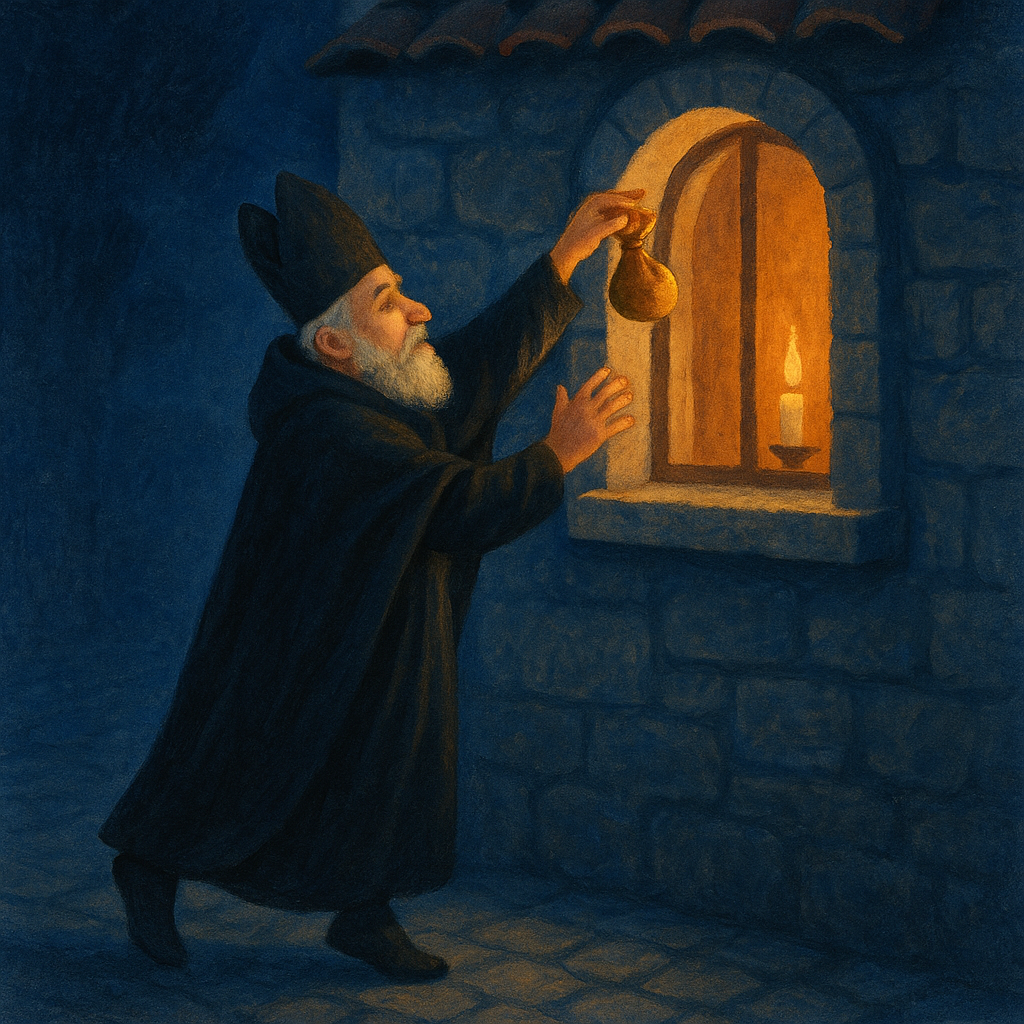
One day Saint Nicholas heard of the sad state of this noble family. So at night, when the maidens were asleep, and the father was watching, sorrowful and lonely, the good saint took a handful of gold, and, tying it in a purse, set off for the nobleman’s house. Creeping to the open window he threw the purse into the chamber, so that it fell on the bed of the sleeping maidens.
The father picked up the purse, and when he opened it and saw the gold, he rejoiced greatly, and awakened his daughters. He gave most of the gold to his eldest child for a dowry, and thus she was enabled to wed the young man whom she loved.
A few days later Saint Nicholas filled another purse with gold, and, as before, went by night to the nobleman’s house, and tossed the purse through the open window. Thus the second daughter was enabled to marry the young man whom she loved.
Now, the nobleman felt very grateful to the unknown one who threw purses of gold into his room and he longed to know who his benefactor was and to thank him. So the next night he watched beneath the open window. And when all was dark, lo! good Saint Nicholas came for the third time, carrying a silken purse filled with gold, and as he was about to throw it on the youngest maiden’s bed, the nobleman caught him by his robe, crying:—
“Oh, good Saint Nicholas! why do you hide yourself thus?”
And he kissed the saint’s hands and feet, but Saint Nicholas, overcome with confusion at having his good deed discovered, begged the nobleman to tell no man what had happened.
Thus the nobleman’s third daughter was enabled to marry the young man whom she loved; and she and her father and her two sisters lived happily for the remainder of their lives.