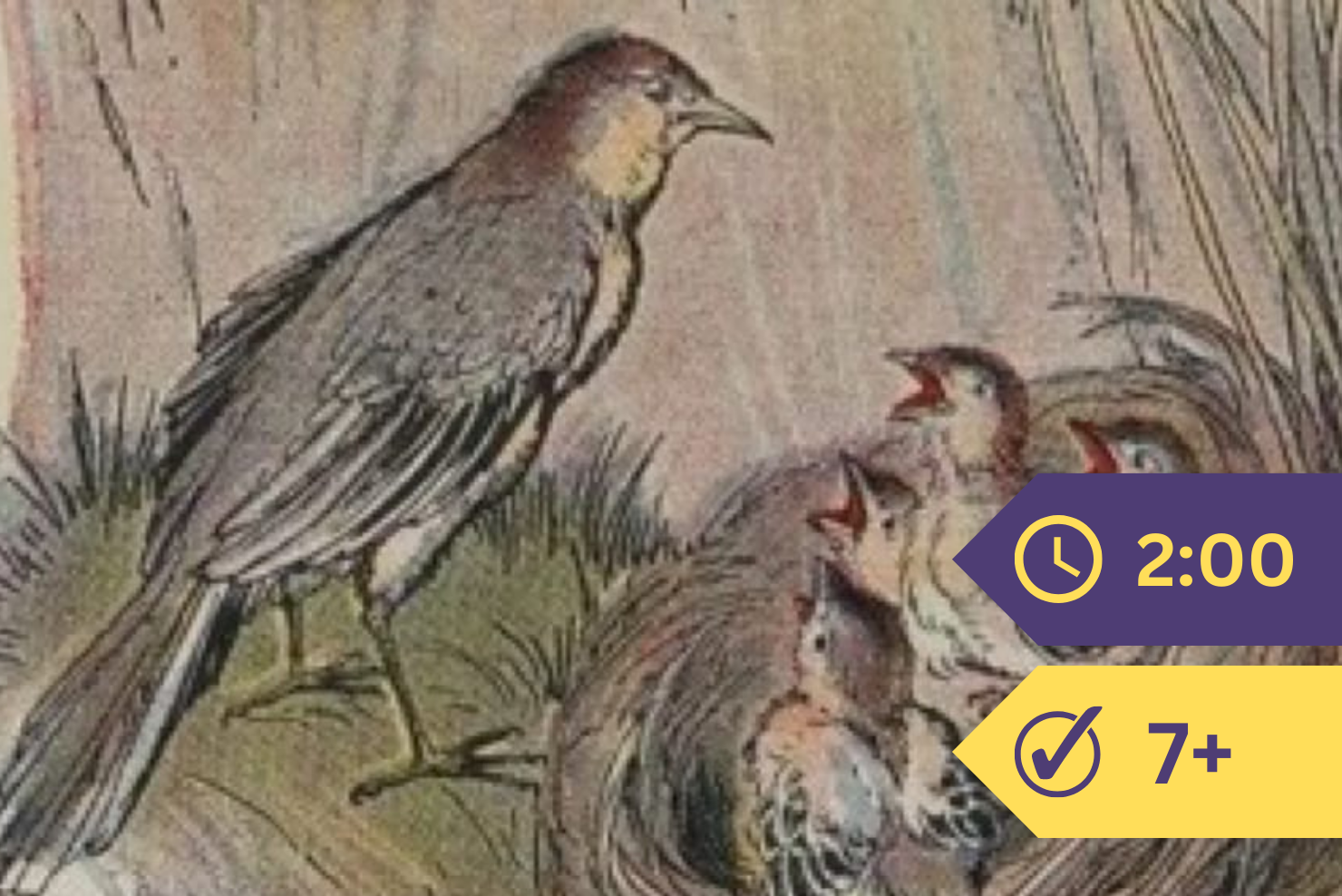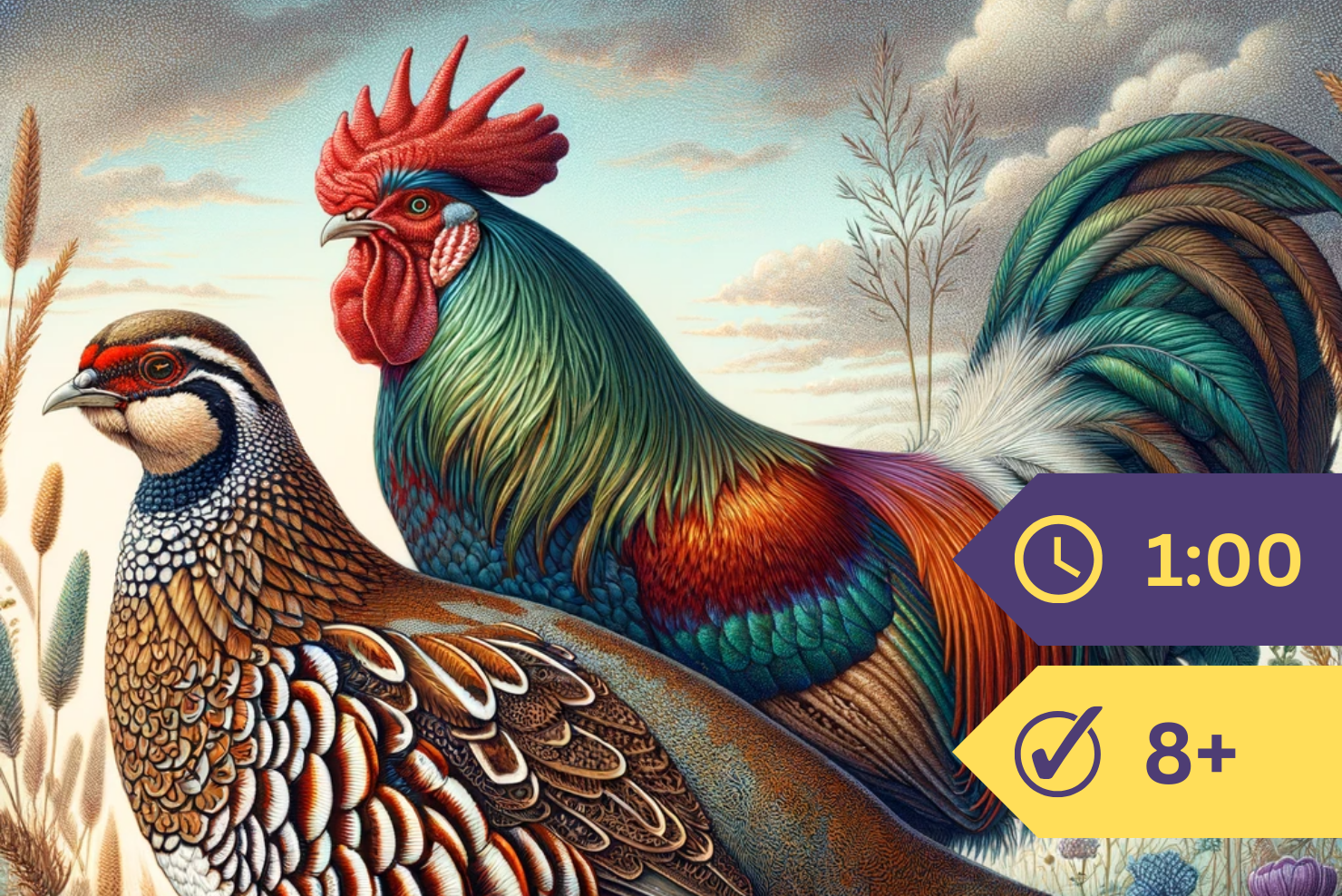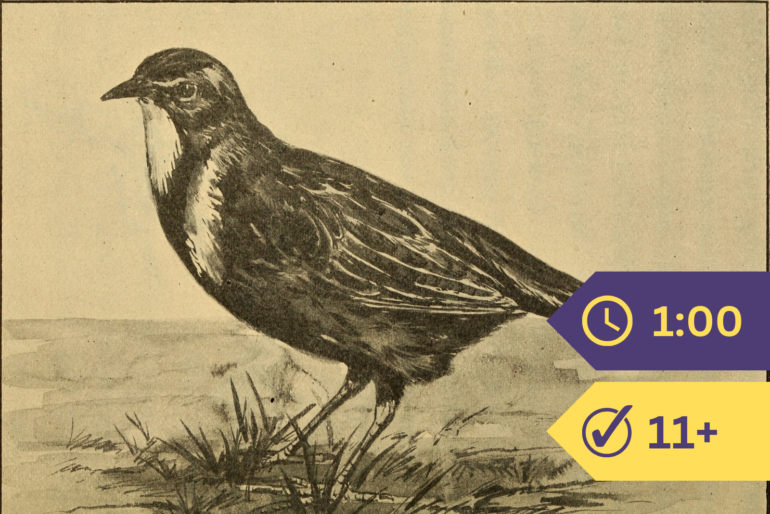
The Lark (according to an ancient legend) was created before the earth itself, and when her father died, as there was no earth, she could find no place of burial for him. She let him lie uninterred for five days, and on the sixth day, not knowing what else to do, she buried him in her own head. Hence she obtained her crest, which is popularly said to be her father’s grave-hillock.


Credits
Aesop was an ancient Greek storyteller, believed to have lived around the 6th century BCE, credited with hundreds of fables that use animals and nature to illuminate human truths. This particular fable belongs to a smaller, lesser-known branch of his work — the aetiological tales — which offer imaginative explanations for the natural features of animals, here accounting for the lark's crest as a monument to filial devotion.