There was once a poor farmer who had paid his landlord everything he owed for his land. In those days a man paid when the harvest came in and he had a little money, and that is what this man did — he paid every coin of it. But the landlord gave him no receipt, and soon after the landlord died.
The son came to collect the debt.
“But I paid your father,” said the farmer.
“Then show your receipt.”
“He gave me none.”
“Then you must pay me.”
The farmer stood in the road and did not know what to do. “St. Anthony, help me!” he said.
He had barely said the words when he saw a friar coming toward him. “What’s the matter, friend?” said the friar. “Tell me.”
When the farmer had told him everything, the friar said, “I know how to get you the receipt. Shall I tell you how?”
“God bless you, yes — but you can’t do it, the man is dead!”
“Never mind that. Listen carefully. Go along that path there” — and the farmer saw that a path had appeared where there had been none before — “and follow it until you come to a building with great iron gates that swing open and shut on their own, over and over. When the gates are open, go in boldly. Inside you will find a big room and a man at a desk writing without stopping, as if someone were driving him. That is your landlord. Ask him for the receipt, and he will not dare refuse you. But mind one thing: do not touch anything in the room.”
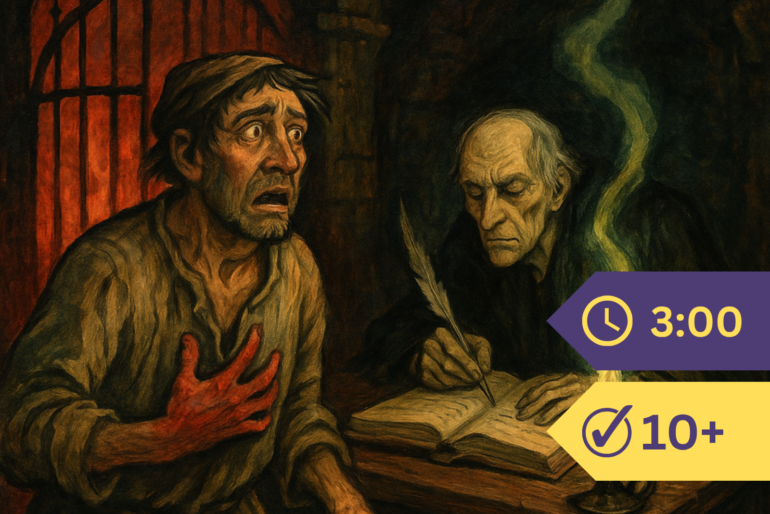
The farmer went as he was told, found everything just as the friar had described, and went in when the gates were open. The landlord was there, hunched over his ledger, writing as fast as his hand would go, his face dark and anxious.
“How did you get here?” he said when he recognized the farmer, and the farmer explained. The landlord took a page and wrote out the receipt without arguing — and then wrote a few extra lines on a separate paper, which he told the farmer to deliver to his son.
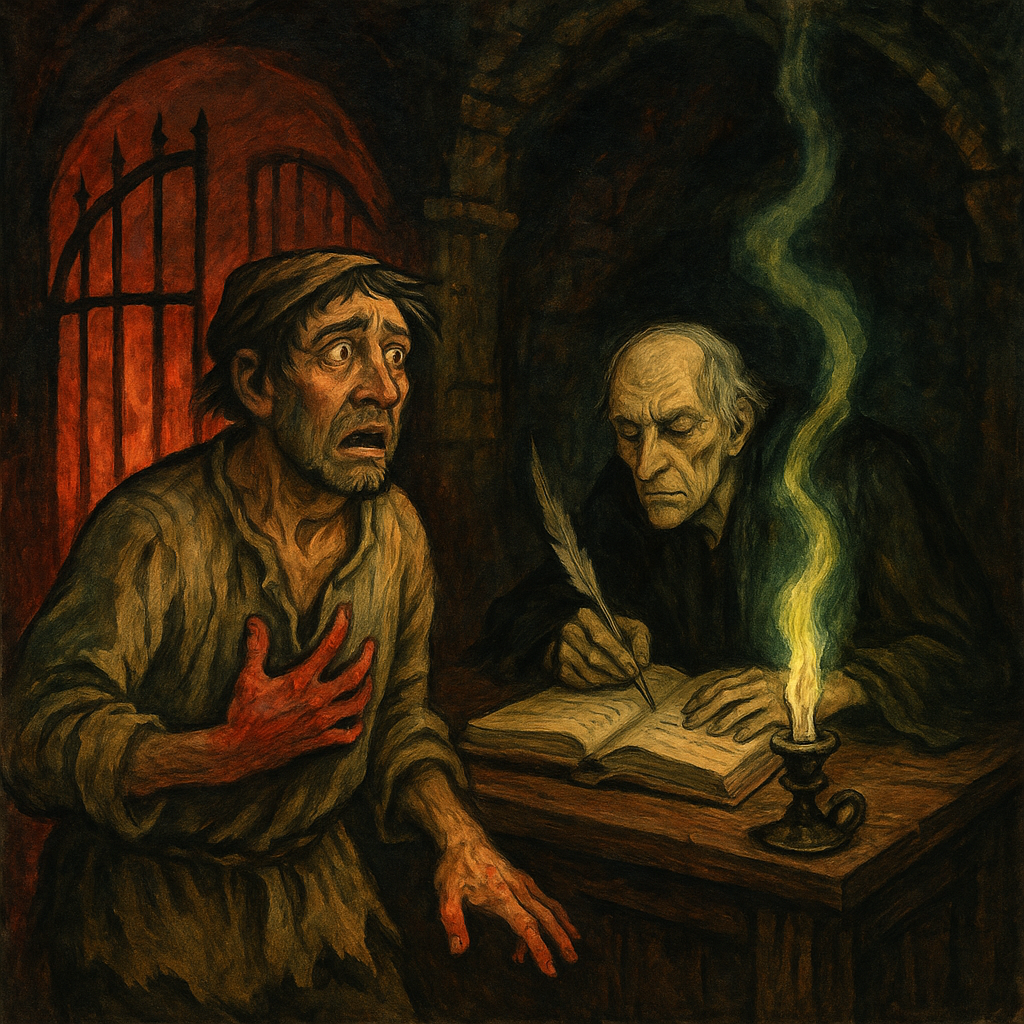
The farmer turned to go. But on the way out he couldn’t resist running his hand along the gleaming surface of a table he passed. The moment he touched it, the skin was burned clean off his hand, and he understood where he was: Hell. He watched for his moment, slipped through the gates when they swung open, and ran.
“What’s happened to your hand?” said the friar when the farmer came back — for the friar was no one other than St. Anthony himself.
The farmer explained and showed his bandaged hand. St. Anthony touched it, and it was healed. Then the farmer delivered the extra paper to the landlord’s son.
“This is my father’s handwriting,” said the son, going pale. “But my father is dead. How — “
The farmer told him. The letter said: I am in Hell. But you — mend your ways. Give to the poor. Make this man whole for the trouble I have caused him. Be just in everything, or you will come here too.
The son gave the farmer a large sum of money, and sent him home with his debt forgiven.