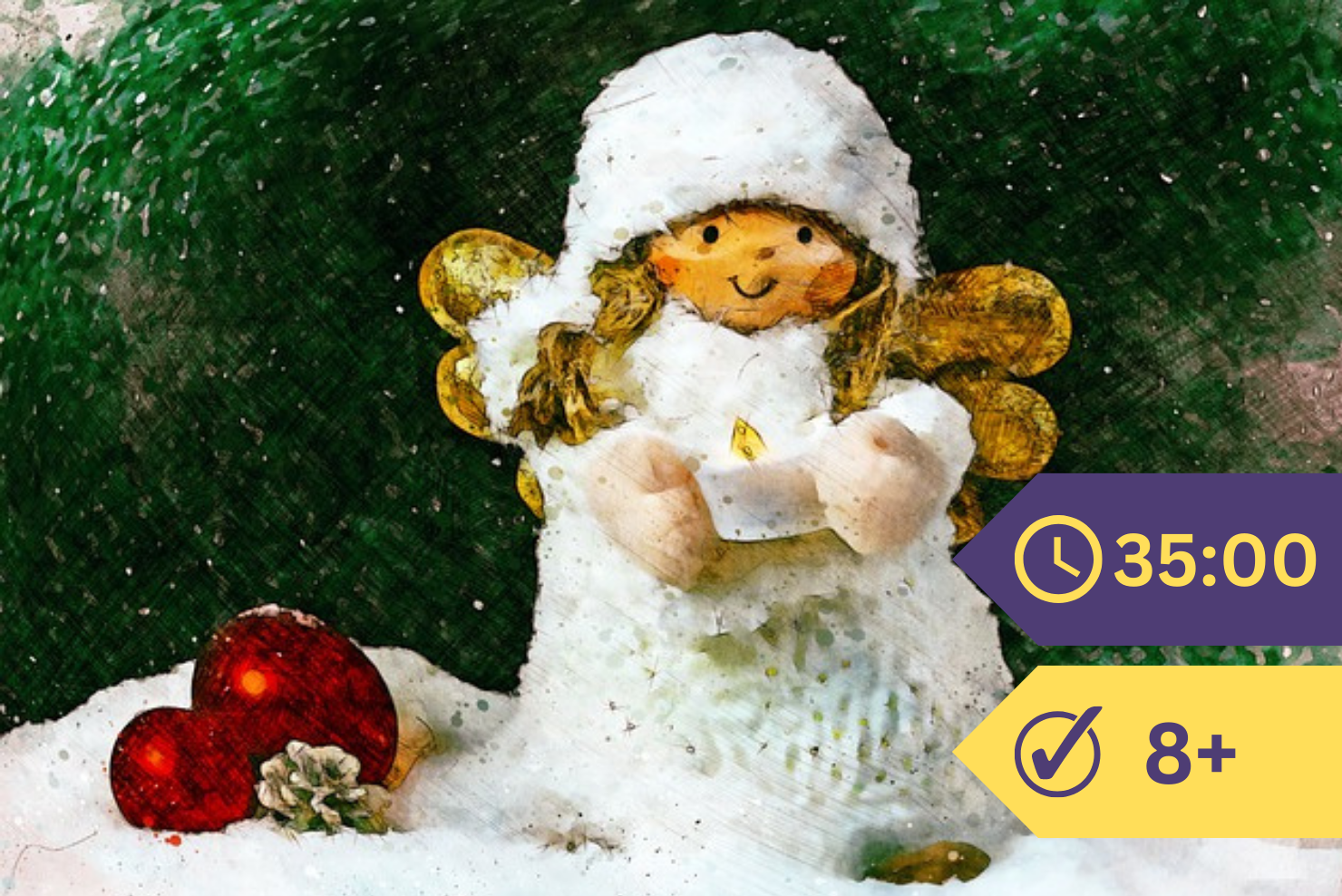
Of all the saints that little children love, is there any to compare with Santa Claus? The very sound of his name has magic in it, calling up visions of well-filled stockings with the presents we particularly want peeping over the top — or hanging out at the side, too big to go in even the largest sock. And there is something so mysterious and exciting about Santa Claus, for no one seems ever to have seen him. We picture him as an old man with a white beard, whose favourite way of entering our rooms is down the chimney, bringing gifts for the good children and something less pleasant for the bad.
Yet this Santa Claus, in whose name the presents come to us at Christmas, is a very real saint, and we can learn a great deal about him — only we must remember that his true name is Saint Nicholas. Perhaps the little children who talked of him long ago found “Saint Nicholas” too much of a mouthful and so called him their dear Santa Claus. But as we grow older, we learn that Nicholas is his true name, and that he was a real person who lived long ago, far away in the East.
The father and mother of Nicholas were noble and very rich, but what they wanted most of all was a son. They were Christians, and so they prayed for many years that God would give them their hearts’ desire. When at last Nicholas was born, they were the happiest people in the world.
They thought there was no one quite like their boy — and indeed he was wiser and kinder than most children, and never gave them a moment’s trouble. But while he was still young, a terrible plague swept over the country, and his father and mother both died, leaving him quite alone in the world.
All the riches his father had possessed came to Nicholas, and among them were three bars of solid gold. These golden bars were his greatest treasure, and he valued them above everything else he had inherited.
Now in the town where Nicholas lived there was a nobleman with three daughters. They had once been very rich, but great misfortunes had overtaken the family, and now they were so poor they had scarcely enough to live on.
One evening things had grown so bad that there was not even bread enough to eat, and the daughters said to their father: “Let us go into the streets and beg, or do anything to earn a little money — we must not starve.”
But the father shook his head. “Not tonight. I cannot bear to think of it. Wait at least until tomorrow. Something may happen to save us from such disgrace.”
As the family sat talking, Nicholas happened to be passing by — and since the window was open, he heard every word the poor father said. It seemed terrible that a noble family should be in want of bread, and Nicholas turned the problem over in his mind as he walked on. He knew they would be far too proud to accept charity openly, so he had to think of another way. Then he remembered his golden bars.
That very night he took one of them and crept secretly to the nobleman’s house, meaning to leave the treasure without anyone knowing who had brought it.
To his relief, he found that a small window had been left open. Standing on his tiptoes, he could just reach it — and so he lifted the golden bar and slipped it through, not waiting to see what became of it, in case anyone should see him. And now do you begin to understand why the visits of Santa Claus are so mysterious?
Inside the house, the poor father sat alone, watching sorrowfully while his children slept. He was wondering whether there was any hope left in the world when something heavy fell at his feet. He looked down — and there lay a bar of pure gold.
“Come quickly!” he called to his eldest daughter. “God has heard my prayer. Now we shall have enough, and to spare!”
The golden bar was sold to a money-changer who gave so much for it that the family could live in comfort and want for nothing. And there was enough left over that the father was able to give his eldest daughter a dowry, and before long she was happily married.
When Nicholas heard how much happiness his gift had brought, he determined that the second daughter should have a dowry too. He went as before, found the little window open again, and slipped in the second bar. This time the father was sleeping peacefully and did not find it until morning. Soon the second daughter, too, was provided for and wed.
The father now began to wonder. Golden bars did not normally fall from heaven — could human hands have placed them there? The more he thought about it, the stranger it seemed, and he resolved to keep watch every night in case a third bar should come for his youngest daughter.
And so when Nicholas crept up for the third time and dropped the last bar through the window, the father sprang out and caught him by his cloak before he could hide.
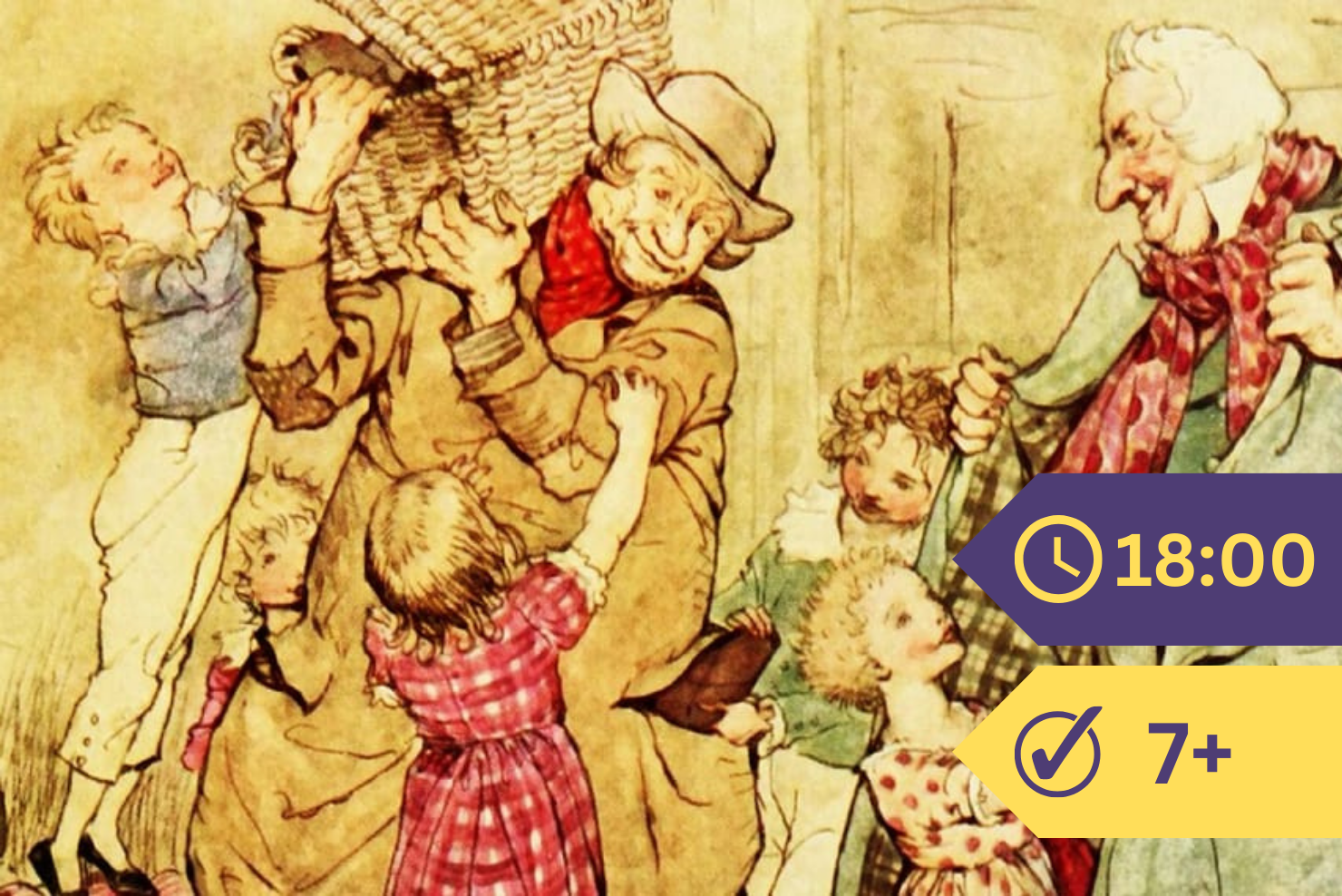
“Nicholas!” he cried. “It is you who have helped us in our need! Why did you hide yourself?” He fell to his knees and tried to kiss the hands that had been so generous.
But Nicholas made him stand up and give thanks to God instead, and begged him to tell no one the story of the golden bars.
This was only one of the many kind things Nicholas loved to do, and it was no wonder he was beloved by all who knew him.
Not long afterwards, Nicholas decided to enter God’s service as a priest. He longed to leave the busy world and live as a hermit in the desert, but a vision came to him in the night, telling him to stay among the people of the crowded cities. His desire to see the Holy Land was so strong, however, that he set off on a journey to Egypt and Palestine — though, remembering what he had been told, he did not linger there and soon turned for home.
On the voyage back, a terrific storm blew up. The ship was tossed and battered, great waves crashed over the deck, and even the most seasoned sailors gave up hope. Then Nicholas knelt on the heaving deck and prayed. Immediately, a deep calm fell upon the sea. The winds died away, the waves smoothed out, and the ship sailed on in peace.
So Nicholas came safely home to the city of Myra. He lived there quietly and humbly, and few people knew much about him — until the day the Archbishop of Myra died. All the priests gathered to choose his successor, and a sign was given to them: the first man to enter the church the next morning would be the one God had chosen.
Now Nicholas spent most of his nights in prayer and always went very early to mass. So the next morning, just as the sun was rising and the bells began to ring, he came walking up to the church door and was the first to step inside. He had barely knelt down to say his prayers when he found himself surrounded by a company of priests, who greeted him as their new archbishop, chosen by God to be their guide and leader.
Nicholas was made Archbishop of Myra, to the great joy of all in the city who knew and loved him.
Not long after, a terrible famine struck the land. The harvests had failed, and the people were starving. Nicholas, as a good bishop should, felt his people’s suffering as his own and set out to do whatever he could.
He went down to the harbour, where two ships lay loaded with grain, and asked the captains if they would sell him their cargo. They were willing enough, they said, but the grain was already promised to merchants in another country and they dared not sell it twice over.
“Do not worry about that,” said Nicholas. “Only sell me some of your corn for my starving people, and I promise you — there will be nothing missing when you reach your destination.”
The captains trusted the bishop’s word and handed over as much grain as he asked. And when they arrived to deliver the rest of their cargo to its owners, every last bag was accounted for and nothing was lacking.
Many stories were told about the good bishop in his lifetime, and many more grew up after his death — for the people loved to believe that Nicholas still cared for them and would come to their aid. Here is one of those legends, and all children who love Saint Nicholas will want to hear it.
There was once a nobleman who had no children and who longed for a son more than anything in the world. He prayed to Saint Nicholas day and night, and at last a boy was born to him. The father was so grateful that every year, on his son’s birthday, he held a great feast in honour of the saint.
Now the Evil One grew very angry each time this happened, for it sent people to church and brought honour to Saint Nicholas — neither of which suited him at all. Each year he tried to think of some way to put an end to these celebrations, and at last he decided that if he could only harm the child, the parents would turn against the saint forever.
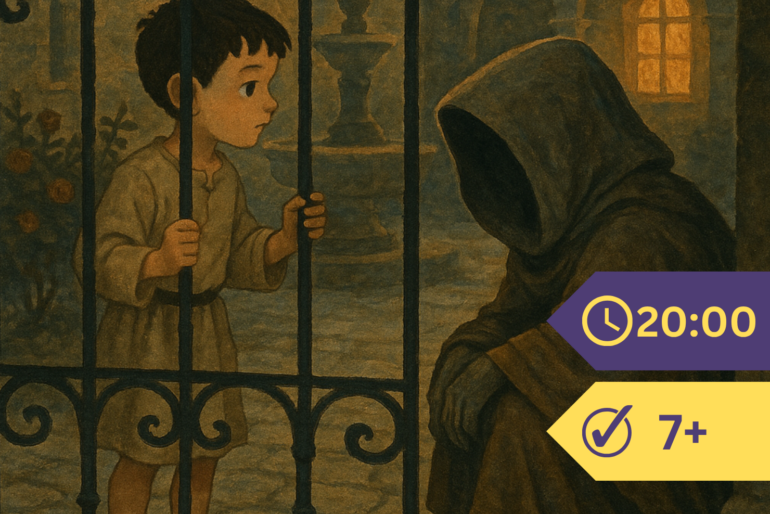
It happened that the boy’s sixth birthday was being celebrated with a greater feast than ever. Late in the afternoon, while all the gardeners and servants were off keeping holiday themselves, a curious-looking pilgrim came and sat down close to the great iron gates that led into the courtyard. He wore the plain robe of a poor traveller, but his hood was pulled so far forward that no one could see his face — which was just as well, for this pilgrim was a demon in disguise, and his dreadful features would have frightened anyone who caught a glimpse of them. He could not enter the courtyard, for the gates were kept locked and the porter was away at the feast.
Before long, the little boy grew tired of the birthday celebrations. Having eaten his fill, he slipped away to play in the garden. His parents let him go, forgetting for a moment that the gardener was not there.
The child wandered into the courtyard and, peering through the iron gates, saw the poor pilgrim resting outside.
“What are you doing there?” he asked. “Why do you sit so still?”
“I am a poor traveller,” said the demon, making his harsh voice as gentle as he could. “I have come a long way and I am weary and footsore. I have had nothing to eat all day.”
“Come inside then, and I will take you to my father,” said the child. “This is my birthday, and no one must go hungry today.”
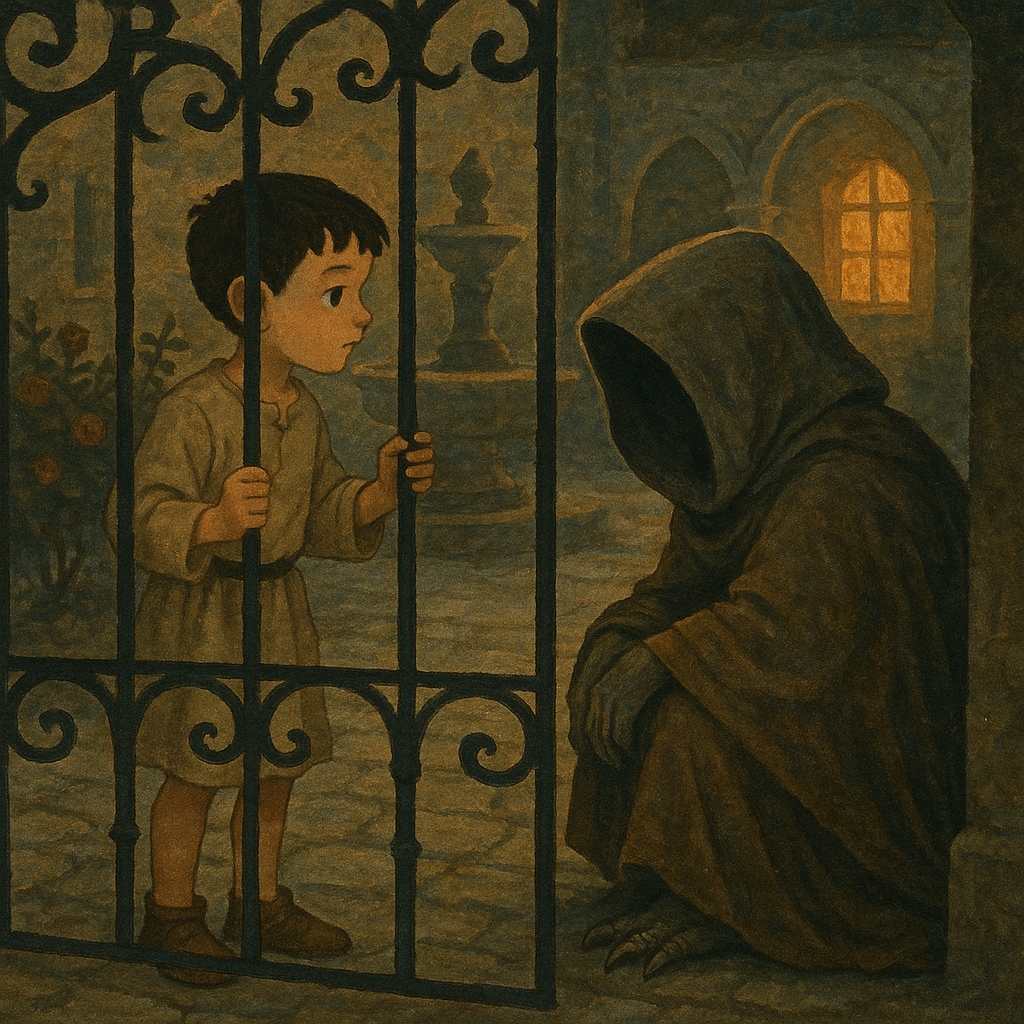
But the demon said he was too weak to walk and begged the boy to bring some food out to him. The child ran back to the banquet hall and said to his father, “Father, there is a poor pilgrim sitting outside our gates, half-starved and exhausted. May I take him something from my birthday feast?”
The father was delighted to see his son thinking of the poor, and willingly agreed.
And so the demon sat at the gate eating good food, all the while asking the boy careful questions. Did he often play in the garden? What did he like to do there? Would the gardener be about today?
“Oh, no,” said the child cheerfully. “Everyone is away for the holiday and I am quite alone.”
At that, the demon said he felt so much better that he thought he could walk after all, and he would very much like to see the beautiful garden and the fountain he had heard about. So the child climbed up and, with some effort, drew back the heavy bolts. The great gates swung open and the demon walked in.
As they went towards the fountain, the child put out his hand to lead the way. But even the demon shrank from touching something so innocent, and folded his arms inside his robe so that the child could only grip a fold of his cloak.
“What strange feet you have,” the child remarked. “They look like they belong to an animal.”
“Yes, they are odd,” said the demon, “but that is simply how they are made.”
The boy noticed the demon’s hands too — they were like the paws of a bear — but having already mentioned the feet, he was too polite to say anything more.
Just then they reached the fountain. With a sudden movement, the demon threw back his hood and showed his terrible face. Before the child could cry out, he was seized by those hairy hands and thrown into the water.
At that very moment the gardener was returning to his work. He saw from a distance what had happened, ran as fast as his legs would carry him — and arrived at the fountain just in time to see the demon vanish, leaving the child’s small body floating on the water. He pulled the boy out at once and carried him, dripping and still, up to the castle.
Every effort was made to bring the child back to life, but nothing seemed to work. He neither moved nor breathed. The day that had begun in such joy ended in the bitterest grief. Yet the parents did not give up hope entirely. They knelt by their son’s little bed and prayed with all their hearts to Saint Nicholas — who had given them the child in the first place — that he would give him back.
As they prayed, something moved. To their joy and astonishment, the boy opened his eyes and sat up, and within a short time was perfectly well.
They asked him eagerly what had happened. He told them about the pilgrim with the strange feet and hands, who had thrown back his hood at the fountain and shown his terrible face. After that, he could remember nothing — until he found himself in a beautiful garden, the most beautiful he had ever seen. Lilies grew there like white stars, and roses lovelier than any in his own garden, and the leaves of the trees shimmered like silver and gold. It was so wonderful that for a while he forgot all about home, and when he finally remembered and tried to find his way back, he was completely lost.
As he was wandering about, an old man came down the garden path. He smiled so kindly that the boy trusted him at once. He wore the robes of a bishop and had a long white beard and the gentlest face the child had ever seen.
“Are you looking for the way home?” the old man asked. “Do you wish to leave this beautiful garden and go back to your father and mother?”
“I want to go home,” said the child, his voice catching, “but I cannot find the way, and I am so tired of searching.”
The old man stooped down and lifted him in his arms. The child rested his head on the old man’s shoulder, and, worn out with wandering, fell fast asleep — and remembered nothing more until he woke up in his own little bed.
Then the parents knew that Saint Nicholas had heard their prayers and gone himself to bring their boy safely home.
They loved and honoured the good saint more than ever after that. Which, all things considered, was the only reward the demon got for his troubles.
That is one of the many stories told of Saint Nicholas, and it brought great comfort to his people to think that, though they could no longer see him, he was watching over them still.
Young women who needed help remembered the golden bars and felt sure the good saint would not let them want. Sailors in a storm remembered the terrible seas that had gone calm at his prayer. And little children have perhaps remembered him most of all — for when Christmas draws near, who is more in their thoughts than Saint Nicholas, their dear Santa Claus? He may have become, in children’s imaginations, a sort of magical gift-bringer; but they should never forget that he was, first and last, a kind bishop who loved to make people happy — and for that reason, he is still called the patron saint of children.