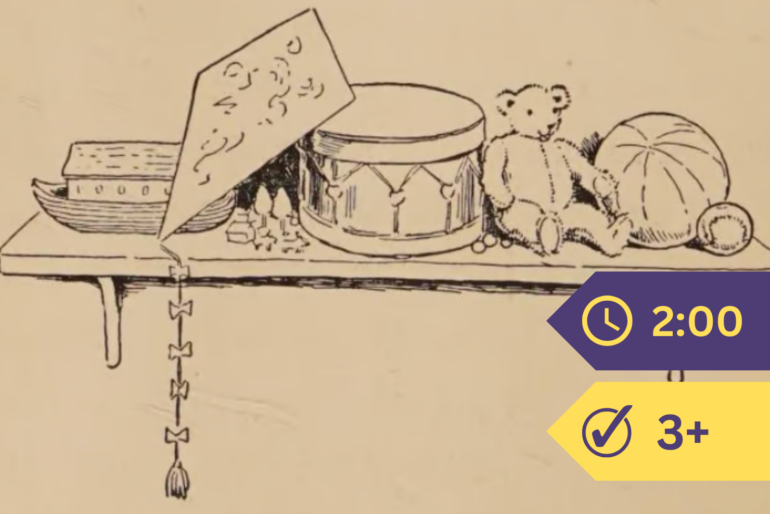
In an old city, there was a Toy Shop. It was located in a basement, and you had to go down four steps to reach the door. However, the shop window was easily visible from the sidewalk, and there was never a day that someone did not stop to look at it.
One day, it might be filled with bright balloons that resembled great colored lights; and the next day, it showcased jumping-jacks. Sometimes, a toy farm with a little red house, trees, horses, cows, and chickens were set out on the window shelf. On other occasions, white woolly sheep stood amidst green-paper grass, or a long line of comical yellow ducks-on-wheels might be on display.
Regardless of how the window was decorated, it was as pretty as a picture in a storybook. Anyone who saw it immediately felt the urge to step into the shop.
A little old lady with silvery hair and pleasant twinkling eyes managed the Toy Shop, and all the children affectionately called her the Toy-Lady. They were great friends with her, as they believed nobody knew more about toys than she did.
The Toy-Lady could spin tops, run toy trains, blow up balloons, and play on the doll pianos. She also had an in-depth understanding of children’s preferences. If someone asked her, “What would you buy for a little boy?” or “What do you think would please a little girl?” she could offer the perfect suggestions.
Everybody enjoyed buying toys from her, and whoever went to the Toy Shop once was almost sure to go again.