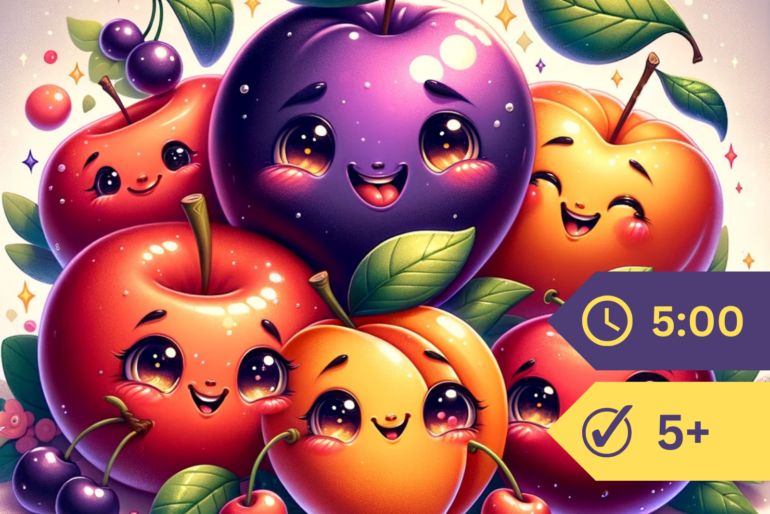
The apple has three cousins, all of whom are very much alike. These cousins are the cherry, the plum, and the peach. All three belong to the Rose family.
Have you ever noticed the great family likeness between these three fruits?
Look at them in the pictures. To be sure, they are of different sizes, but they are almost alike in shape.

And if you should cut them open lengthwise, right through the stony center, all three would look much like the next picture, which is taken from a peach. All these fruits have the soft outer part which you find so pleasant to the taste.

Within this, in all of them, is a hard object, which we call the stone or pit; and inside this stone or pit, in each case, lies the seed.

These next pictures show you two views of the flower of the cherry.
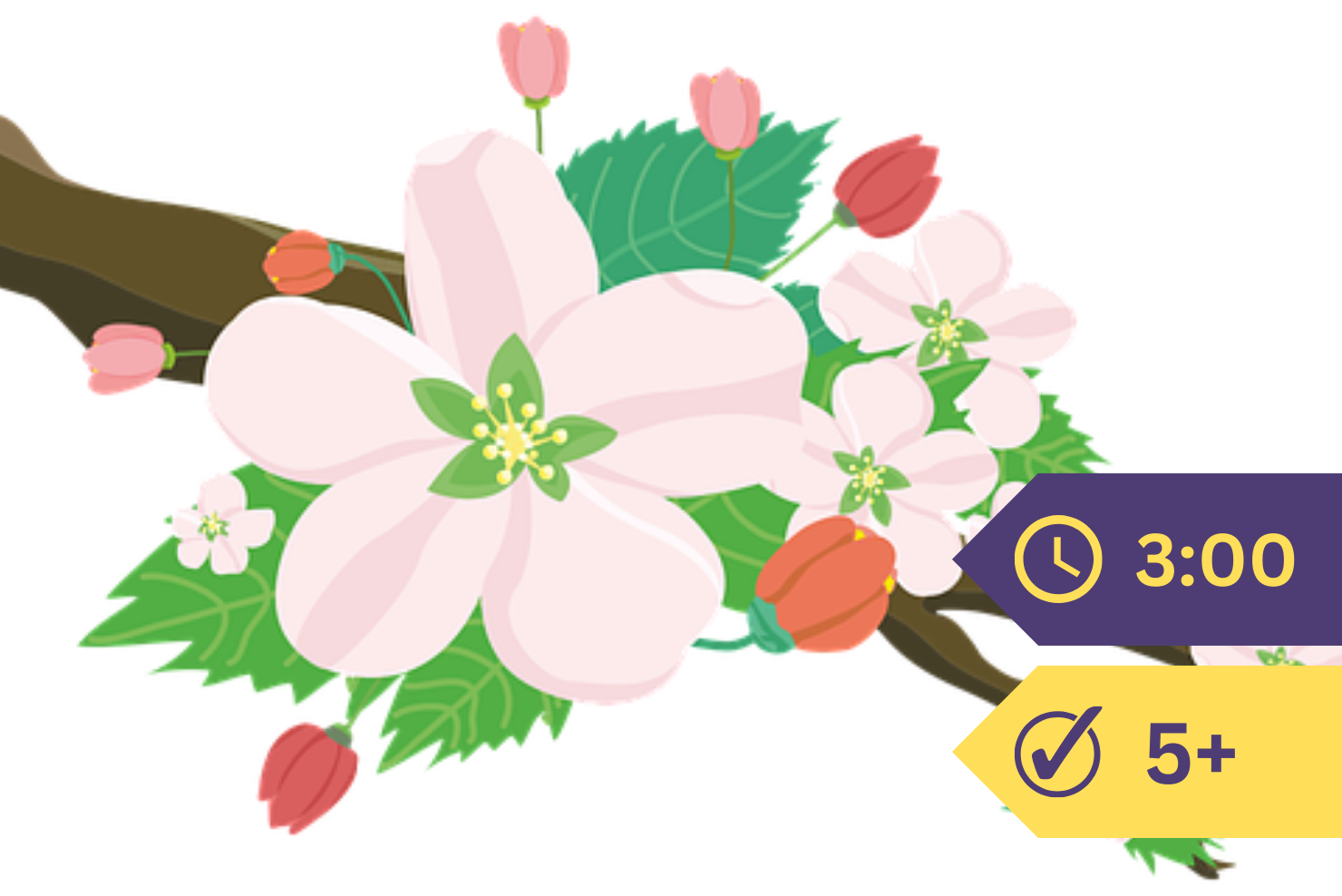
Here you see a likeness to other members of the Rose family, to the blossoms of the apple and the pear.

You see that the green cup is cut into five little leaves (in the picture these are turned back and downward). You see also the five white flower leaves, and ever so many of the pins with dust boxes. But you find only one of those pins without dust boxes; and this, as you now know, has a seedbox below.

Well, that is all right. The cherry blossom has but one of these pins, and the flowers of the peach and of the plum have only one.

The picture below shows you a cherry blossom cut open. Here you see plainly the single pin with a seedbox.
This seedbox with its case is what grows into the cherry. The white flower leaves, and the pins with dust boxes, fall away. In the cherry flower the green cup also disappears, instead of making the best part of the fruit, as it does with the apple and the pear. And the upper part of the seedbox pin withers off; but the seedbox below grows juicy and ripe and red, at least its outer case does.

By the end of June you take out the long ladder and place it against the cherry tree. Seating yourself on one of its upper rungs, you swallow the outside of the shining little ball we call the cherry, letting the stony seedbox inside drop down upon the ground, where all ripe seeds belong.
The story of the plum and of the peach is almost the same as the story of the cherry. If you understand how the single seedbox of the cherry blossom turns into the cherry fruit, then you understand how the same thing happens with the single seedboxes of the plum and the peach blossom.
You know that in the flowers of the pear and the apple there were several of these pins without dust boxes; and although these were joined below into a single seedbox, this had separate compartments for the many seeds.
But the single seedboxes of the cherry, the plum, and the peach, have but one hollow. Usually in this hollow we find only one seed. So you see that these three fruits make a little group by themselves because of their great likeness to one another.