The cell in which Leaf Green lives has no little mouths such as we saw in the picture some time ago.
Its walls are so delicate that the carbonic-acid gas passes through them quite easily,—as easily as the gas escaping from an unlighted jet in the schoolroom could pass to your nose even if you wore a veil, or as easily as water would pass through a piece of muslin.
But between Leaf Green’s cell and the outer air are other cells,—those which make up the outer covering or skin of the leaf. These are arranged so as to form the openings or mouths about which we have read. By means of these mouths the gas makes its way through the leaf’s thick skin.
The plant needs as food the carbon in this gas, and so keeps fast hold of it; but the oxygen is not needed for this purpose, and so it is pushed back into the air.
Now, we learned in the last chapter of one very great service rendered to animals by plants. We learned that plants took carbon from the air, and turned this into food for animals.
But there is still another way in which plants serve animals. And once more it is the work of Leaf Green and Sunbeam that is of such importance to us; for when they take hold of the carbon, making it into living food for man and beast, they take from the air the gas that is poisonous, and send back into the air the gas which gives life and health.
This poisonous gas which they lay hold of, you remember, is carbonic-acid gas; and carbonic-acid gas is what we animals send out of our bodies with every breath, for it is the part of the air which poisons us. When the schoolroom is so close that our heads ache, it is because so many children have been breathing out this gas, and we are forced to take it back into our bodies again.
But when this gas is stolen by the plant, and robbed of its carbon, it is no longer carbonic-acid gas. Nothing of it is left but the oxygen which is pushed out through the cell walls; and this oxygen is as good to breathe as the other gas (carbon and oxygen mixed) is bad.
So the plant finds good what we find poisonous. It takes in and keeps that which hurts us (the carbon), and sends out that which helps us (the oxygen).
So you see that our lives depend on the lives of plants in two ways:—
- The plants give us the food we need for life.
- The plants take from the air the gas that poisons us, and give to the air the gas which we need for life and health.
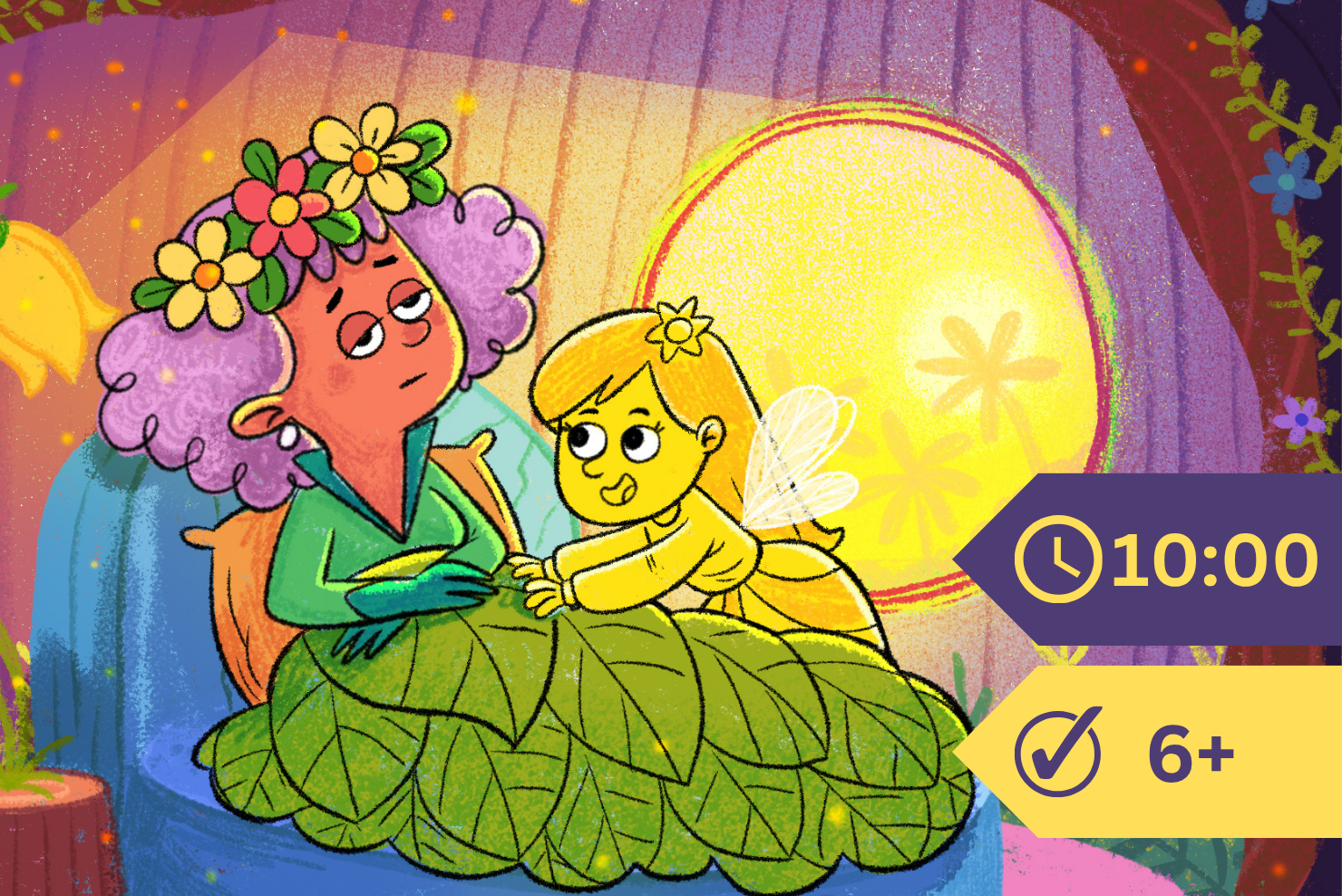
And in both cases it is Leaf Green and Sunbeam who are making life possible for us.
Remember the great services of these two fairies when next you pass a green tree which is bathing itself in sunshine.