It was Christmas night at Castle Havenough, in the Land of Nothing Strange. It had been a day of gifts and guests, and now the king and queen had gone to a grand dinner in the banquet hall, leaving the young prince and princess alone to spend the rest of the evening as they chose.
A great fire blazed in the fireplace. It cracked and roared and chuckled as the children threw in pitchy sprigs of evergreen. The Christmas tree glittered across the room, bespangled with tinsel and tassels, now glowing in the firelight as if every twig were set with rubies and diamonds. The floor, the chairs, the table — everything — was heaped with gifts, for this young prince and princess had received everything they had wished for. And it was almost always so: whatever they wished for, they received. It seems strange to us that they were not always entirely happy. But it was not strange at all in the Land of Nothing Strange.
Before he left for the banquet, the king had called the children to his side and put his arms around their slender shoulders. “My children,” he said, “I hope you have had a happy day and received everything you desire. If not, I promise you this: if you can agree exactly on what you wish and tell me — if money can buy it, it shall be yours.”
“But cannot money buy everything, Father?”
“No, my son. Not quite everything.”
“And if money cannot buy it?”
“Then, princess, I will try to get it for you some other way.”
“And if you cannot?”
“Well — then I will tell the Wishing Man.”
And with that he was off. But not before telling them that, since this was Christmas Day, they might stay up just as late as they wished.
Just as late as they wished! Why, this was the very best Christmas gift of all — because not even princes and princesses, you know, can sit up just as late as they wish very often.
But first they had to decide: was there anything more they wanted, and could they agree on a single wish?
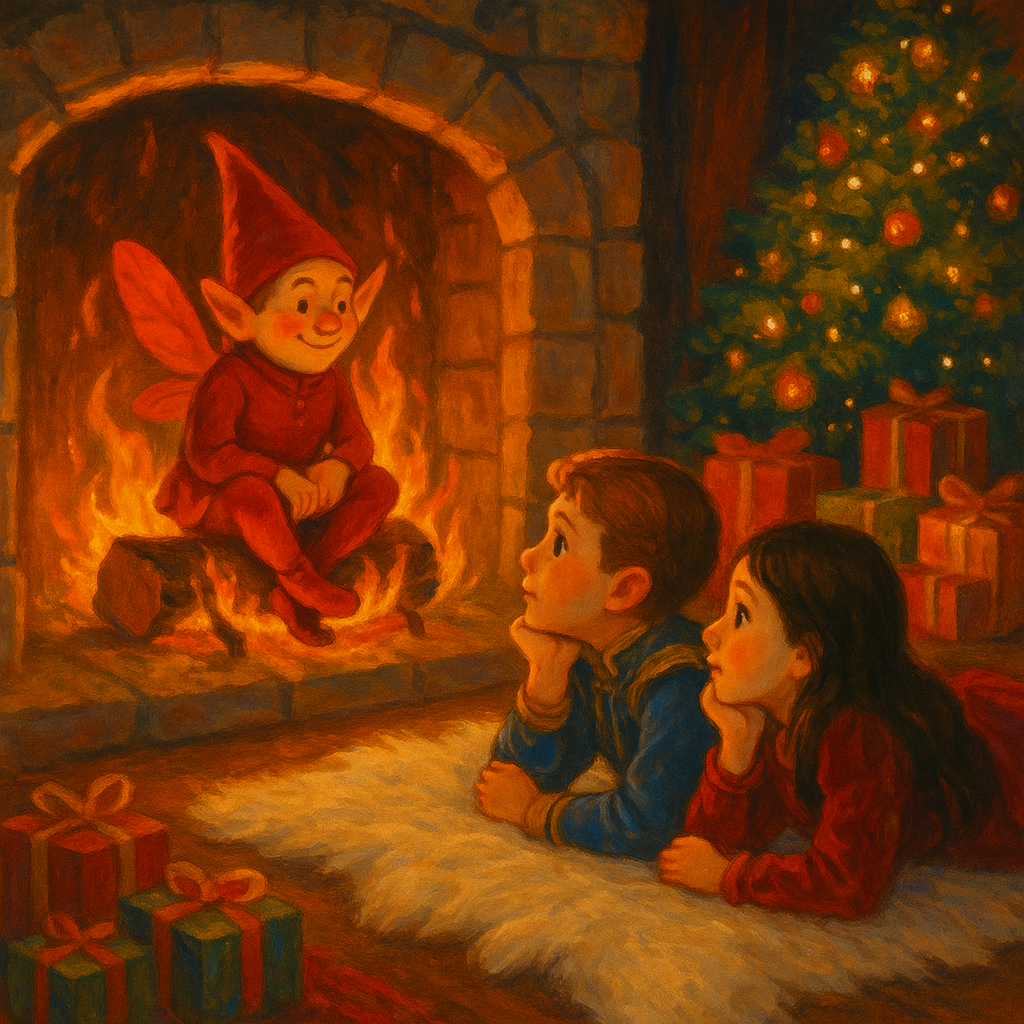
So they threw themselves full-length on the floor before the fire, on the great white bearskin rug, the one with the snarling head that showed its long, gleaming, harmless teeth. With their chins on their hands and their elbows on the floor, firelight throwing shadows across their faces, they lay and talked.
“You wish first,” said the prince, who hadn’t quite made up his mind and wanted time to think. “You’re younger, and you’re a girl. What do you wish?”
“I wish that all the snow were sugar and all the mud were chocolate. Don’t you?”
“No, of course not. You couldn’t go sledding! The runners would stick, and if you fell you’d go heels over head. And there’d be no sugar in summer, and no chocolate except when it rained.”
“I never thought of that,” said the princess. “What do you wish?”
“I wish that my Christmas stocking were as tall as this house, and I had to take a ladder to get up to it and another ladder to get down inside it. Don’t you?”
“Why, no, of course not.”
“Why not?”
“Because a Christmas stocking is the same size as all your other stockings — and if your Christmas stocking were as big as the house, all your stockings would be, and you’d never get one on. And if you did, it would go right over your head.”
“That’s true,” said the prince. “I never thought of that. Well, what do you wish?”
“I wish every day were Christmas, and there wasn’t any school. Don’t you?”
“No! If there were no school, you’d be a dunce. And who wants to be a dunce? I’ll tell you what I wish.”
“What?”
“I wish that every day were just as nice as Christmas — but different. Different, you know, but just as nice. That’s what I wish.”
“So do I.”
And so they agreed: every day should be like Christmas — different, but just as nice. They would tell their father in the morning.
“But do you suppose money could buy it, prince?”
“I don’t know. I’m afraid it can’t. But Father said he’d tell the Wishing Man. I wonder what he looks like. I’d like to see him.”
“So would I.”
Just then there was a commotion in the fireplace. It sounded as if a log had fallen forward. And so it had. But something else had happened.
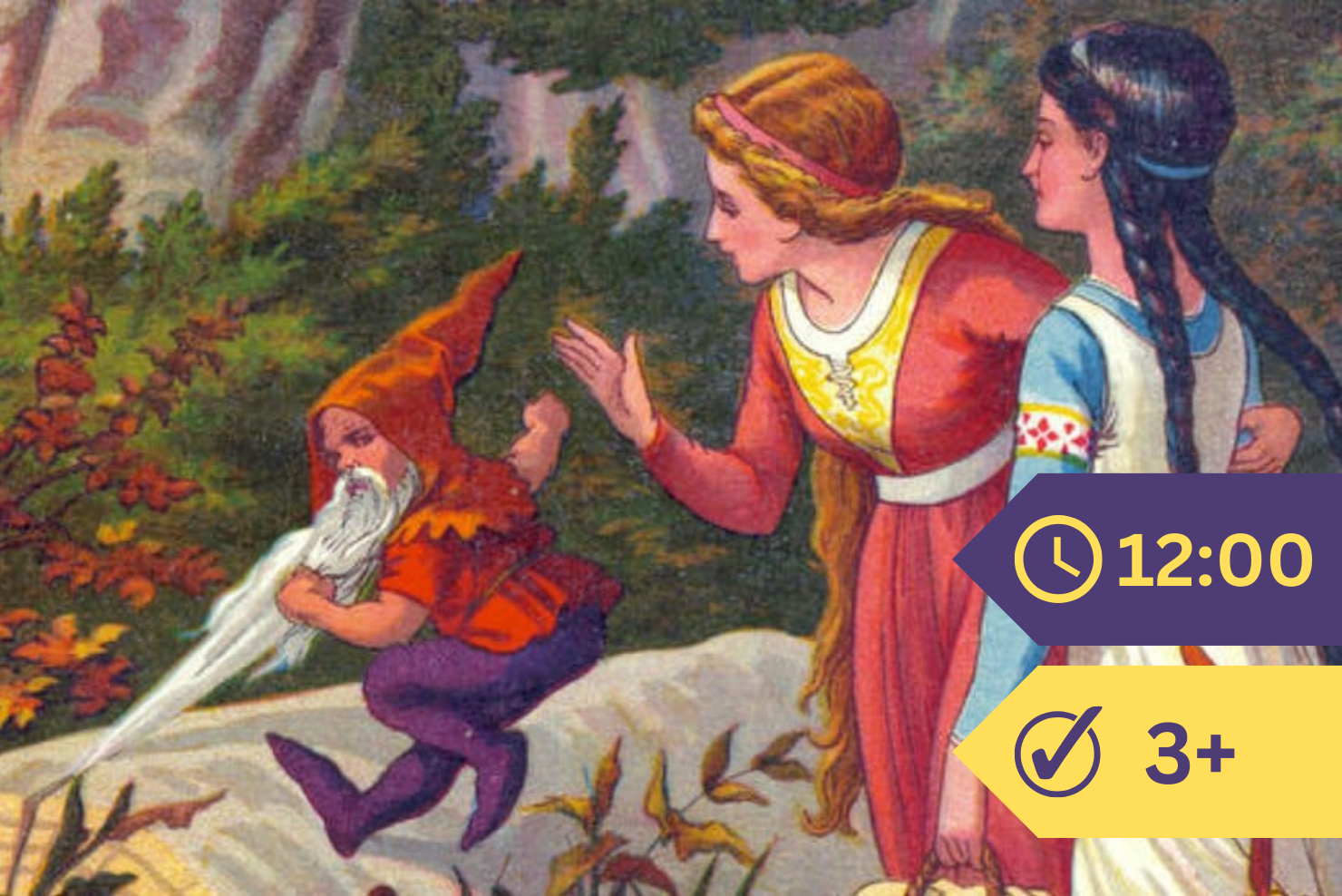
On the blazing backlog sat the funniest little man you would ever see in all your travels around the world. He was red from the top of his cap to the tip of his boot. His coat, flung over his little red wings, was red. His face was red — but perhaps that was just the reflection from the coals. You would have thought he’d burn up, or at least jump out in a hurry. But he did nothing of the sort. It seemed very strange — but it was not strange at all in the Land of Nothing Strange. Sitting there on that blazing log, hands on his knees, flames leaping around him, feet resting in the red-hot coals, he looked as comfortable as if he had found the finest armchair in the world.
“Well?” the little man drawled.
“Well?” drawled the prince and princess together, sitting up in amazement.
“Well? I’m here.”
“Who’s here?” asked the prince.
“Why, I am. You said you’d like to see what I looked like, and so I’ve come. I’m here.”
“Are you the Wishing Man?” asked the princess.
“That’s my name.” And then he broke into a song:
“I have wishbones on my fingers,
I have mystery in my eyes;
My clothes are lined with four-leaf clovers
And are stained with magic dyes.
I have pockets full of rabbits’ feet,
And amulets and charms;
Just for luck I pick up horseshoes;
I have tattoos on my arms.
I know a world of wonders,
And if you would believe,
I have fortunes in my wallet
And surprises up my sleeve.
I come from a distant country,
Away up near the sky,
From the golden palace, Overhead,
In the land of Wonder Why.
I’m the best of friends of children,
And I’ll help you if I can;
Now tell me what your wishes are,
For I’m the Wishing Man.”
They told him their wish — that every day should be just as nice as Christmas, different but just as nice.
“That is a good wish,” said the Wishing Man. “I hope you’ll get it, but you never can tell.”
“You never can tell! Aren’t you the Wishing Man? Don’t you give people their wishes?”
“Oh, no! I’m not wise enough for that. The Angel of Blessings does that. I simply go through the world and carry to him all the wishes I hear people make.”
“How do you carry them?” asked the prince.
“Oh, right here.” He pointed to a little jeweled box at his belt. “See, I have a padlock on it, and I never lose a wish.”
“Are you the only wishing man in the world?” asked the princess.
“Oh, bless my soul, no! If I were, do you think I’d have time to sit here on this nice cool seat and chat with you? There are a great many of us — we all look exactly alike, dress exactly alike, and we are all twins.” That seemed strange, but it was not strange at all in the Land of Nothing Strange.
“My country is the Land of Wonder Why. I come here every morning and stay until my little box is full of wishes, then take it back. By the way, I see it’s full now, and your wish is right on top. Would you like to come with me to see the Angel of Blessings? Those who speak with him are most likely to have their wishes granted. Many people never get their wishes simply because they don’t understand how to get them. Would you like to come?”
“Is it very far?” asked the prince. “Could we be back before bedtime?”
“Oh yes, with time to spare.”
“Won’t we be cold?” asked the princess.
“We’ll fly very fast. You won’t have time to shiver more than once before we’re there. Come, then — get on my back.” He tucked his red coat between his little wings, shook them out, and made ready to fly.
“Now part your hair in the middle, so you’re not heavier on one side than the other. Step right in — the fire won’t hurt you. Prince, put your right arm around my neck and hold my left wing with your left hand — so. Princess, put your left arm around my neck and hold my right wing with your right hand — so. Ready?”
Up they went, and off they went, through the frosty air, faster than the fastest aeroplane. Below lay the beautiful white snow; above hung the beautiful white stars. They had just shivered once and were nearly ready to shiver again when the Wishing Man folded his red wings and they landed on the doorstep of the golden palace, Overhead, in the Land of Wonder Why.
The Wishing Man took them each by the hand, walked up the white marble steps, opened the great doors — which swung at a touch — and stepped inside.
Anyone could see this was the House of Wishes. There was everything here that anyone had ever wished for, or ever could wish for. Along the right-hand wall stood great possessions: carloads of gold heaped up, carloads of silver, houses of every kind, farms stretching as far as the sun shone, and gardens with every flower that had ever bloomed anywhere in the world. On the other side were things to wear and things to eat — gowns, furs, hats, suits; and beyond those, bricks of ice cream as big as ice cakes, plum puddings as big as your head, whole mince pies you could eat entirely. Straight ahead, across the room, were the very best things of all — just plain enough to eat, happy days and sleepy nights, and good friends. And behind everything you could see, stretching back and back, were all the things nobody could ever list, because there was everything that anyone had ever wished for, and everything that anyone could ever wish for.
In the center of the great hall, at the end of a golden carpet, stood a platform. On it sat a great white desk, bright as the moon. At the desk, clothed in white, sat the Angel of Blessings. At his right stood his messengers — he called them pages. Some were rich, some poor; some wore fine clothes, some wore rags; but every face shone like a star. It was their duty to carry blessings to those whose wishes had been granted.
Along the golden carpet, the little red Wishing Men came and went continually, passing each other as they brought new wishes to the desk and hurried out to listen for more. All day and all night this went on, and all the while the Angel of Blessings opened the wishes and read them. Sometimes he shook his head sorrowfully, and even frowned — and that meant the wish was lost, dropped into the waste-basket at his left, which fell to the bottom of the earth. But when he smiled and nodded, the wish was granted, and he handed it to a page, who dropped to one knee, received it, and carried it to the wisher.
The Wishing Man brought the prince and princess to the great white desk and announced them: “Prince and Princess Havenough, from the Land of Nothing Strange.” The children, trained in court, made their most beautiful bow and said nothing until the Angel spoke. The Wishing Man laid their wish on the desk from his little casket, then retired with many a bow.
“Prince and Princess Havenough,” said the Angel, reading the wish with a smile, “it is a good wish. It will be granted — on one condition. That you become my pages, carry my blessings, and deliver to people the wishes I send to those whose wishes have been granted. Will you be my pages?”
“Must one go very far?” asked the prince. “We are small; we’ve never traveled far; we don’t know where many places are.”
“Not at all,” said the Angel. “Merely to the Land of Nothing Strange — to your home, to your friends, to your acquaintances. Will you be my pages?”
“We will, Mr. Angel,” and they bowed.
“Then stand here at my right. I may have commissions for you now. Here is a wish from a little boy in the Land of Nothing Strange, not far from Castle Havenough. He wishes he had a pair of skates — all his friends have some, and he has none.”
“He may have a pair of mine,” said the prince. “I will take them to him.”
“Good! His wish is granted.” And the Angel handed the prince the wish, with the boy’s name and address.
“And here is a wish from a little girl nearby. She wishes she had a doll. She asked Santa Claus for one last night, and he must have forgotten it. She wants one very much.”
“She may have one of mine — I have so many,” said the princess.
“Good! It is granted.” And he handed the wish to the princess.
“Here is another,” said the Angel. “It is from the teachers and servants of Castle Havenough. They wish they were happier — that the prince and princess were somewhat more thoughtful and kind. Shall their wish be granted?”
“We will try, Mr. Angel.”
“Good! And here is one from the royal house itself — I see the seal. Why, it is from the King and Queen of the Land of Nothing Strange. ‘We wish that our son and daughter were more dutiful, thoughtful, loving, and kind.’ Shall the wish be granted, pages?”
“We will try, Mr. Angel.”
“Good! That is enough for tonight. Tomorrow I shall have more blessings for you to carry. Every day I will send you some, as long as you serve me. And I promise you that every day will be as happy as Christmas — different, but just as nice. Wait a moment.” He wrote something on a card and handed it to them. He called it their Commission:
Be it known to all those who may read this short line,
That the prince and the princess are pages of mine;
They carry my blessings, will seek what you wish,
Will be kind and regardful, polite, unselfish.
For wages, I now and hereafter decree,
Their days shall be happy as happy can be.
Then he pressed a little golden button. The Wishing Man returned, took the prince and princess by the hand, and led them down the golden carpet and out through the great doors. In less time than it takes to tell, they were back — lying once more on the white bearskin before the flickering fire.
The Wishing Man wanted to be off, but the children begged him so eagerly to sing again that he consented, “Just by way of encore,” and sang his song once more. And then he was gone.
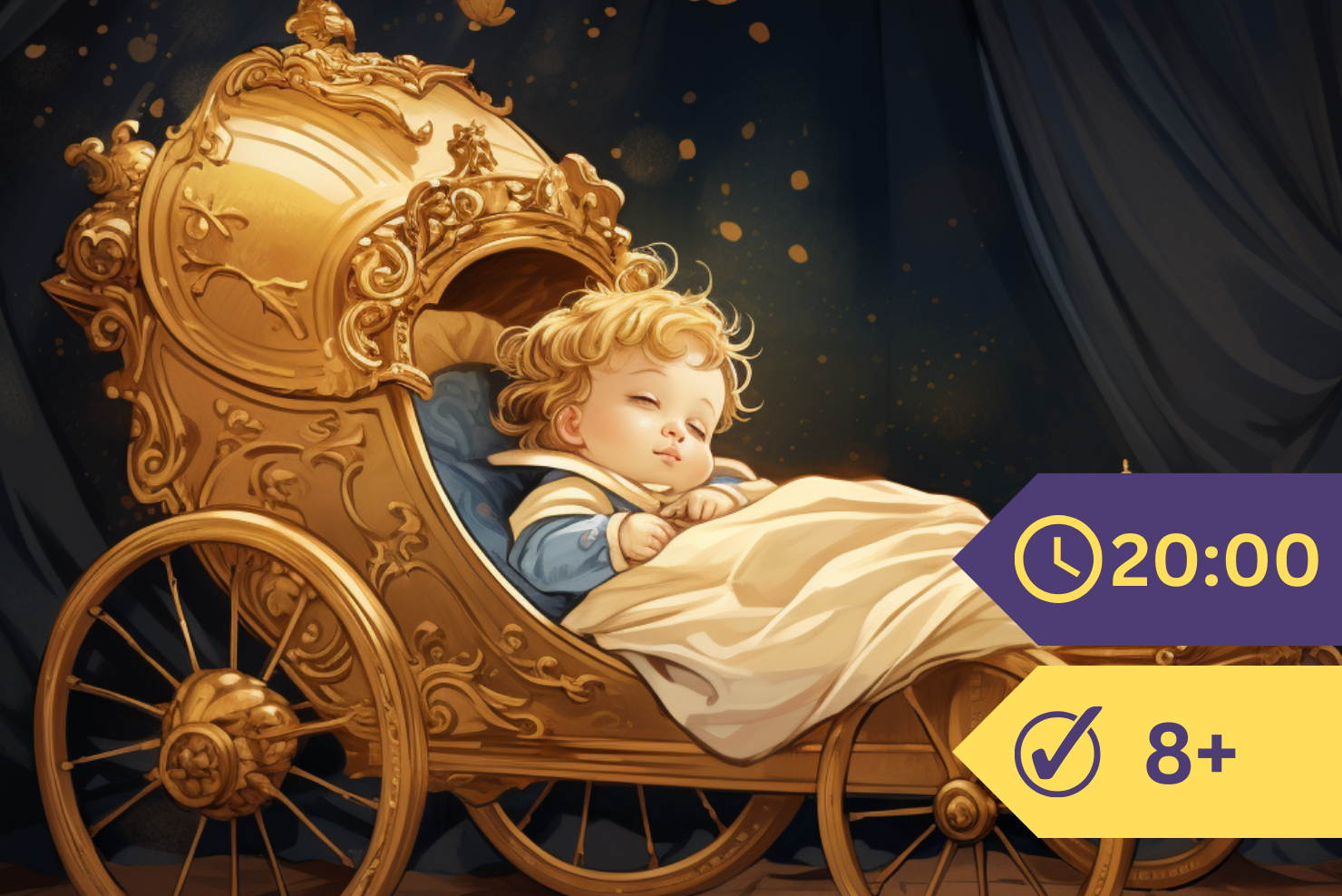
It may have been the long journey, or the cold air, or something else entirely. But when the servants came softly in at ten o’clock, the prince and princess lay fast asleep before a fire that had burned very low, while the clock went tick-tock, tick-tock, very loudly indeed.
What they told the king in the morning, how long they served as pages of the Angel of Blessings, how many blessings they carried — I cannot say; I never heard. But this I know: for many days after that night, the servants and teachers remarked that the prince and princess seemed kinder than usual. And the king and queen were heard to say that they had never in their lives seen their children so loving and so happy.