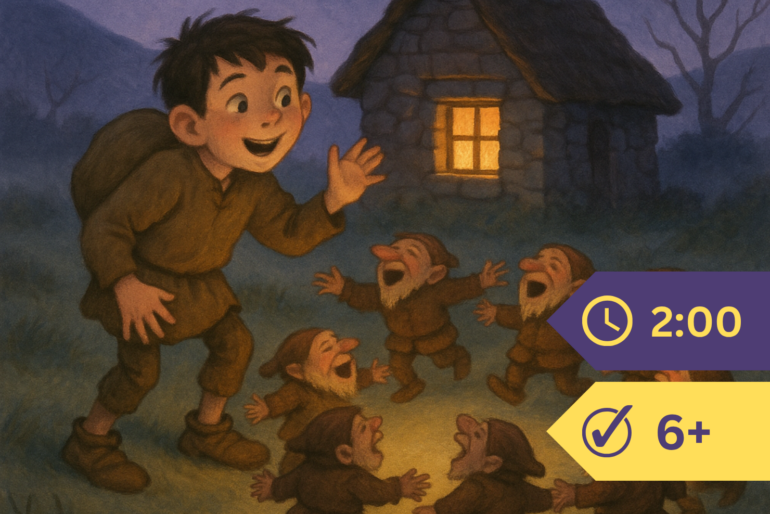
There was once a man whose son married a widow, and the widow had a son of her own. Both boys had humps on their backs. The stepmother doted on her own son and worked her stepson to the bone, giving him too little to eat and too few kind words. In the end she turned him out altogether.
The poor boy wandered away with nowhere to go.
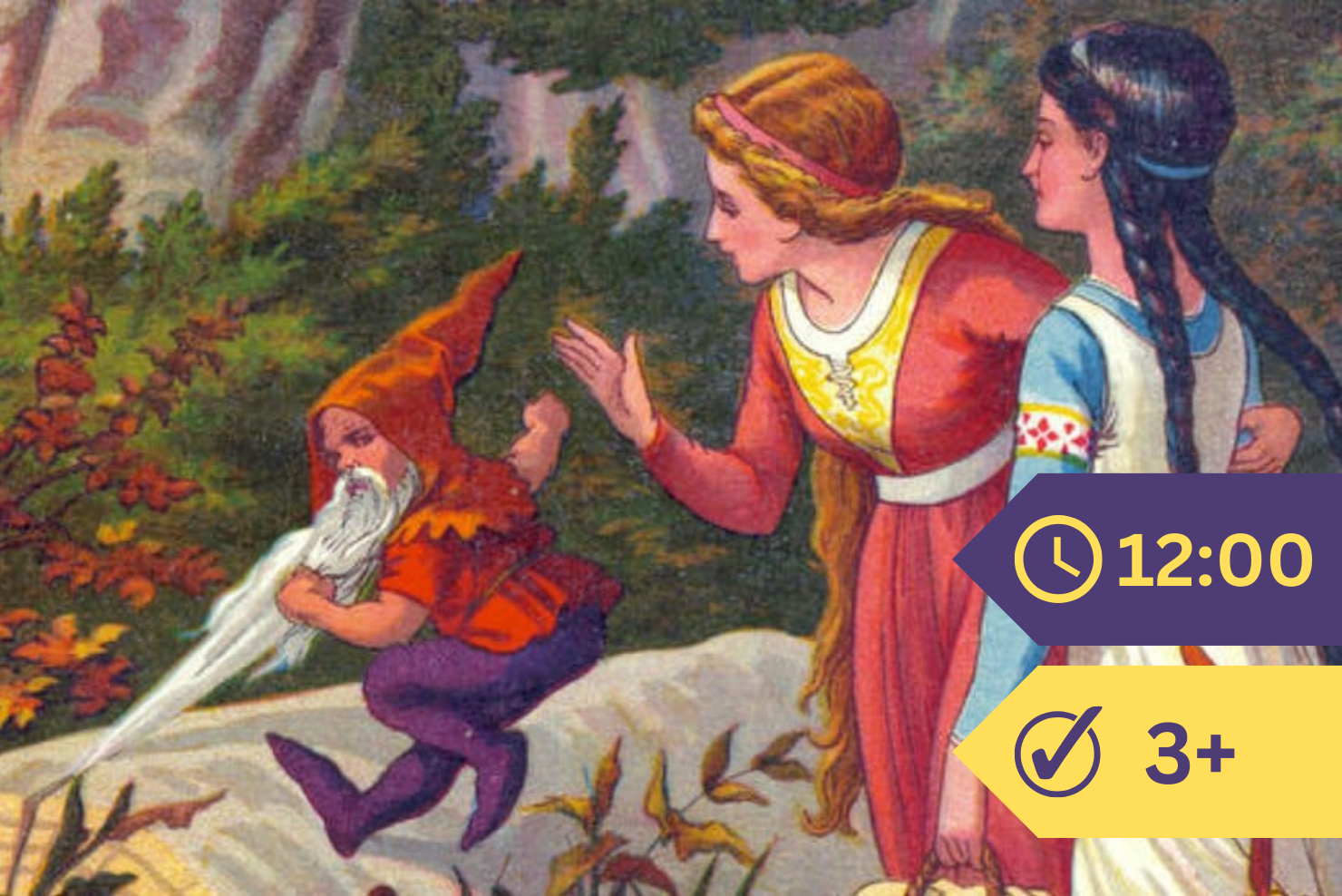
After a long walk across the hills he came to a lonely hut on a wide moor. To his astonishment a crowd of little hunchbacks came swarming out of it and began dancing around him, chanting over and over:
Saturday! Sunday!
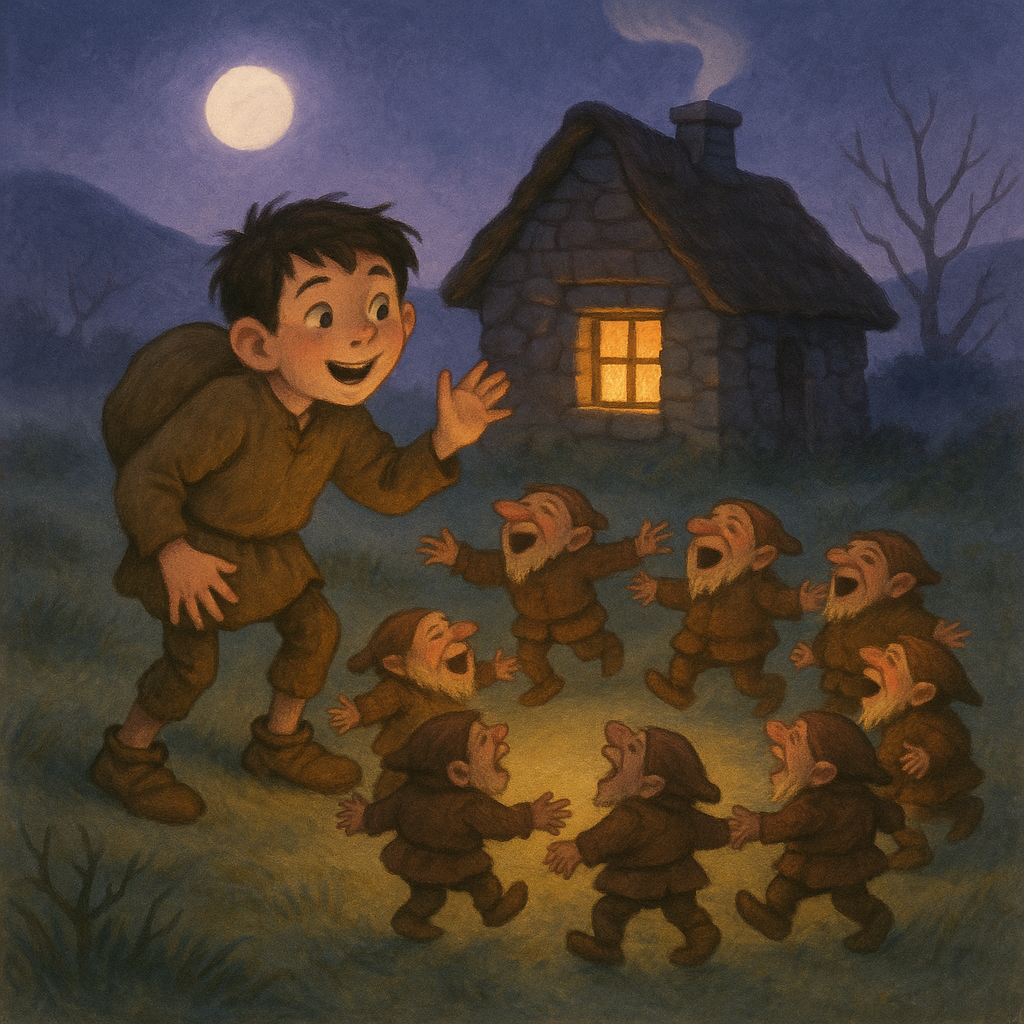
Round and round they went, the same two words, again and again. Something stirred in the stepbrother — a kind of answering impulse — and he chimed in with the next day of the week:
Monday!
At once the dancing stopped. Every little hunchback stood straight and tall, their humps gone — and so was his. He felt his back smooth for the first time in his life.
The leader of the strange folk came forward: “The favour is ours to repay, not yours to earn. It was your adding the right word at the right note at the right moment that broke the enchantment on all of us. Take this wand as a further gift. Go home. If anyone beats you as before, say to it: At ’em, good stick! — and stand back.”
They all vanished. The boy went home.
“So you’re back,” said the stepmother. “And your hump — where did you leave that?”
He told her everything.
“Did you hear that?” she said to her own son. “Go and do the same.”
So the stepmother’s boy set out and found the moor and the lonely hut. The little hunchbacks came swarming out and danced and chanted:
Saturday! Sunday! Monday!
The stepmother’s son saw his chance and shouted, all out of tune:
Tuesday!
The little hunchbacks turned on him. They gave him a thorough beating — and their leader fastened a second hump on him, one in front to go with the one in back, and sent him home.
When the stepmother saw the state of her son she turned on her stepson and beat him for the mischief, and her son joined in. But the boy had the wand now. He said quietly: At ’em, good stick.
The wand flew from his hand and dealt out a beating considerably worse than the one they’d just administered. After that, nobody troubled him.