They say there was a king’s son who went out hunting one winter’s day. Snow lay thick over everything, and when he brought down the birds, their bright blood made beautiful marks against the dazzling white.
“How beautiful!” the prince exclaimed. “I will never marry until I find a girl whose complexion is as fair as this snow, and tinted like this rosy blood.”
When his hunting was done, he went home and told his parents he intended to wander the world until he found her. They approved his plan and sent him on his way.
On and on he went, until one day he met a little old woman who stopped him in the road. “Where are you off to in such a hurry, fair prince?”
“I am searching the world,” he said, “for one who is fair as snow and tinted like rosy blood, to make her my wife.”
“That I can help you with, and I alone,” said the old woman, for she was a fairy. She pressed three love-oranges into his hands and told him that when he opened one, a maiden of the kind he sought would appear — but he must find water immediately and sprinkle her, or she would vanish.
The prince took the oranges and walked on. After a long while, the urge came over him to open one. He broke it, and instantly a beautiful maiden appeared, her skin as fair as snow and tinted like rosy blood — but it was only once she had already disappeared that he remembered the water. Too late. He wandered on until the same urge came upon him again. He broke the second orange, and a maiden appeared, fairer than the first. This time he ran at once to find water, but there was none nearby, and when he returned she was gone.
On he went until he was nearly home, and one day he came upon a handsome fountain by the road, with a fine palace standing opposite. The sight of the fountain reminded him of his last orange. He took it out and broke it open.
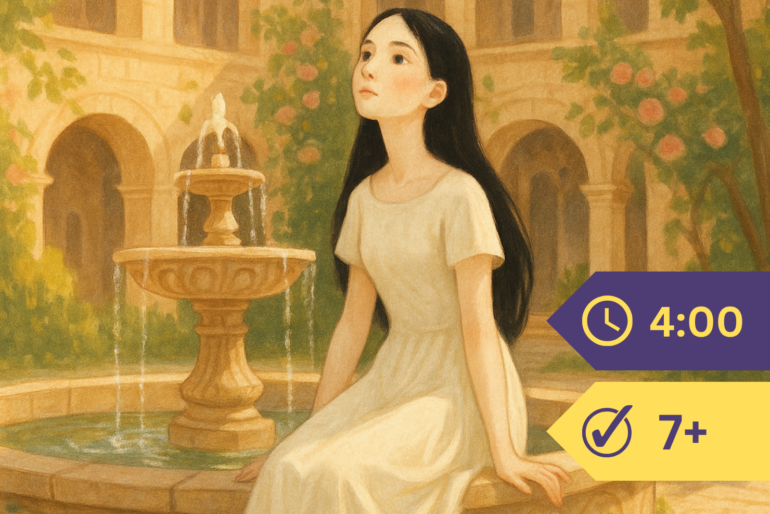
A maiden appeared, far fairer than either of the others. He sprinkled her at once with water from the fountain, and she did not vanish — she stayed, and loved him.
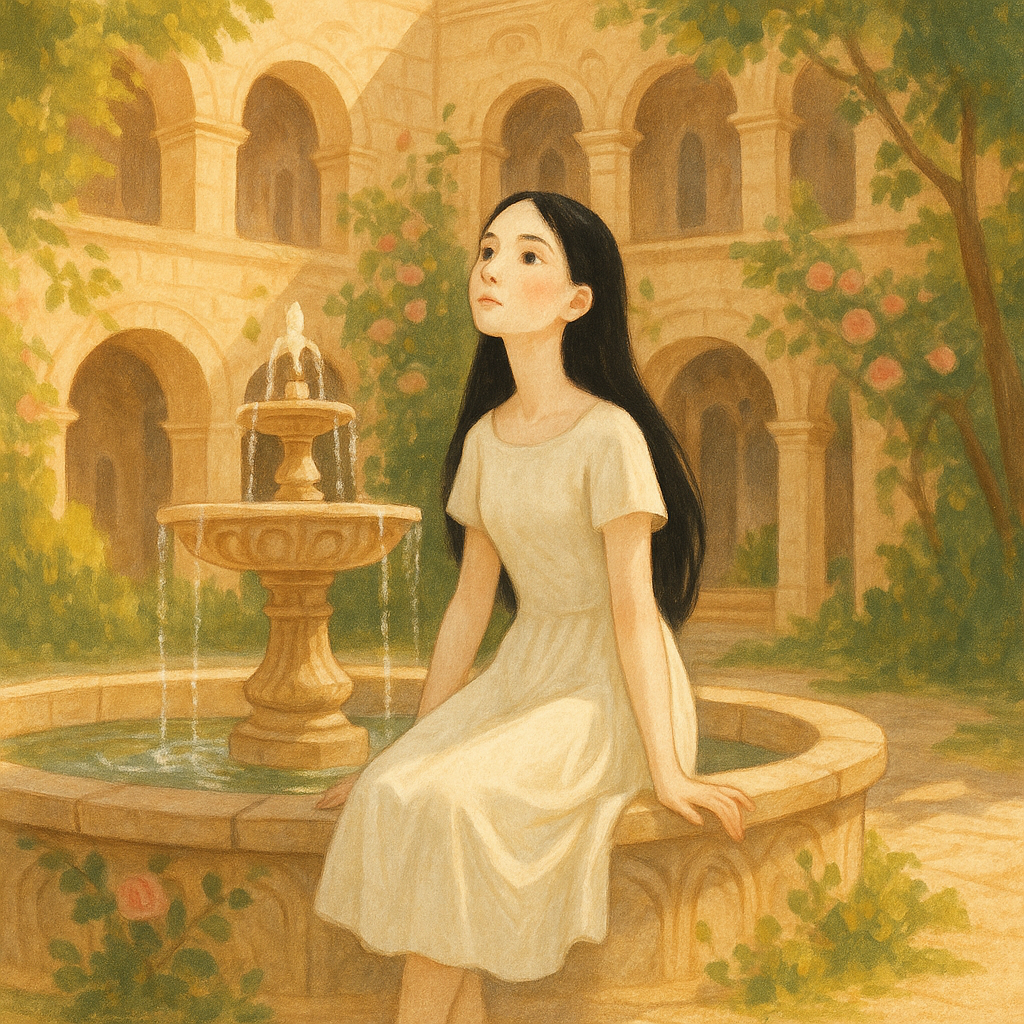
“Wait here in this bower,” he said, “while I go and fetch a proper retinue to escort you home.”
In the palace across the road lived a woman who happened to come down to the fountain to draw water just then. She glanced into the water, saw a reflection more beautiful than her own, and looked up to find the maiden sitting in the bower above. She called up to her, and when the maiden came down, the woman caressed her and praised her beauty and stroked her hair — until, under cover of stroking, she slipped a magic pin from her own hair and pressed it into the maiden’s head. Instantly the maiden became a dove and flew to perch on the edge of the fountain.
The woman climbed up into the bower. When the prince returned and found her there instead of his beloved, he was bewildered and searched everywhere.
“I am she whom you seek,” said the woman. “The sun has changed me while I waited for you, but I will be myself again once we are away from it.”
The prince did not know what to make of this, but there seemed nothing to do but take her and hope. He brought her home, and grand preparations were made for the royal wedding — tapestries on the walls, flowers strewn across the floors, and the cook busy in the kitchen preparing dish after dish for the banquet.
Then a little dove flew to the kitchen window and sang: “Cook, oh cook, who are you cooking for? May the cook fall asleep, and may all the food burn!”
After that, nothing would go right in the kitchen. Every day the dishes were ruined, and the wedding banquet could not be served. At last the prince came to see what was the matter, and they showed him the dove that had done it all.
“Sweet little dove,” the prince murmured, and he caught it gently in his hands and stroked it. As he stroked, he felt something in its head — a pin. He drew it out.
Instantly his own beloved stood before him, fair as snow, rosy as blood.
The mystery was explained, and there was great rejoicing.