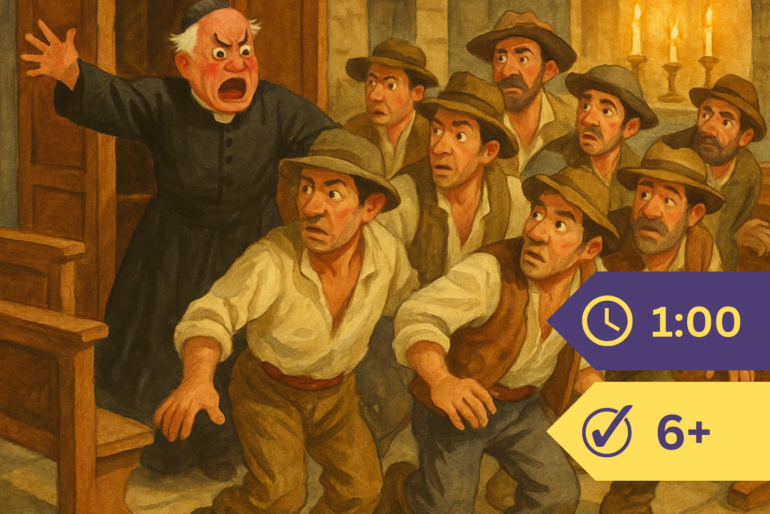
Seven clodhoppers went to confession on the same day.
The first stepped forward and said, “Father, I stole something.”
“What did you steal?” asked the priest.
“A bit of mistuanza,” said the bumpkin apologetically, “because I was starving.”
The priest looked at the thin, weathered man before him. Stealing a handful of herbs because you were hungry was not, in the scale of sins, a very grave matter. He gave a gentle penance, sent the man to communion, and called the next.
The second said exactly the same thing. Then the third. Then the fourth and fifth and sixth.
By the seventh, the priest was frowning. “It is a very peculiar thing,” he thought, “that seven grown men should all have taken it into their heads to steal herbs at the same time.”
When the seventh had had his turn, the priest leaned forward.
“But what do you mean by mistuanza?”
“Oh,” said the countryman agreeably, “a mixture of things.”
“That’s not quite how we use the word,” said the priest. “What things exactly?”
“A bit of ox,” said the man, “a bit of pig, and a bit of chicken.”
The priest threw open the confessional door and stepped out.
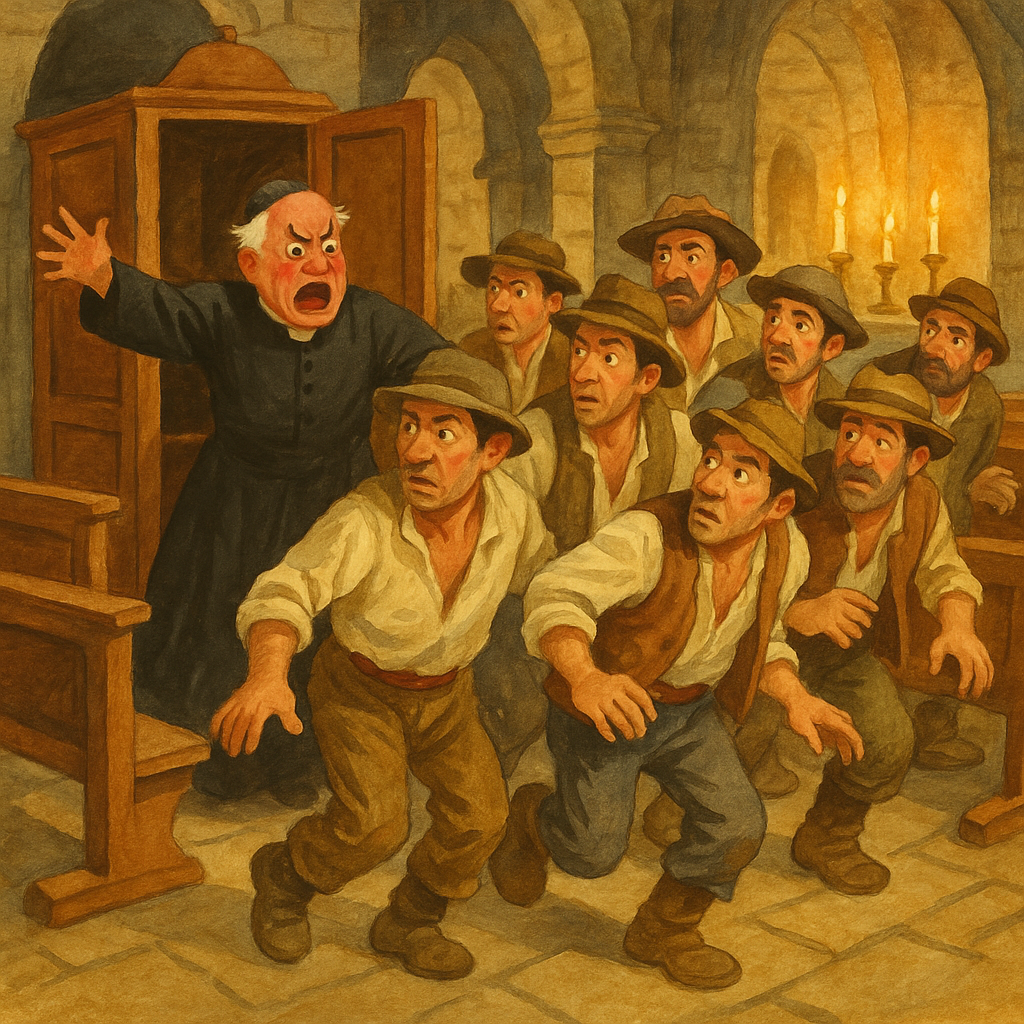
“Gentlemen of the mistuanza!” he shouted across the church. “Come back! Come back at once! None of you can go to communion like that!”
The seven clodhoppers took one look at the priest’s face, calculated their odds, and ran.