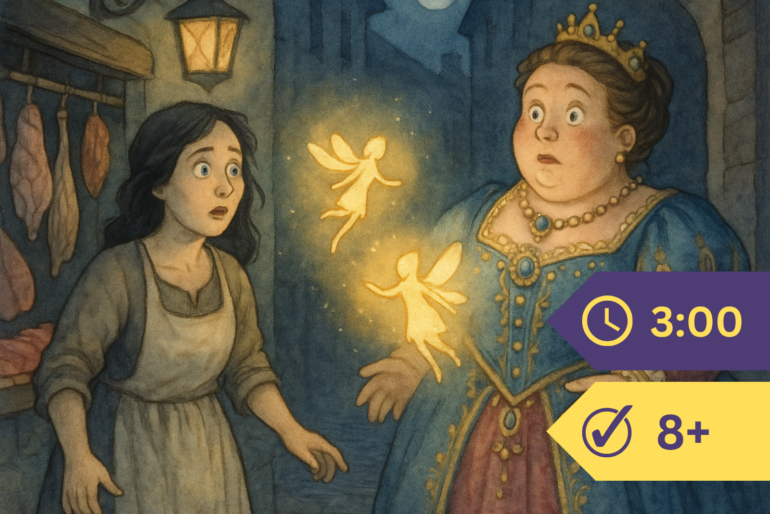
There was once a queen who had such a bad temper that she made everyone around her miserable. Whatever her husband did, she was discontented. She slapped her maids’ faces for nothing. The whole palace walked on eggshells.
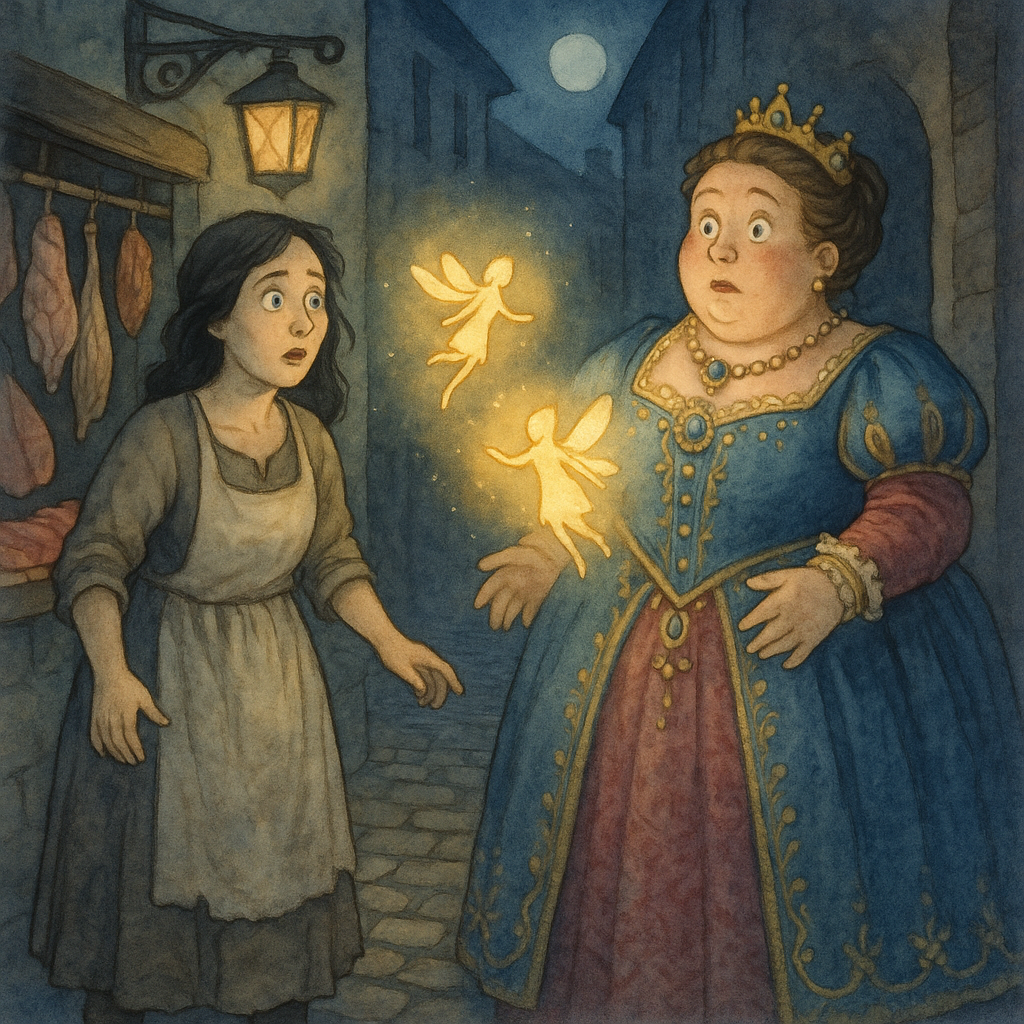
Two fairies saw this and decided something had to be done. They searched the city, and in a small back lane they found the wife of a tripe-seller who looked exactly like the queen — same face, same figure, as alike as two drops of water.
The plan was simplicity itself. That night, while everyone slept, the fairies exchanged their clothes. The queen woke beside a tripe-stall and dressed herself in what she found by the bed. The tripe-seller woke in a palace bedroom and dressed herself in what she found there.
The queen’s day in the tripe-shop began with being scolded for not having made the coffee. She had never made coffee in her life. She managed to do it, badly. Then a small boy came in and asked for a halfpenny’s worth of scraps, and she gave him the finest tripe in the shop, enough for a prince’s dinner. Her husband roared. She didn’t know one cut from another. She got things wrong all morning. She was shouted at, shoved, kicked, and smacked for every mistake, and sent to bed without dinner.
The tripe-seller’s day in the palace was entirely different. When the maids asked what she needed, she said, “Nothing, thank you, I’m perfectly all right.” When the ladies arrived in their fine dresses, she told them how wonderful they looked. When the king brought her flowers, she was so delighted and thankful that he stood there overcome.
The whole palace could not understand the change, and congratulated itself. For the first time in years, the king asked the queen to drive out with him.
The carriage drove through the city. The tripe-seller asked — out of something between longing and nervousness — if they might go past her own neighbourhood. As the royal carriage rolled past the mouth of the lane, the real queen came pelting out of the shop.
“My husband! My royal husband!” she cried.
The king stopped the carriage. He looked from the queen in the gutter to the gentle, gracious woman beside him, and could make nothing of it.
Both women told the truth: the tripe-seller explained exactly who she was and what had happened, as honestly as she could. The queen confessed it all and promised, from the bottom of her frightened heart, never to lose her temper again.
The king took his wife back. He gave the tripe-seller and her husband a beautiful villa in the countryside, on condition that the tripe-man never beat her again. He was delighted enough with his good fortune to keep the bargain willingly.
And the queen, remembering very clearly what a day in the tripe-shop was like, found keeping her temper came surprisingly easily after that.