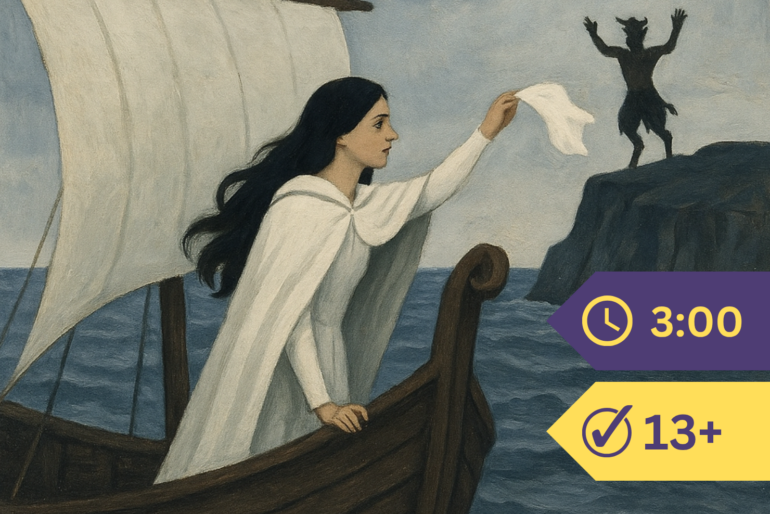
There was once a great king who had one only daughter, and from the time she was small she begged him, over and over, to take her hunting with him.
“It is not proper for little girls to go hunting,” he would say. But she kept asking, and at last he gave in.
In the forest, she got separated from the hunting party, and her father—caught up in the ardour of the chase—forgot to keep looking for her until it was too late. She was gone.
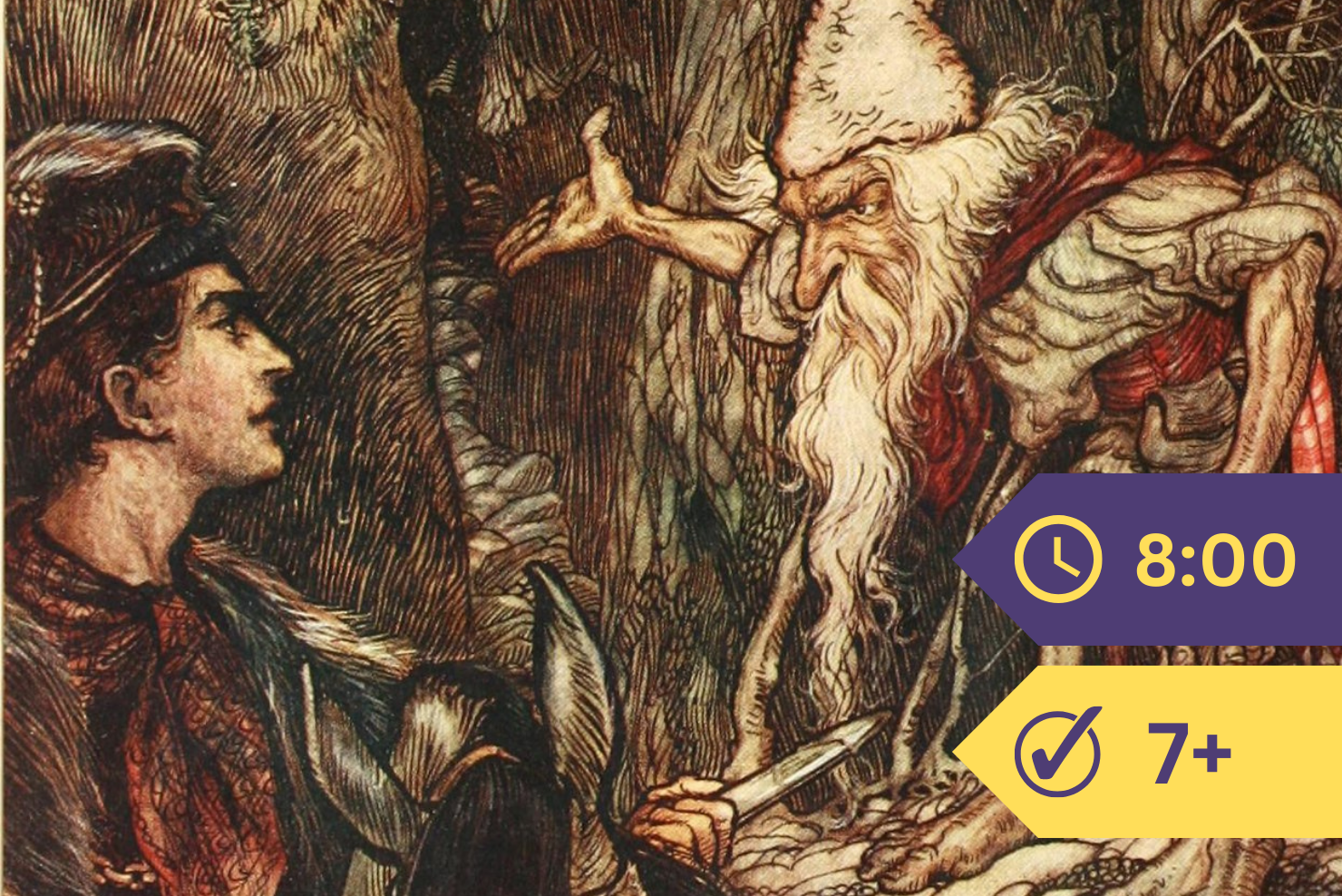
She wandered among the trees crying for her father, but her father did not come. What came instead was a selvaggio—one of those wild, half-human creatures that in the old days were sometimes found in the deep forests: a man from the waist up, but with the legs of a goat, walking upright. He found her lost and weeping, and he fell in love with her, and took her away to live with him.
Ten years passed. The queen, her mother, died of a broken heart. The princess had two children now.
The selvaggio loved her dearly, in his way, and did everything he could to bring her comfort. When he discovered she could not eat the raw game he hunted, he would travel to distant towns and steal cooked food to bring her. But she could not love him, and never did.
After those long years, when he no longer watched her so closely, she slipped away one day to a cliff above the sea. Below her a ship was passing; she called and waved until the captain took pity on her and brought the ship in to shore. He wrapped her in a cloak and she told him who she was, and he promised to take her home. He gave her two white kerchiefs—one for her head and one to hold.
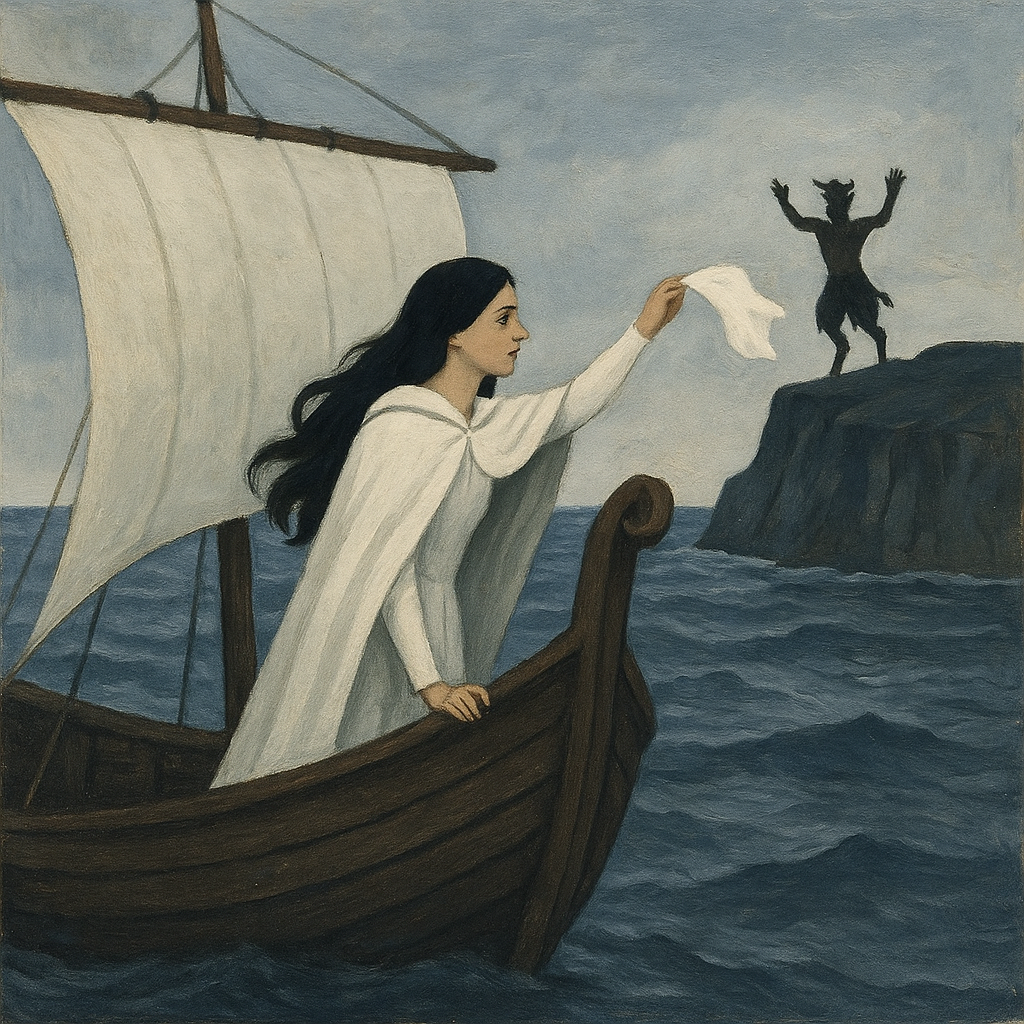
They had not gone far before the selvaggio discovered what had happened. He came running to the cliff and stood there, making signs to her across the water, pleading with her to come back. She waved the kerchief she held—no.
He ran back to the den and brought one of the children and held it up to her. She went on waving: no.
He fetched the second child, and held both up. She went on waving: no.
Then he drew a knife and killed the first child, and showed her: come back or I will kill the other. She went on waving: no.
He killed the second child. She went on waving.
Then he tore open his own chest with his hand and took out his heart, and died there on the cliff for the love of her.
The sailors brought the princess home. There was great rejoicing, and the captain and his crew were richly rewarded. She never spoke of it.