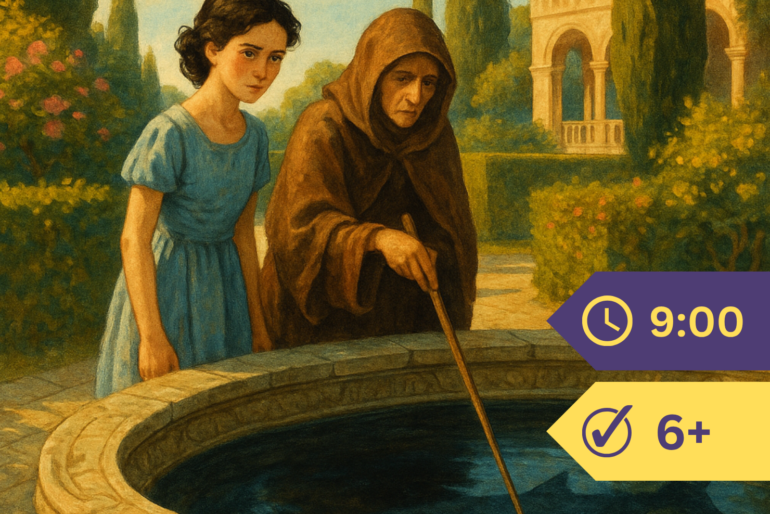
They say there was a well-to-do peasant whose wife died, leaving him two children — a boy and a girl. Both were beautiful, but the girl was of the most extraordinary beauty.
Because they were still young and the father had no idea how to fill a mother’s place, he sent them each day to a woman in the village who would teach and look after them. The woman, however, had her eye on marrying their father. She sent word every single day asking why he did not come and marry her. The father answered each time that he had no wish to remarry. But she pressed him so relentlessly that, worn down, he sent back word: when a pair of thick woollen stockings — which he gave the children to carry to her — had rotted away, he would marry her, and not before.
The woman took the stockings and hung them in the loft, and twice every day she dampened them with water until they were soon quite rotted. Then she showed them to the children and told them to go home and tell their father what they had seen. When the children arrived home they said, “Papa! We saw your stockings today — they are all rotted away.”
“Nonsense,” said their father. “Those thick stockings couldn’t have rotted in this time. There must be some trickery.”
The next morning he handed the children a large pitcher full of water. When all the water had dried up, he said, he would marry her, and not before. The woman took the children to see the pitcher every day, watching the water level slowly drop — though the truth was she had been quietly pouring a little out each morning before they arrived. At last she showed them the pitcher empty, and sent them home to report what they had seen. The father said it was impossible; but the children insisted they had watched it diminish little by little, day by day. He could find no way to deny what the children had witnessed with their own eyes, and so he saw he was bound by the condition he had set himself.
He married the teacher.
No sooner was she inside the house than she told him she would not have the children under her roof. They were not her children, she could not bear the sight of them. The father protested — he had nowhere to send them — but the stepmother pressed him so persistently that, for the sake of peace, he stopped resisting, and she set about disposing of them herself.
One day she made them a large cornmeal cake, packed it in a basket with a bottle of wine, and took them for a long walk outside the town gates. When they had gone very far, she suggested they sit down and eat. The children were happy enough to do so. But while they were eating, the stepmother slipped away without a sound and left them behind, thinking they would be lost.
She had not noticed, however, that the boy had overheard his father and stepmother talking about getting rid of them. He had brought along a paper cone of ashes and scattered them the whole way along the road — so now, following that trail, the two children found their way home again.
The stepmother was furious when she saw them walk back through the door, but she said nothing, so as not to arouse suspicion.
A few days later she made another cake and proposed a second walk. The children went along willingly. This time the boy had brought a cone of millet, which he scattered grain by grain as they walked. They had no hurry finishing their food in the woods. But when they turned to find the track home, there was no trace of it — the birds had eaten every grain. The little girl was stricken when she saw that they were lost, and sat down to cry.
But her brother said, “Never mind. Our stepmother was very cruel to us. Perhaps we’ll find someone kinder. Come — let’s look for shelter before night falls.”
The little girl took heart at her brother’s words, and together, hand in hand, they walked on.
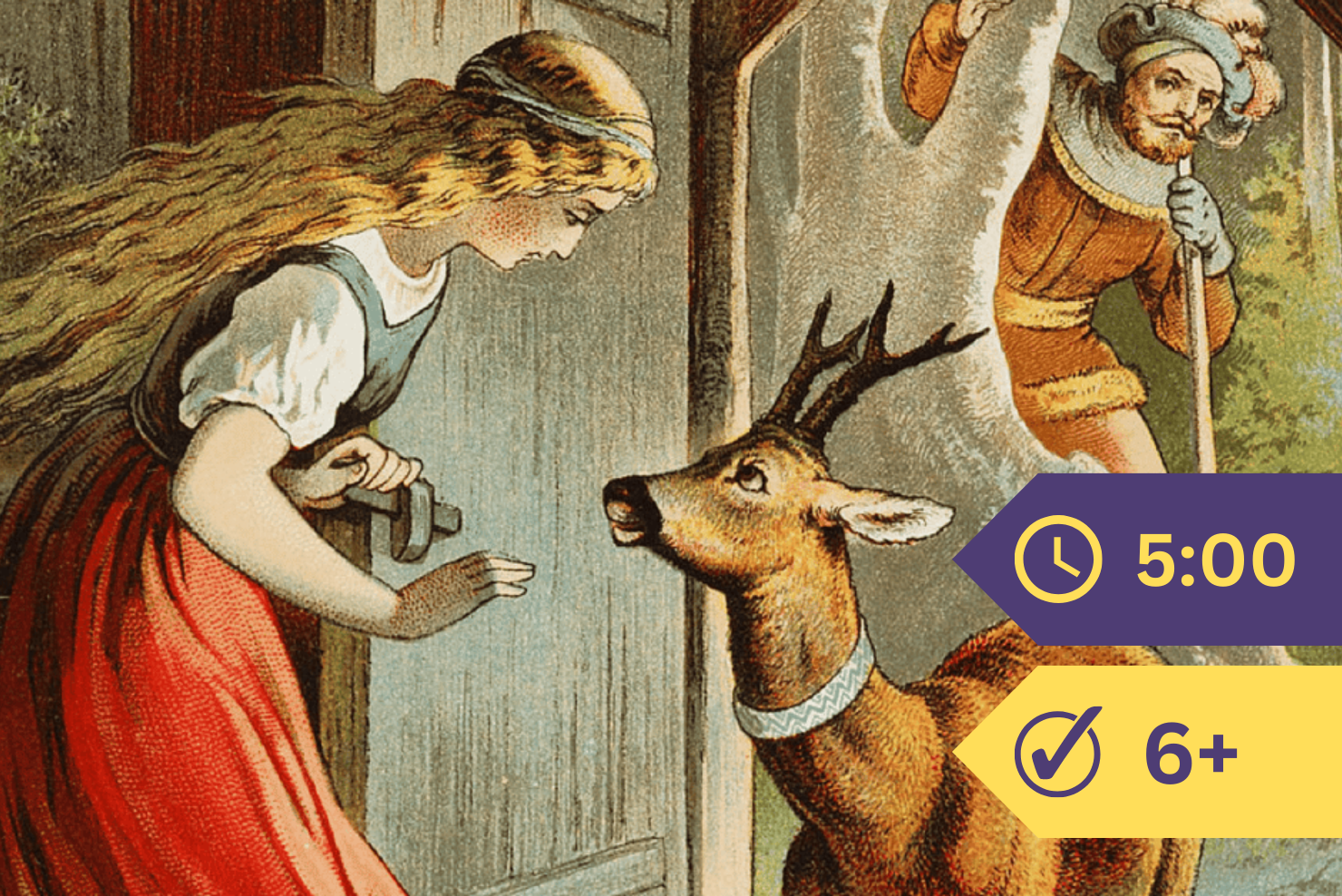
Before dark they came to a small cottage — the only one in sight. They knocked. A voice called out from inside, “Who’s there?” and when they answered “Friends,” an old man opened the door.
“Please take us in for the night,” said the boy. “Our stepmother sent us away from our home.”
“Come in, and welcome,” said the old man. “You shall be my children.”
So they went in, and they lived with him as his own.
Some time passed. One day, when the old man and her brother were both out, the king happened to come riding past on a hunt and stopped at the cottage to ask for water. He was so astonished by the girl’s extraordinary beauty that he asked her where she came from, and she told him everything. When the king returned home, he said to his mother: “Today I saw the most beautiful girl I have ever seen. You must come and meet her.”
The queen-mother had no great wish to visit a poor woodland cottage, but her son pressed her so earnestly that she at last agreed to go. The king rode ahead to the cottage to warn the girl they were coming, gave her a good sum of money, and asked her to prepare the finest dinner she possibly could for him and the queen-mother. She tidied the little cottage until it shone, cooked as well as she ever had, and received her guests with such grace and ease that the queen-mother was won over entirely. When the king told her he intended to make this girl his wife, she was well pleased.
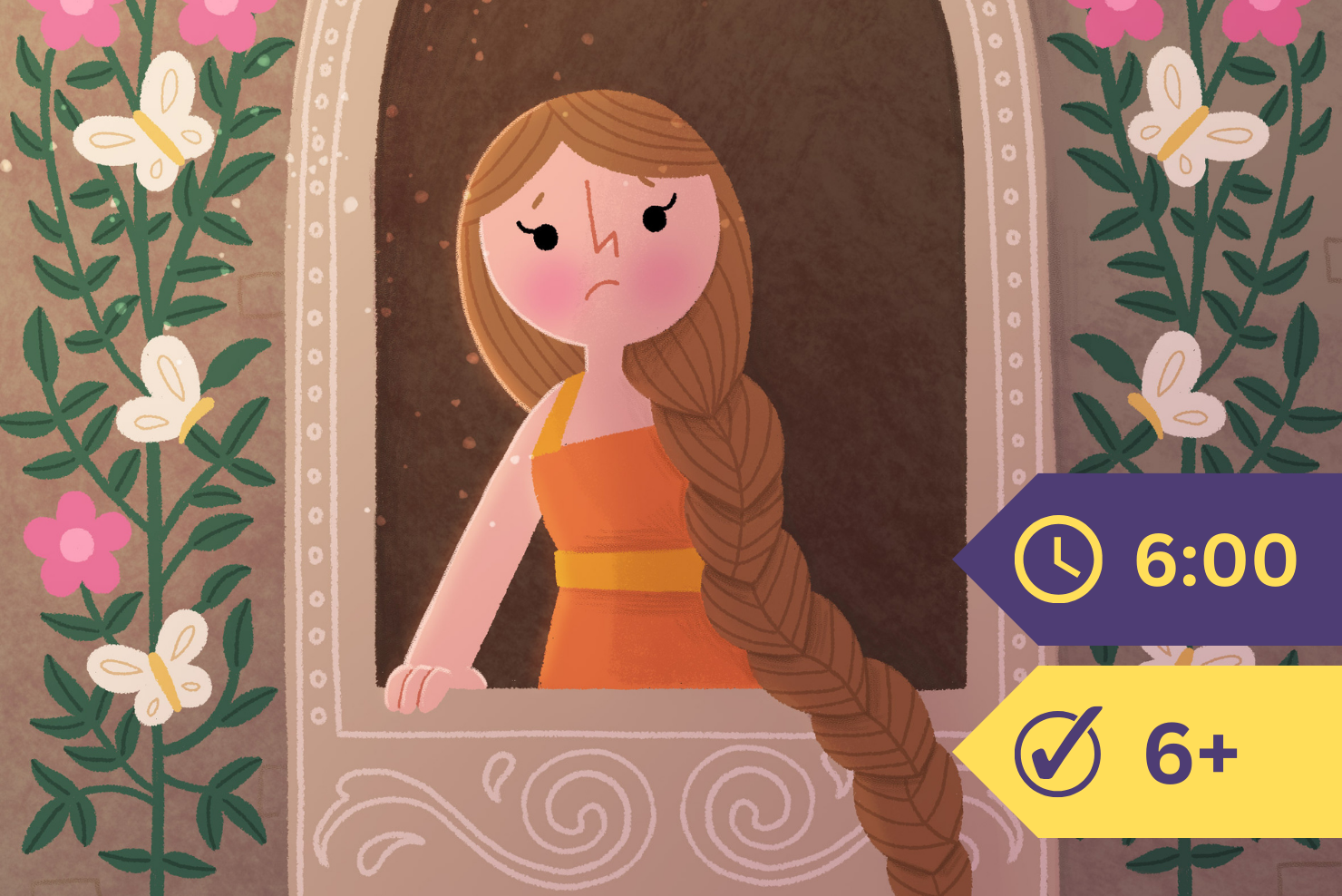
And so Albina — for that was her name — married the king, and her brother was made viceroy.
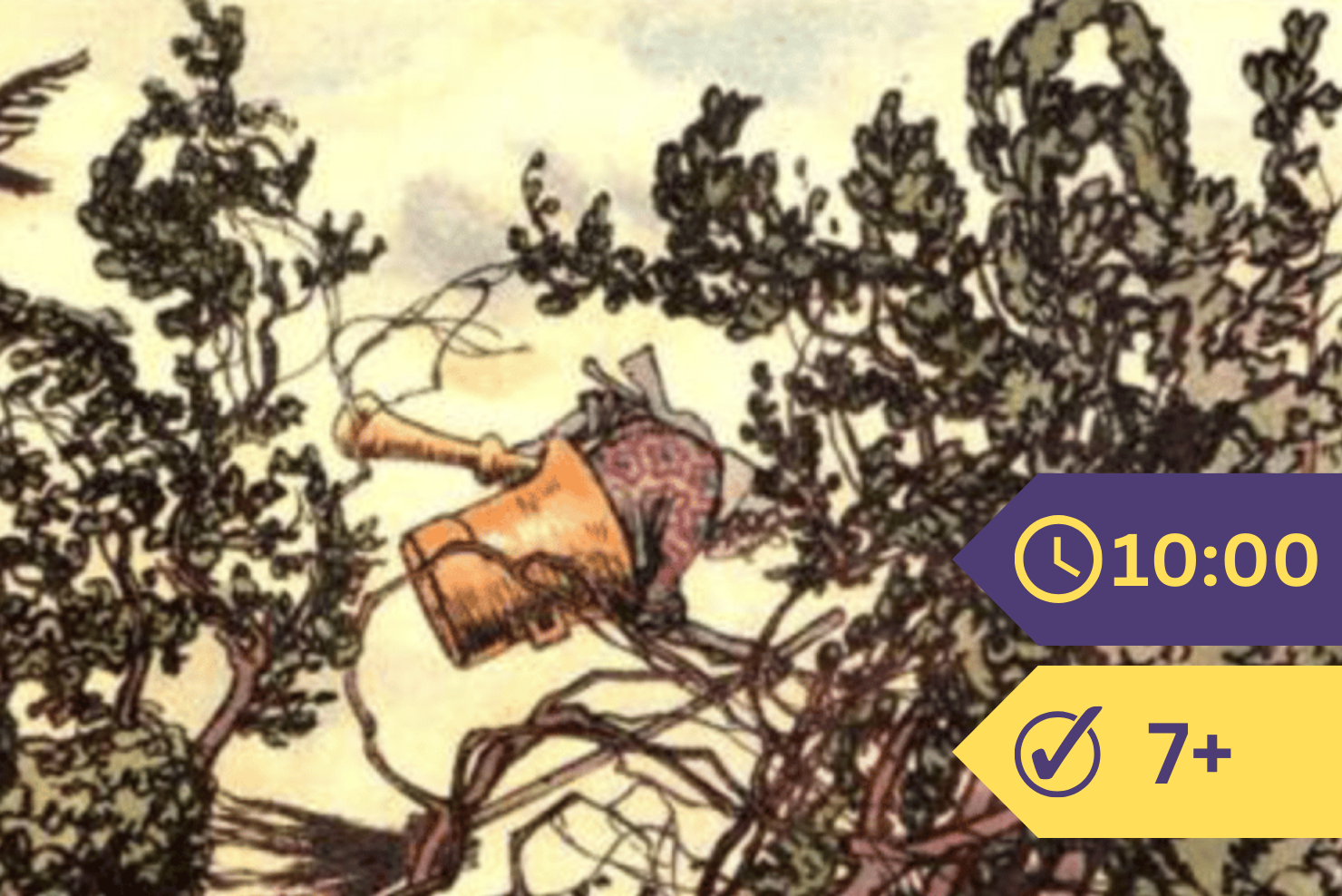
Meanwhile, the stepmother back home had begun to wonder what had become of the children. She was a witch, and she had a divining rod. She struck the rod and asked it where the children were. The answer came: The girl is married to the king. The lad is made viceroy.
The stepmother went to her husband and said, in a very gentle voice, “You know, I’ve been feeling a kind of remorse about those children. I think I ought to go and find them and bring them home to us.” The father was overjoyed to hear this, and gave his blessing for the journey.
The next day she put on a pilgrim’s long robe and set off.
On and on she walked until she reached the city where Albina was queen. She stationed herself beneath the palace windows and, with her divining rod, conjured a golden hen with golden chicks, and made them strut back and forth in the sunlight. Queen Albina, looking down from the window, was enchanted by the sight and sent a maid at once to bring the pilgrim woman to her. The queen offered to buy the golden birds.
“My hen and chicks I neither sell nor lend,” the false pilgrim answered. “There is only one price I ask.”
“And what is that price?” asked the queen.
“That the queen herself take me down to the palace garden and show me the whale that I know lives in the fish-pond.”
“That is easily agreed to,” said Albina. “Come with me.”
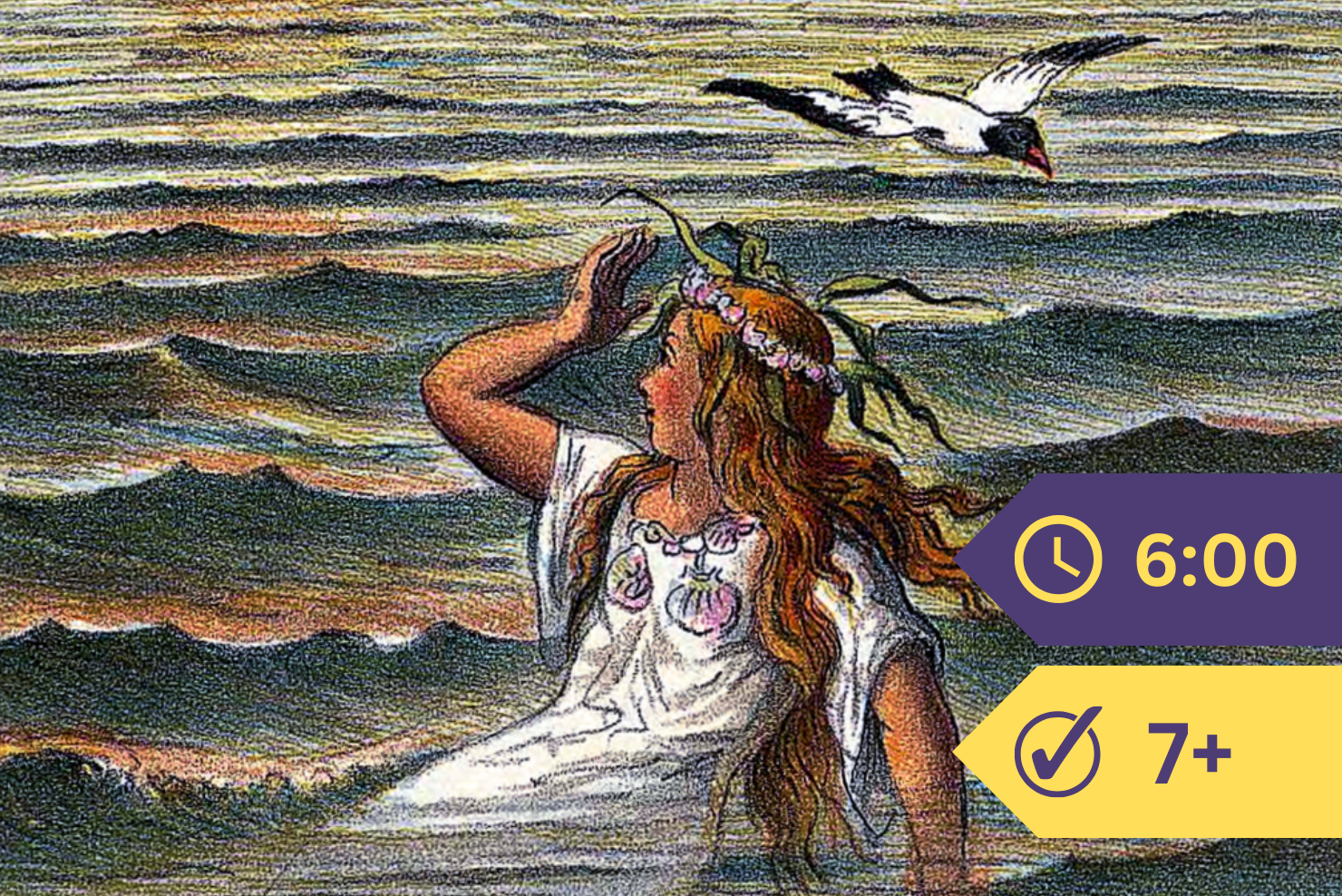
Together they walked down to the pond. The moment the false pilgrim caught sight of the whale, she dipped her rod into the water and commanded the whale to swallow the queen. The whale obeyed the stroke of the wand, and Queen Albina was swallowed whole.
The stepmother climbed to the royal bedchamber and wrapped herself deep in the coverlets. Then she called the maids and told them to inform the king that the queen was gravely ill.
The king came at once. “I am ill indeed — very ill!” the false queen moaned, groaning between words. “And there is no hope for me, for there is only one cure for what I have, and it is a thing I could never ask.”
“Tell me the cure,” said the king.
“The only remedy for my sickness is the blood of the viceroy. But I could not ask for such a thing.”
“It is dreadful,” said the king. “But if it is the only way to save your life, you must take it.”
“Oh no! I couldn’t possibly!” cried the false queen — making a show of reluctance.
But the king, determined to save her at any cost, sent guards to seize the viceroy and confine him in one of the lower chambers of the palace, in readiness to be killed. The windows of that chamber looked out over the fish-pond.
The viceroy stood at the window, staring out at the dark water below, when a voice rose up to him from somewhere inside the whale:
Brother — save me. I am here, imprisoned in the whale, and I have given birth to two children inside it.
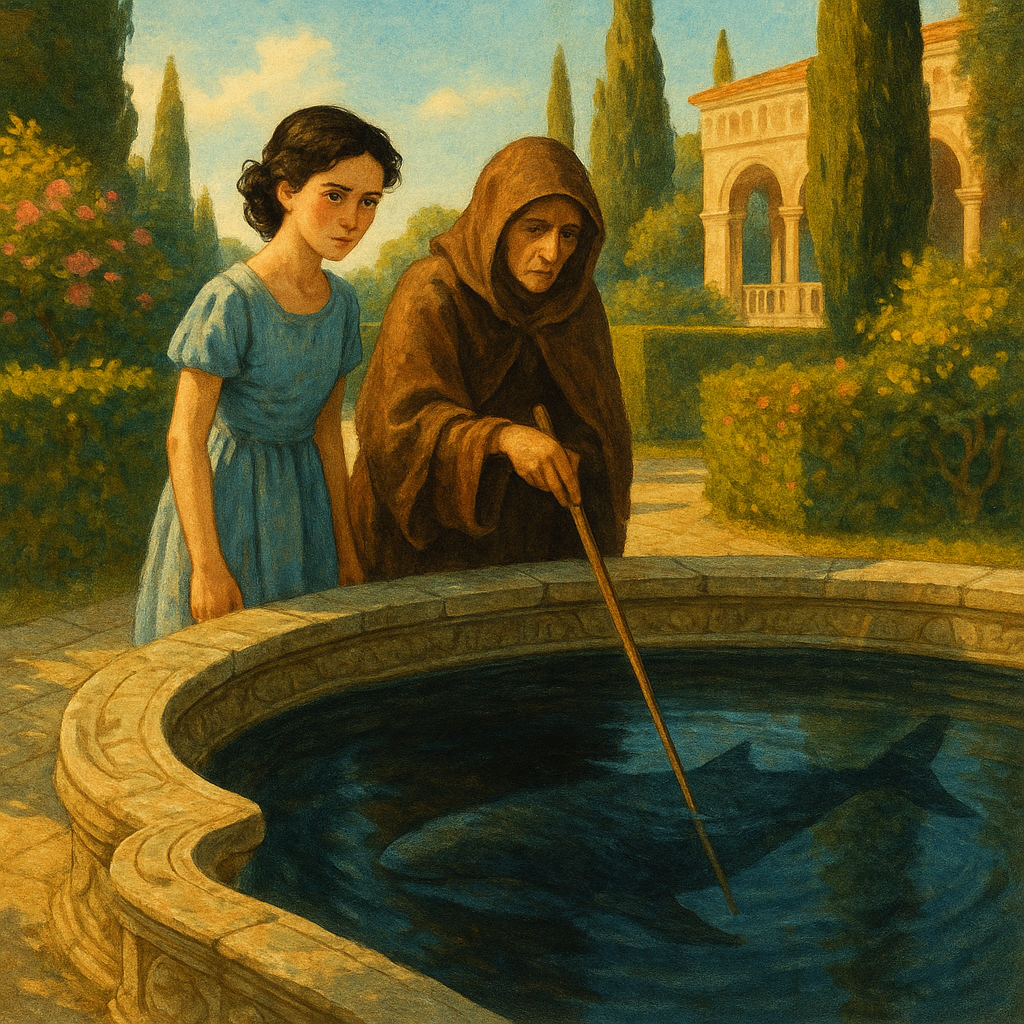
But he could only answer: “I can save no one. I am bound and locked up here, and I am about to be killed myself.”
Then a voice of grief came up from inside the whale: Woe to me — my brother is to die, and I and my children are shut up in this terrible place. Woe to me!
The gardener, tending his beds nearby, heard the sound of weeping. He went to the king and said: “My lord, come down yourself and listen — there is a voice crying out, and it seems to come from inside the whale.”
The king went down. At once he recognised the queen’s voice. He ordered the whale to be cut open. No sooner was it done than Albina and her two children were brought out into the light.
The king embraced them all. “Then who is the woman in the queen’s bed?” he said, and had her brought before him.
When Albina saw her, she said, “This is my stepmother.”
The pilgrim’s robe that the stepmother had taken off was found hidden nearby, and all that she had done came to light. The king declared her a witch. She was put to death, and the viceroy was set free.