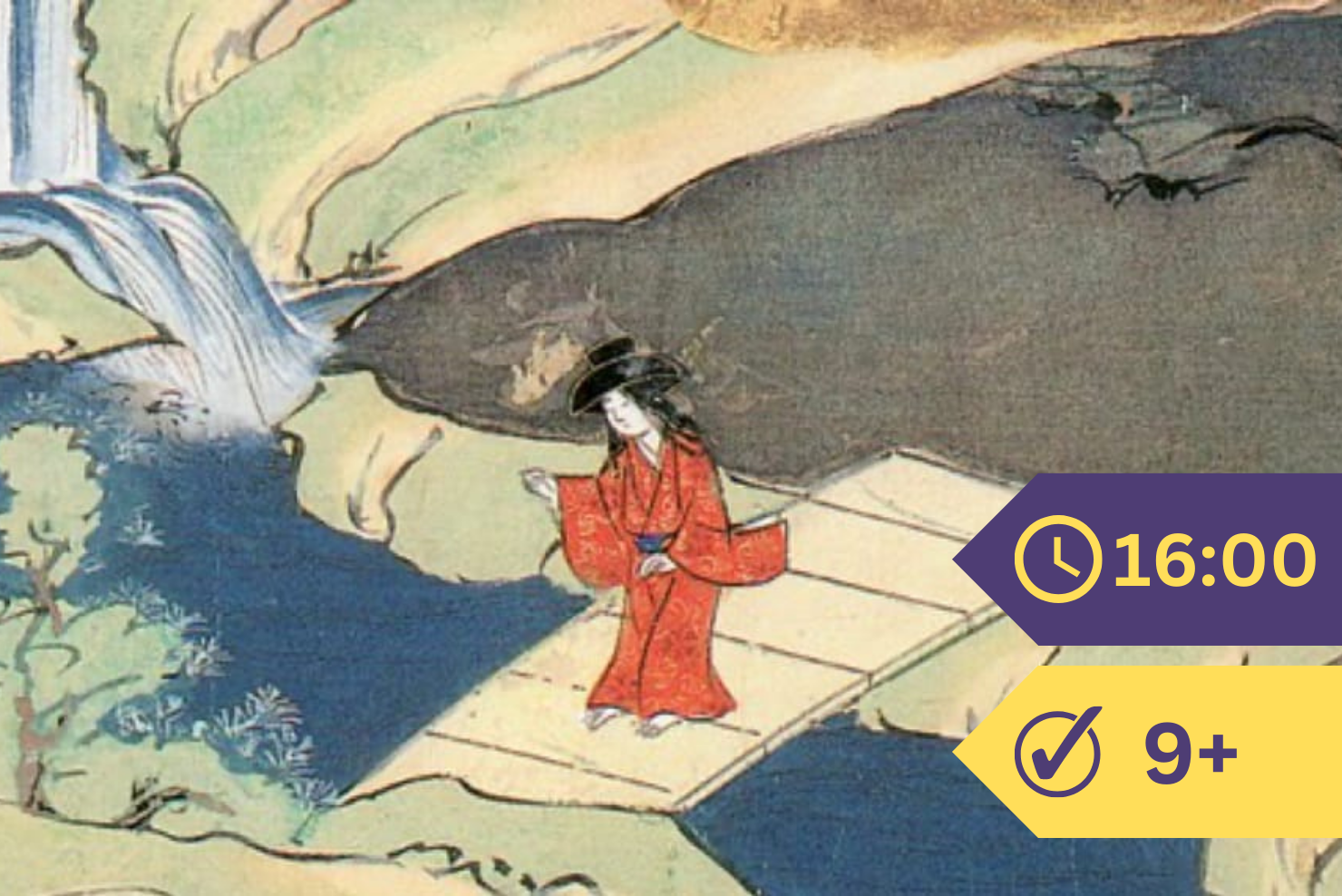
A girl called Buona Grazia — “Good Grace” — was left destitute when her mother died. A hunchbacked tailor came by, told her he earned twenty scudi a month, and proposed marriage. She had nowhere else to go, so she agreed, though with a very poor grace indeed.
The hunchback saw from the start that she didn’t care for him. His solution was to lock her in. He did all the errands himself. He let her out only for Mass, and watched her the whole time. He whitened all the windows so she couldn’t see into the street. Three years passed.
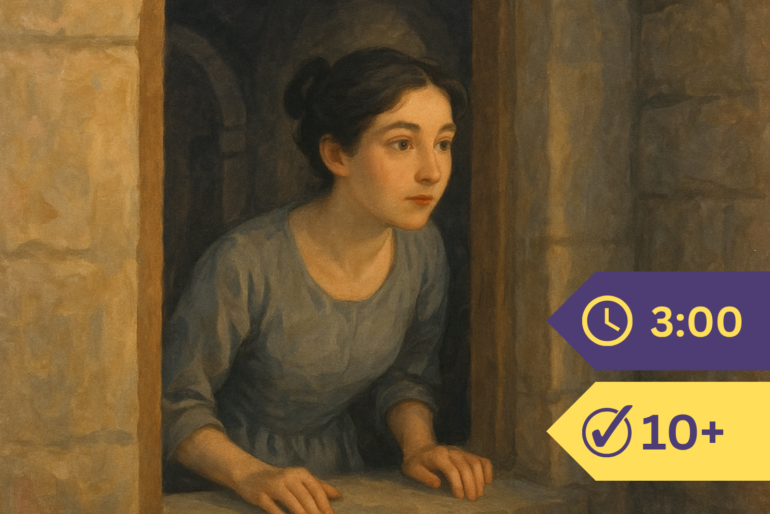
There was one small window of a lumber room that looked only onto an inner courtyard, and he hadn’t bothered with that one. One day a traveller arrived at the inn that occupied part of the building, and spotted her looking out.
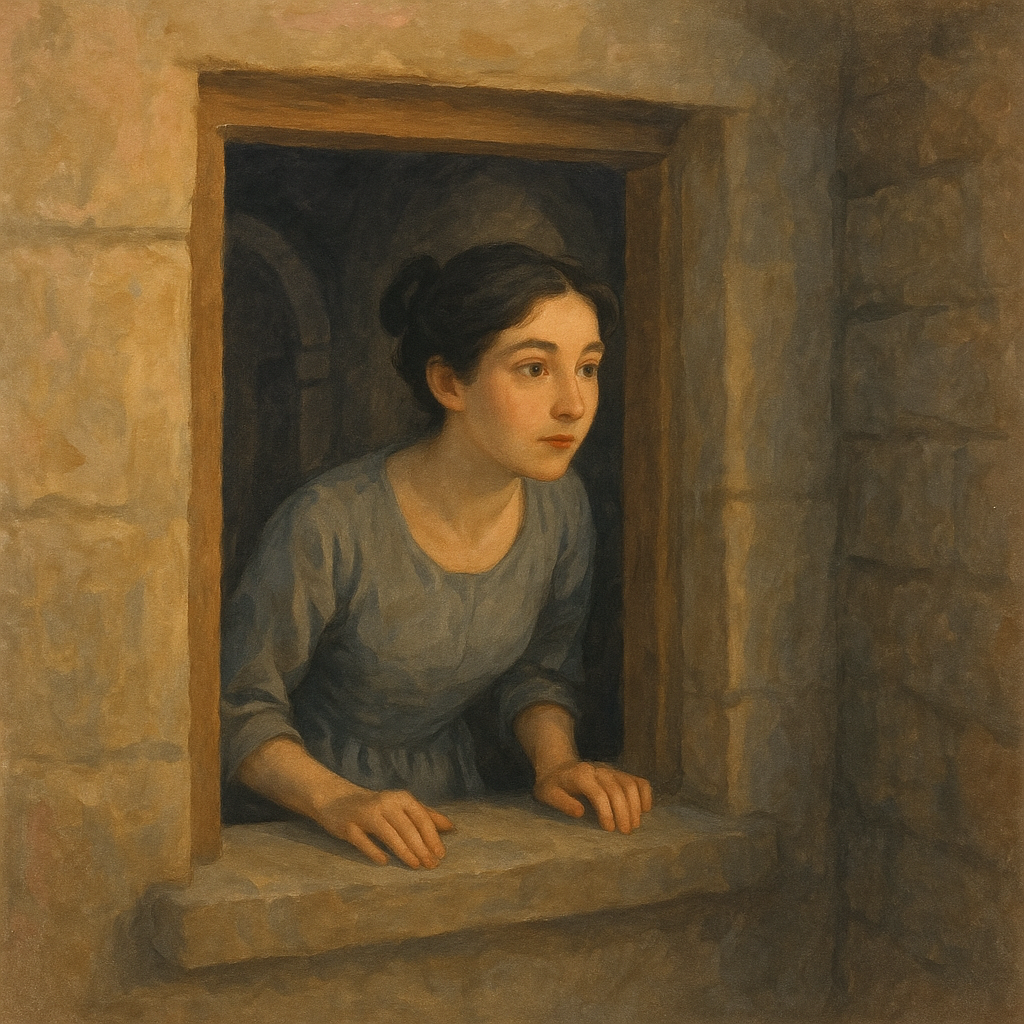
“What are you looking for?”
“Nothing in particular. I’m locked in. I just looked out for company.”
He asked a few questions, and offered to help.
“Most likely there’s a picture on your wall,” he said. “Make a hole behind it, and I’ll make one from my side. When they meet, you can come through.”
She was doubtful. But they set to work — she with whatever tools she could find, he when he heard the tapping to locate the spot. The partition between the rooms was thin, and the hole was made in an afternoon.
“I can’t travel in these clothes,” she said when she climbed through.
“No,” he agreed. “I’ll have a travelling dress made for you. By the hunchback.”
“Be careful,” she said.
He sent his servant to call the tailor up, and when the hunchback arrived, the stranger said: “Make a travelling dress immediately for my wife.”
The hunchback stared. “She looks exactly like my Buona Grazia.”
“There’s often a resemblance between people from the same city. Now take her measure and be quick about it.”
The hunchback, cowed by the stranger’s manner, measured her without further comment, was given money for a good breakfast at the café, and went away.
She climbed back through the hole, set the picture in its place, and when the hunchback returned with the finished dress he found everything as he had left it.
She spent the afternoon coaxing him to take the whitening off one window — just this once — so she could watch the departing gentleman and his lady in the travelling dress he had made. He gave in.
While he was downstairs taking the dress to the inn, she climbed back through the wall, dressed in it. In the window she left a doll dressed like herself.
The stranger and his new companion came down to the waiting carriage. The hunchback stood nearby, watching.
“You give me your good grace?” the stranger called up to him pleasantly.
“Yes, yes, of course!” said the hunchback, delighted by the attention.
“With all your heart?”
“With all my heart!”
“Then give me your hand on it.”
Two witnesses from the stable stood watching carefully.
The carriage rolled away. The hunchback looked up at the window. The doll stood there. He waved at it to go inside. It didn’t move. He ran up with a stick and found the trick.
He went straight to the court and demanded soldiers be sent after them. But the two witnesses were already there and testified that they had heard him give “his Good Grace” to the gentleman willingly, with his hand, in front of witnesses.
“You gave her up of your own accord,” said the judge. “There is nothing to be done.”
And there wasn’t.