An old man and his wife lived in a tumbledown cottage near the king’s palace. It was so shabby that people said even a pig would turn up its nose at it. But the old man was rich. He was a miser, and a lucky one, and he would go without dinner rather than part with a single gold coin.
At last he starved himself once too often. He fell ill, grew too weak to recover, and died, leaving his wife and one son.
That night the son dreamed that a stranger stood by his bed. “Your father is dead and your mother will soon follow, and all their money will be yours. Half of it was got unfairly. Give that half back to the poor, from whom it was squeezed. Throw the other half into the sea. But watch as it sinks, and if anything floats, take it, even if it’s only a scrap of paper.”
The young man woke troubled. He had known cold and hunger all his life, and he had been looking forward to a little comfort. But he was honest, and if his father’s wealth was ill-gotten, he knew he’d never enjoy it. So he found out who in the village was poorest and gave them half. The other half he carried to a rock that jutted over the sea and threw in. It vanished at once. Only a tiny scrap of paper floated on the surface. He stretched down and fished it out. Inside were six shillings.
“Well, that’s not much,” he said. But six shillings were better than nothing, and he tucked them away.
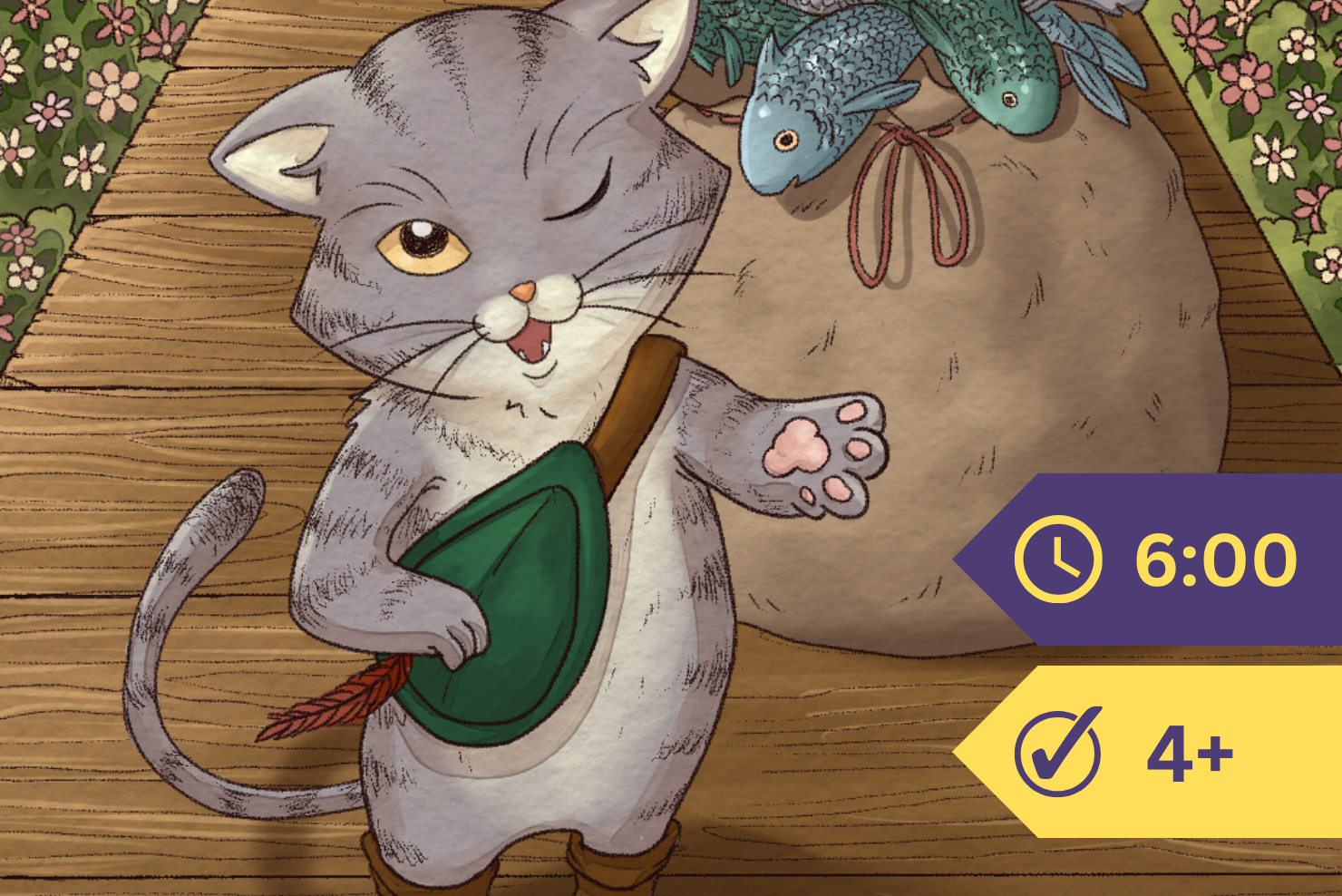
For some weeks he and his mother lived on what the garden gave, and then she died too. With a heavy heart he wandered into the forest and came to a small hut. An old woman answered his knock and told him that he could have milk and a bed for nothing. Two women and three men were at supper. When he’d eaten, he noticed an animal by the fire that he’d never seen before, grey and small, with large bright eyes, and it seemed to be singing.
“What’s that?”
“A cat.”
“I’d like to buy it, if it isn’t too dear. It would be company.” They said he could have it for six shillings. He handed over the paper’s six shillings, and the next morning set off with the cat curled up in his cloak.
That evening he stopped at another house. The old man who opened the door said, “You may sleep here, and you don’t need to pay.” In the kitchen, the family crowded round to look at the cat, which rubbed against them, held out its paw, and purred, and they fed it every treat a cat could eat. When the old man heard the young man’s story, he said, “Go to the king’s palace. He’s kind to everyone.”
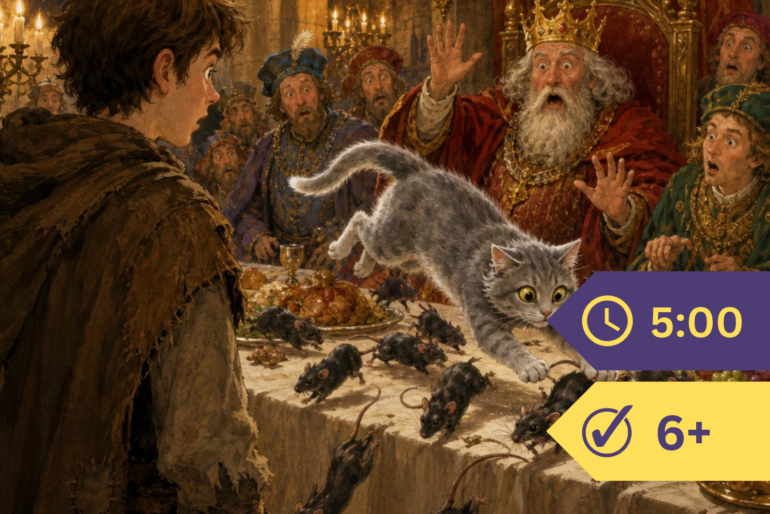
The king was at dinner when the young man came into the great hall, and he stared. Little black creatures were running over the floor and even across the table, snatching food from the royal plate. They bit at the king’s hands if he tried to drive them off.
“What are those?” asked the young man.
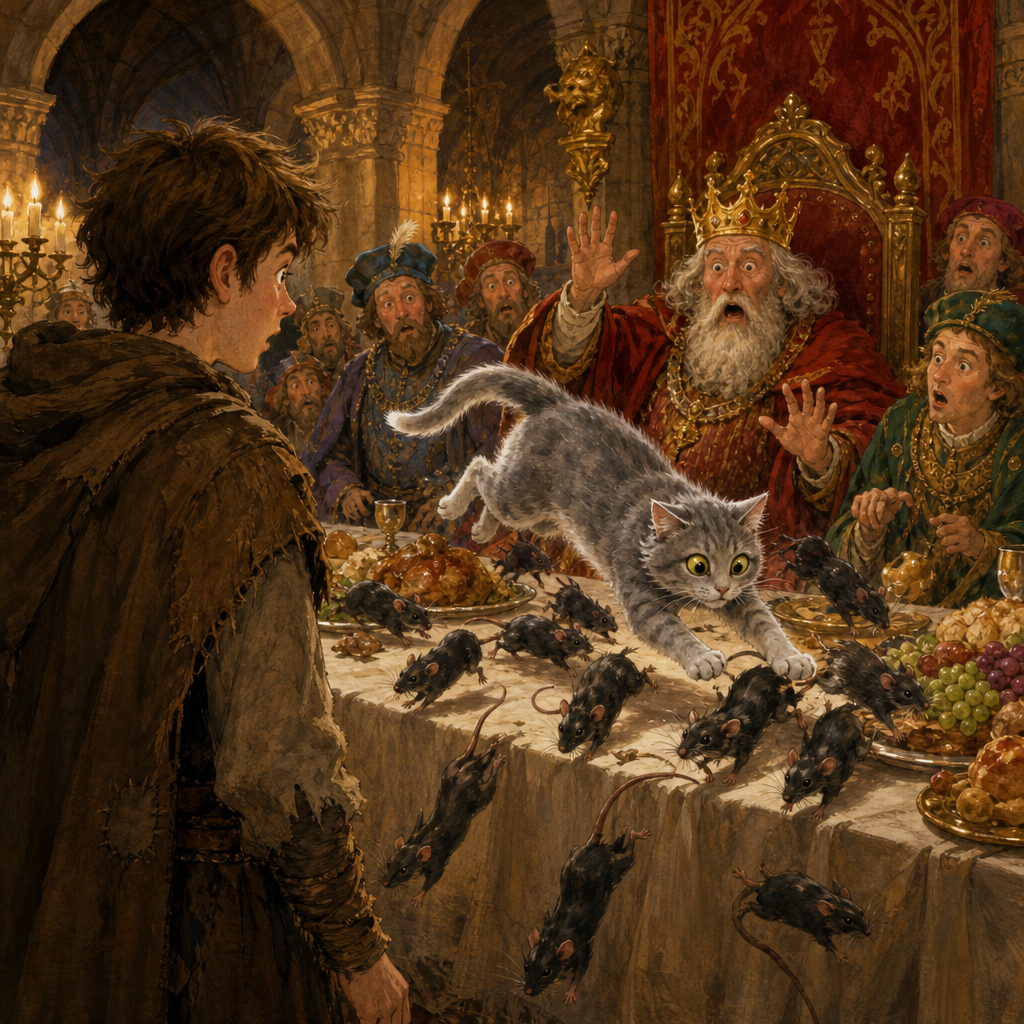
“Rats,” said the king. “For years we’ve tried to be rid of them and can’t. They climb into our very beds.”
At that moment something flew across the room. The cat was on the table. A few shakes of its head, and rats lay all around. A scuffling of feet, and the hall was empty.
The king and his court stared. “What is that creature?”
“A cat,” said the young man. “I bought it for six shillings.”
“You’ve freed my palace from a plague that has tormented us for years,” said the king. “Choose your reward. You can be my Prime Minister, or marry my daughter and rule after me.”
“The princess and the kingdom,” said the young man.
And so it was.