The lands are lit
With all the autumn blaze of Goldenrod,
And everywhere the purple asters nod
And bend and wave and flit.
— Helen Hunt Jackson, “September”
For many seasons the Golden-rods had ruled the meadow. No one thought of choosing a king from any other family, for the Golden-rods were strong and handsome, and they loved to rule.
But one autumn something happened that set all the flowers buzzing. Someone suggested having a queen. Such a thing had never been heard of before!
It began among the Asters. Some of them grew outside the wall beside the road, where they saw and heard what went on in the great world. These sturdy plants carried the news back to their relations inside the meadow. That is why the Asters were such wise and lively flowers, from the little white stars in the grass to the tall sprays tossing purple plumes above the mossy wall.
“Things are changing in the great world, and it’s time we made a change in our little one,” said one of the roadside Asters, after a long talk with a wandering wind. “Matters aren’t going well here. The Golden-rods care only for gold and power, just as their name says. We are children of the stars, and our tribe is even larger than theirs. It’s only fair that we take a turn at ruling. I propose our stately cousin, Violet Aster, for queen. Whoever agrees, say Aye!”
A great shout went up from the Asters. The late Clovers and the Buttercups joined in, for they were honest, sensible flowers who liked fair play. To everyone’s delight, the Pitcher-plant said “Aye” very firmly. That impressed the whole meadow, because her family was old and much respected.
The proud Cardinals by the brook turned red at the very idea of a queen. The Fringed Gentians shut their blue eyes so they wouldn’t have to see the bold Asters. Clematis fainted dead away in the grass. The Golden-rods only laughed.
“Let those Asters try it,” they said. “Nobody will vote for that silly Violet. Don’t worry, friends. Just help us elect our handsome cousin, who was born in the palace this year.”
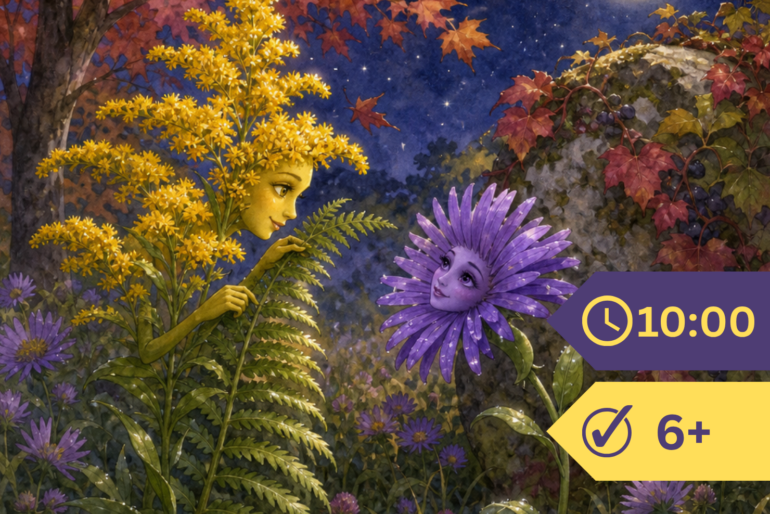
In the middle of the meadow stood a beautiful maple. At its foot lay a great rock covered with wild grapevine. Flowers of all kinds sprang up there, and this autumn a tall spray of Golden-rod and a lovely violet Aster had grown up side by side, with only a screen of ferns between them. The meadow called this spot the palace.
When voting day came, the wind went around collecting the votes. The Golden-rods, Cardinals, Gentians, Clematis, and Bittersweet all voted for the Prince, as they called the handsome fellow by the rock. The Asters, Buttercups, Clovers, and Pitcher-plants voted for Violet.

Then, to the meadow’s great surprise, the Maple dropped a leaf for her, and the Rock gave a bit of lichen. These two seldom joined in the flowers’ affairs. The tree lived high above them, busy with its own music, and the rock was so old it seemed lost in thought most of the time. But one was a poet and the other a philosopher, and both believed in gentle Violet.
Their votes won the day. Violet was crowned queen of the meadow to loud cheers from her friends.
“We will never go to Court or take any notice of her,” cried the Cardinals, red with anger.
“Nor will we!” said the Gentians, shaking their fringes as if the idea itself were dirty. “Let’s turn our backs, and be glad the brook runs between us.”
Clematis hid her face among the vine leaves and declared the palace was no longer a fit home for a delicate, high-born flower like herself. The Golden-rods raged and said many untrue and unkind things about Violet. The Prince tossed his yellow head behind the ferns and pretended not to care.
“Let her try,” he said carelessly. “She’ll never manage it, and she’ll soon be glad to hand the crown over to me.”
So the meadow was split in two. Half turned its back on the new queen. The other half loved her and believed in her. All of them waited to see how the experiment would turn out.
The wise Asters gave Violet advice. The honest Clovers offered their steady friendship, and the cheerful Buttercups brightened her days with kind words. But her best help came from the rock and the tree. When she needed strength, she leaned her slender head against the rough old rock, which had weathered a hundred years of storms, and courage seemed to flow into her. When her heart was heavy or hurt by someone’s unkindness, she looked up at the beautiful tree, always full of soft music, always pointing toward the sky, and she felt comforted.
The first thing she did was drive the snakes out of her kingdom, for they lured innocent birds to harm and left many a happy nest in grief.
Next she tackled the red ants and the black ants, who were always at war, to the great dismay of the peaceful insects. She told each tribe to stay in its own country, and if any quarrel came up, to bring it to her and she would settle it fairly. It was hard work, because the ants adored a good fight. But in the end she made them friends, and everyone was glad.
Then she cleaned up the meadow’s news. The wind was the messenger, but the birds were the reporters, and some of them were very bad ones. The larks brought news from the clouds, and the thrushes brought news from the woods. The robins told of home and family, and the lively wrens added witty jokes. These were always welcome. But the magpies made trouble with their spiteful gossip. The crows scolded everyone who didn’t think and do exactly as they did. So the magpies were forbidden to gossip around the meadow, and the gloomy crows were ordered off the fence, where they’d been cawing dismally for hours.
Everyone felt safer and happier after that. Only the Cardinals missed hearing their fine dresses and grand parties talked about. And the Golden-rods, who were used to living in public, missed the excitement, along with the scandal.
Under the big burdock leaves, Violet opened a hospital for sick and homeless creatures. Several late butterflies were tucked into silken hammocks to sleep until spring. A sad ladybug who had lost her children found comfort there. Many wounded ants sat in the sunshine, swapping stories of their battles like old soldiers.
It took a long time, and it wasn’t easy, for the rich and powerful flowers gave no help at all. But the Asters worked bravely, and so did the Clovers and Buttercups. The Pitcher-plant kept her door open to every visitor with old-fashioned hospitality.
Little by little everything prospered, and the meadow grew prettier by the day. With the snakes gone, birds came to nest in every tree and bush, singing their thanks so sweetly that music filled the air. Sunshine and rain seemed to love visiting, keeping the flowers fresh and the grass green. Passers-by stopped to look and said with a smile, “What a pretty little spot this is!”
The wind carried the news to other meadows and brought back messages of praise from other rulers, glad to hear the experiment was working so well.
That made a deep impression on the Golden-rods and their friends. They couldn’t deny that Violet had done better than anyone dared hope. The proud flowers began to see they would have to give in, admit they were wrong, and become loyal subjects of this wise and gentle queen.
“We’ll have to go to Court if ambassadors keep arriving with gifts and honors for Her Majesty,” said the Cardinals. “They’ll wonder why we’re never there, and they’ll say we’re sulking at home instead of shining the way only we can.” Secretly they were longing to show off their red velvet robes at the palace feasts.
“Our season will soon be over,” sighed the Gentians, smoothing their blue fringes. “We must either humble ourselves or miss all the fun. It’s hard to see the old ways change, but if they must, we may as well submit gracefully.” They were eager to be the belles of the ball again.
Clematis astonished everyone by suddenly climbing the maple and shaking her silvery tassels like a canopy over the Queen’s head.
“I can’t live so near her and not start growing,” she said. “I have to cling to something, so I’ll choose the noblest thing I can find, and look up, not down, from now on.” Like many timid creatures, she was easily guided. It was lucky for her that Violet’s example was so brave.
Prince Golden-rod, meanwhile, had found it impossible to keep his back turned. He was a gentleman with a truly noble heart under his yellow cloak, and he was among the first to notice and admire the modest, faithful flower who grew so near him. He couldn’t help overhearing her comfort and counsel to those who came for advice. He saw the quiet kindnesses no one else noticed. He knew how many troubles she had and how bravely she carried them.
“She has done more than any of us to make this kingdom beautiful and safe and happy,” he told himself. “I’ll be the first to say so, to thank her and offer my loyalty.” And he waited for his chance.
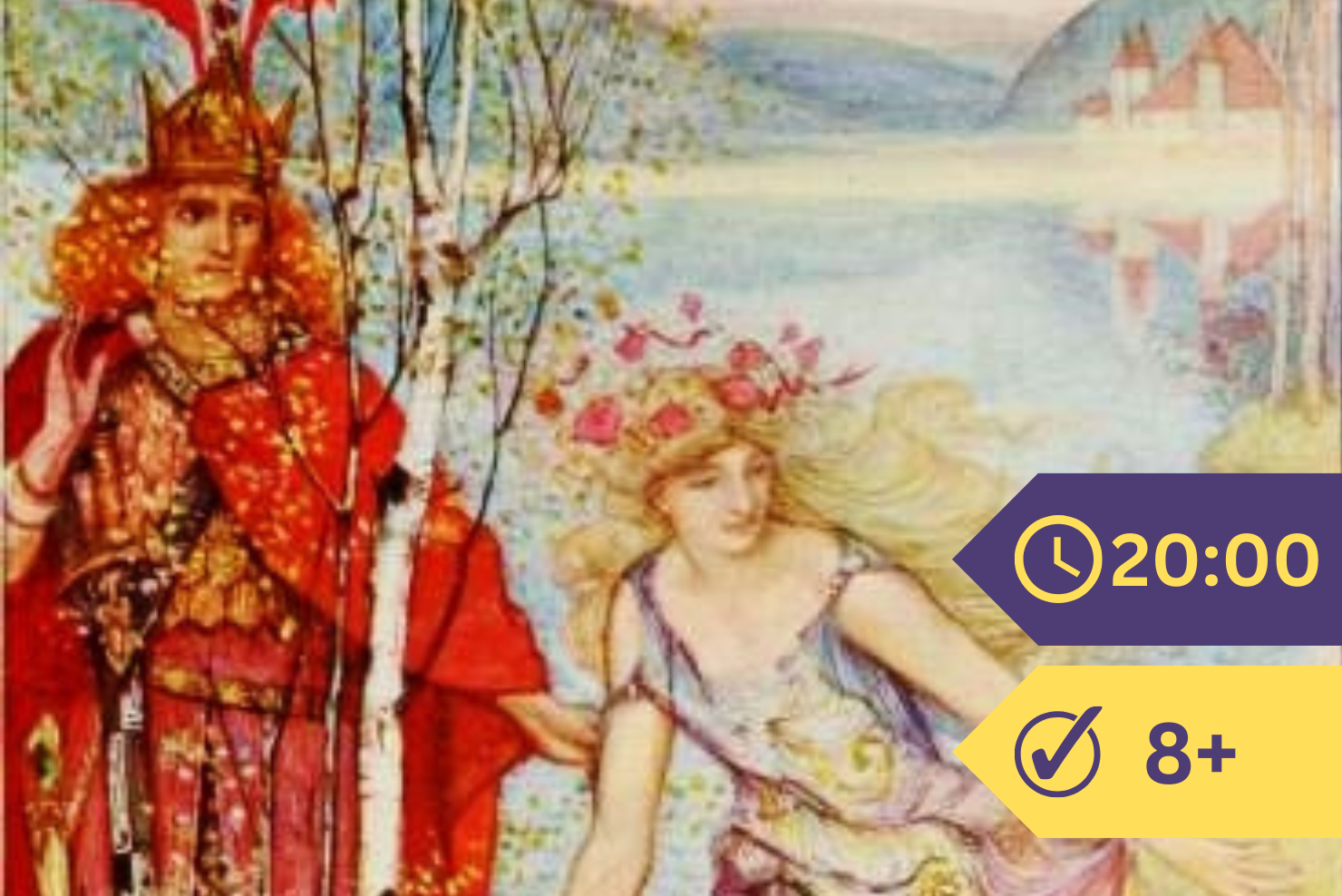
One night, with the September moon shining over the meadow and the air soft with the last warmth of summer, the Prince serenaded the Queen on his wind-harp. He knew she was awake, for he’d peeked through the ferns and seen her gazing at the stars, her violet eyes full of dew, as if something troubled her. He sang his sweetest song, and Her Majesty leaned closer to listen. She had long wished to be friends with the gallant Prince. They had been born in the same palace and had grown up together happily, until coronation time came.
When he finished, she sighed. She wondered how long it would be before he said what she knew was in his heart.
Golden-rod heard the sigh, and forgetting his pride, he pushed the ferns aside and whispered, his face glowing.
“What troubles you, sweet neighbor? Forgive my unkindness, and let me help if I can. I don’t dare say as Prince Consort, though I love you dearly. But as a friend and faithful subject, because I confess that you are fitter to rule than I am.”
As he spoke, the petals that hid Violet’s golden heart opened wide, and he could see how glad she was. She bent her stately head and answered softly.
“There is room on the throne for two. Share it with me as King, and let us rule together.”
What the Prince said back, only the moon knows. But when morning came, the whole meadow was surprised and delighted to see the gold and purple flowers standing side by side. The maple showered rosy leaves over them, and the old rock waved his crown of vine leaves and said:
“This is as it should be: love and strength going hand in hand, and justice making the earth glad.”