Once there was a poor couple who lived in a miserable hut with nothing in it but want. They had no food to eat and no wood to burn. But if they had little of anything else, they had plenty of children, and every year brought one more. The father wasn’t pleased. He went about grumbling that there could be too much of a good thing, and just before another baby was due, he went off into the woods for firewood, saying he’d rather not see the new child until it started yelling for food.
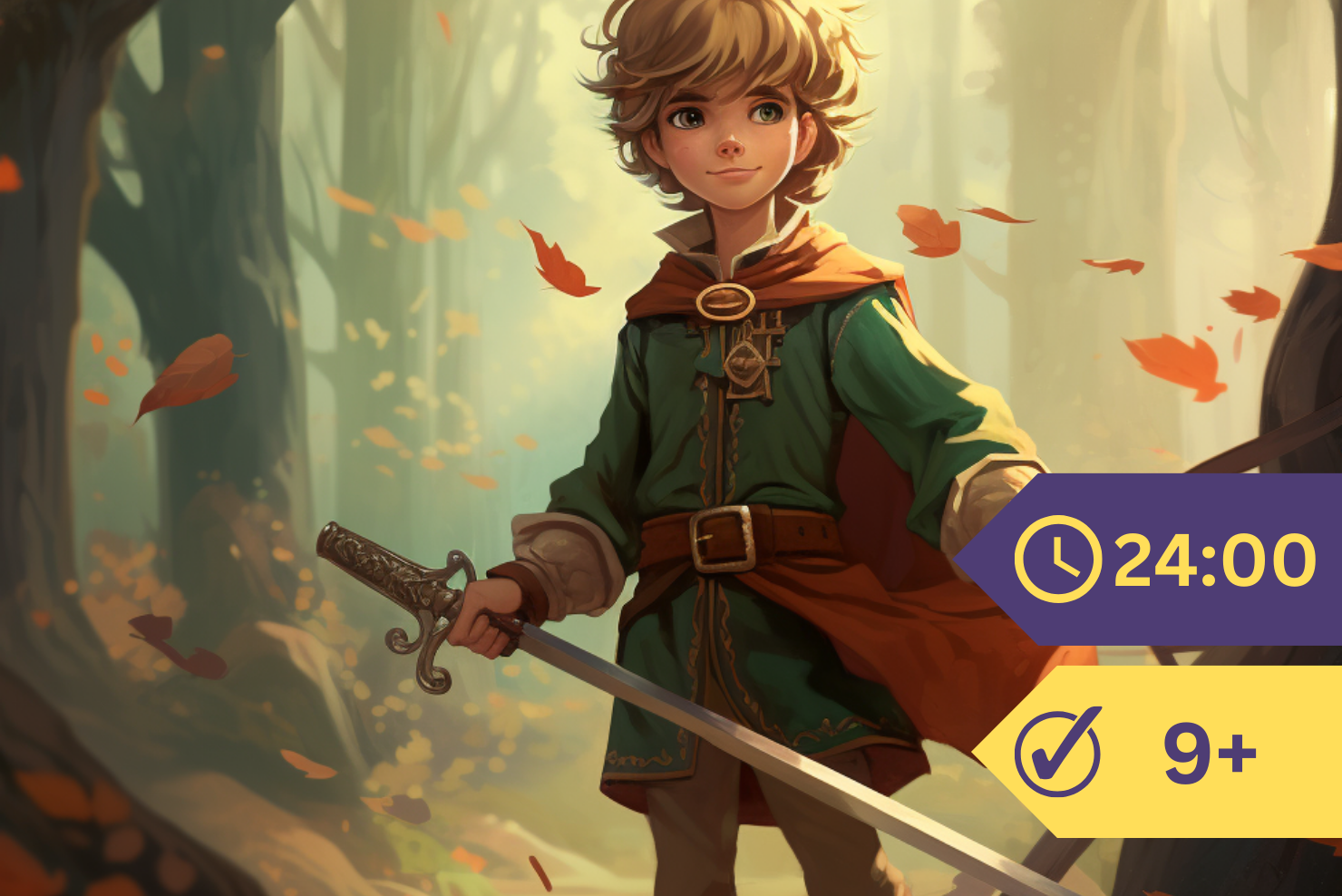
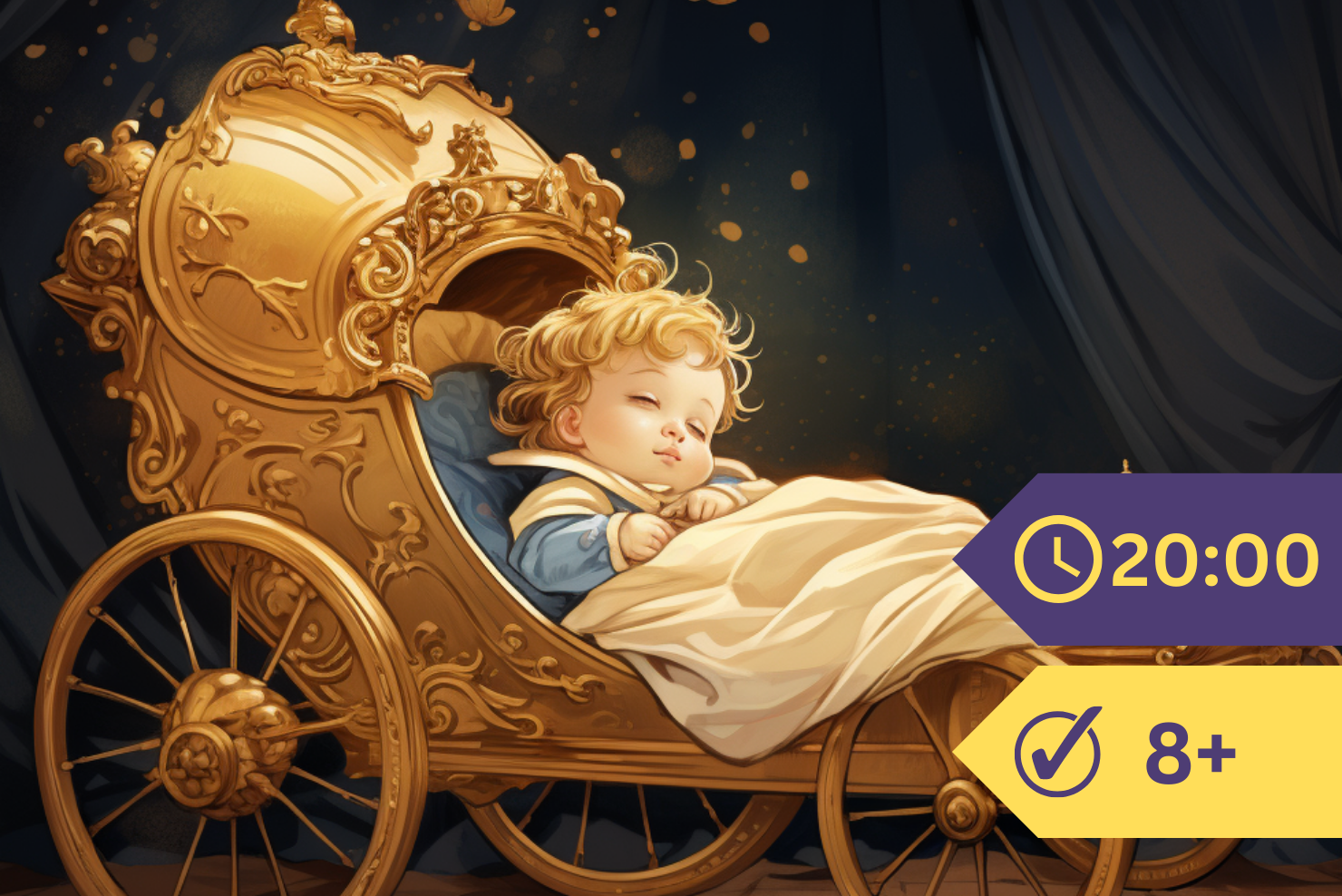
As soon as this baby was born, he looked around the room. “Dear Mother,” he said, “give me some of my brothers’ old clothes and food for a few days, and I’ll go out into the world and seek my fortune. You’ve got enough children here.”
“Heaven help you, my son,” said the mother. “You’re far too little.”
But the little fellow begged and pleaded until she gave him some old rags and tied up a bit of food, and cheerfully off he went.
Hardly had he left the house when another boy was born, who also looked around. “Dear Mother, give me some old clothes and food for a few days, and I’ll go find my twin brother. You’ve got children enough.” His mother protested, and again it did no good. The boy got his rags and food and marched off into the world to find his brother.
After walking a while, the younger caught sight of his brother ahead and called, “Wait! You’re walking as if for a bet. You should have stayed to see your younger brother before you rushed off.”
The elder stopped, and when the younger reached him and said he was his brother, they sat down together and looked to see what food their mother had given them.
When they came to a brook running through a green meadow, the younger said, “We ought to name each other. We were in such a hurry we had no time at home.”
“What will you be called?”
“Minnikin. And you?”
“King Pippin.”
They named each other and went on. At a crossroads they agreed to part and take separate roads, but they hadn’t gone far before they met again. They parted a second time, and met again. A third time, the same thing. So they agreed that one should go east and the other west.
“But if you’re ever in trouble,” said King Pippin, “call me three times and I’ll come and help. Just don’t call until you’re truly desperate.”
“Then we may not meet again for a long while,” said Minnikin. They said goodbye, and Minnikin went east and King Pippin west.
After walking a long way alone, Minnikin met an old woman with only one eye. He stole it.
“Oh! What’s become of my eye?” cried the old woman.
“What will you give me to get it back?”
“I’ll give you a sword so good it can defeat a whole army.”
“Give it to me, then.”
She gave him the sword and got her eye back. He walked on and met another old woman with one eye, and stole that too.
“What will you give me to get it back?”
“A ship that can sail over fresh water and salt, over high hills and deep valleys.”
She gave him a ship so small he could put it in his pocket, and she got her eye back. After a long while he met a third old woman with one eye, and stole it.
“What will you give me for it?”
“The art of brewing a hundred barrels of ale at one brewing.”
For teaching him that, she got her eye back, and each went on her way.
A little farther on, Minnikin wanted to see what his ship could do. He put one foot in, and it grew larger. When he put in the other foot, it was as big as a seagoing ship.
“Go over fresh water and salt water, over hill and valley,” he said, “and don’t stop until you reach the king’s palace.”
In an instant the ship flew off as swiftly as a bird and stopped just below the king’s palace.
People in the palace had seen a boy sailing through the air, and they ran down to see who it could be. But Minnikin had already stepped out and put the ship in his pocket, where it shrank to its small size again. All they found was a ragged little boy on the shore. The king asked where he came from. The boy said he didn’t know, but begged so nicely for a place at the palace that he was allowed to carry wood and water for the kitchen maid.
When Minnikin went up to the palace, he found everything hung with black, inside and out. He asked the kitchen maid why.
“The king’s daughter was promised long ago to three trolls, and next Thursday evening one of them will come for her. A knight named Ritter Red says he’ll save her, but who knows? You can imagine how sad we all are.”
On Thursday evening Ritter Red took the princess down to the shore, where the troll would come, promising to guard her. But as soon as she sat down, he climbed a big tree and hid among the branches.
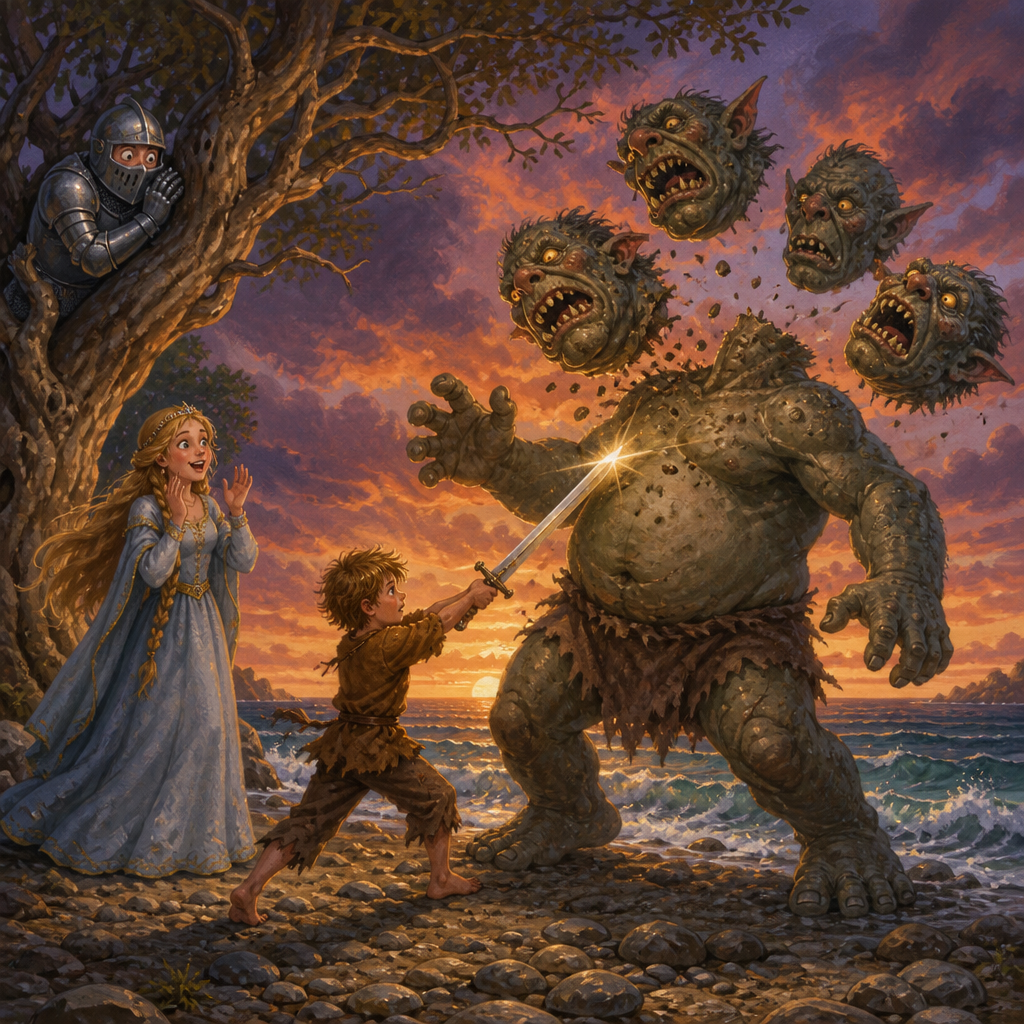
The princess wept and begged him not to leave her. “Better one should die than two,” said Ritter Red.
Meanwhile, Minnikin begged the kitchen maid for permission to go down to the shore for a bit. “I’d love to play with the other children,” he said.
“All right,” she said, “but be back before the pan goes on the fire for supper and the roast on the spit, and bring a big armful of wood.”
Minnikin promised and ran to the shore.
Just as he reached the princess, the troll came rushing up with a great whistling and whirring. He was huge and fearsome and had five heads.
“Fire!” screeched the troll.
“Fire yourself!” said Minnikin.
“Can you fight?”
“If I can’t, I can learn.”
The troll struck at him with an iron bar so hard that the earth flew five yards in the air.
“Pooh,” said Minnikin. “That was not much of a blow. Now you’ll see one of mine.” He took the sword the old woman had given him and swung it, and all five of the troll’s heads flew off across the sand.
The princess was so happy to be free that she danced for joy.
“Lie down and rest your head in my lap,” she said to Minnikin, and while he slept she dressed him in a golden robe.
When Ritter Red saw that the danger was past, he crept down from the tree. He threatened the princess until she promised to say that he had saved her. Then he took the troll’s tongue and lungs, wrapped them in his handkerchief, and led her back to the palace. The king honoured him extravagantly and seated him at his right hand.
Minnikin went on board the troll’s ship, took a great quantity of gold and silver hoops, and trotted back to the palace. The kitchen maid stared. “Dear Minnikin, where did you get all that?” She was half afraid he’d come by it dishonestly.
“I went home for a bit,” said Minnikin, “and these hoops fell off our buckets, so I brought them for you.”
She thanked him, and asked no more.
The next Thursday was the same. The palace was hung with black and everyone was sad. Ritter Red said that if he could save the princess from one troll, he could save her from another, and led her to the shore. Again he said, “Better one should die than two,” and climbed the tree.
Minnikin again begged leave, and promised to be back in time for the roast. This time the troll was twice as big and had ten heads.
“Fire!” shrieked the troll.
“Fire yourself!”
“Can you fight?”
“If I can’t, I can learn.”
The troll struck with an iron club even bigger than the first, so hard that the earth flew ten yards into the air.
“Pooh, that wasn’t much of a blow. Now you’ll see one of mine.” He swung the sword, and all ten heads danced away across the sand.
“Lie down in my lap,” said the princess, and while Minnikin slept she drew a silver robe over him.
As before, Ritter Red crept down, threatened the princess, took the troll’s tongue and lungs in his handkerchief, and led her home. The king honoured him even more. Minnikin carried back an armful of gold and silver hoops, and told the kitchen maid they’d fallen off pails.
On the third Thursday it all happened again. Ritter Red said he’d saved her twice, so he could do it a third time. He led her to the shore, then climbed the tree again. The princess begged. “Better one life lost than two,” he said.
Minnikin begged for leave once more, and promised to be back in time to turn the roast. Almost at once the troll came whirring, much bigger than either of the other two, with fifteen heads.
“Fire!” roared the troll.
“Fire yourself!”
“Can you fight?”
“If I can’t, I can learn.”
“I’ll teach you!” yelled the troll, and struck so hard the earth flew fifteen yards into the air.
“Pooh, that wasn’t much of a blow. Here’s one of mine.” He swung the sword, and all fifteen heads danced away across the sand.
The princess thanked him and blessed him. “Rest now in my lap,” she said, and while he lay there she put a brass robe on him.
“But how can we let people know it was you who saved me?” she asked.
“I’ll tell you,” said Minnikin. “When Ritter Red takes you home and says he saved you, you will marry him and get half the kingdom. At the wedding, when they ask who should pour the wine, say, ‘I want the ragged boy from the kitchen, who carries wood and water.’ When I’m pouring the wine, I’ll spill a drop on his plate and none on yours. He’ll be angry and hit me. This will happen three times. The third time, you say, ‘Shame on you for striking the one dear to my heart. He saved me from the troll, and he’s the one I’ll have.'”
Minnikin ran back to the palace, but first he took a quantity of gold and silver and precious things from the troll’s ship, and gave the kitchen maid another armful of hoops.
Ritter Red crept down from the tree and made the princess promise again to say that he had rescued her, then took her home. The king could think of nothing but how to honour the man who had saved his daughter from three trolls, and it was settled that Ritter Red would marry her and receive half the kingdom.
On the wedding day, the princess asked for the little boy from the kitchen, who carried wood and water, to pour the wine at the feast.
“What do you want with that dirty, ragged boy?” said Ritter Red. But the princess insisted, and got her way. Everything went as planned. Minnikin spilled a drop on Ritter Red’s plate and none on hers, and each time Ritter Red lost his temper and struck him. At the first blow, Minnikin’s ragged clothes fell off. At the second, the brass robe fell. At the third, the silver, and there he stood in the golden robe, so bright that light flashed from it.
“Shame on you,” said the princess, “for striking the one dear to my heart. He saved me from the troll, and he is the one I will have.”
Ritter Red swore it was he who had saved her, but the king said, “The one who saved my daughter must have proof.”
Ritter Red ran for his handkerchief with the lungs and tongue, and Minnikin brought all the gold, silver, and jewels he’d taken from the trolls’ ships. They laid their tokens before the king.
“Whoever has so many treasures must be the one who killed the trolls,” said the king, “for you can’t find these anywhere else.” So Ritter Red was driven out of the kingdom, and Minnikin was to have the princess and half the realm.
One day the king was walking with Minnikin, and Minnikin asked if he had ever had another child.
“Yes,” said the king. “A second daughter. A troll carried her away, because nobody could save her. You’ll have one daughter, but if you can free the other, you may have her too, and the other half of the kingdom.”
“I’ll try,” said Minnikin. “But I’ll need an iron cable five hundred ells long, five hundred men, and food for five weeks. It’s a long voyage.”
The king agreed, but worried he had no ship big enough.
“I have my own,” said Minnikin, and took the little ship out of his pocket. The king laughed, thinking it a joke, but Minnikin begged him to just give him what he’d asked for, and he’d see. When everything was brought, nobody could lift the cable, and the tiny ship had room for only one or two at a time. Minnikin took hold of the cable and laid a few links into the ship. As he did, the ship grew bigger and bigger until it was large enough for the cable, the five hundred men, the provisions, and Minnikin himself.
“Go over fresh water and salt, over hill and valley, and don’t stop until you reach where the king’s daughter is,” Minnikin told the ship, and it was off, so fast the wind whistled round it.
After a long voyage, the ship stopped suddenly in the middle of the sea.
“We’ve arrived,” said Minnikin, “but how we’ll get back is another matter.” He tied one end of the cable around himself. “I must go to the bottom. When I jerk the cable and want to come up, you must all pull together like one man, or it’s all over for us.” And he sprang into the water. Yellow bubbles rose around him, and he sank deeper and deeper until he reached the bottom. There was a great hill with a door in it, and he went in. Inside sat the other princess, sewing. When she saw Minnikin she clapped her hands.
“Thank goodness! I haven’t seen a human being since I came here.”
“I’ve come for you,” said Minnikin.
“You’ll never be able to take me. If the troll sees you, he’ll kill you.”
“Tell me about him. Where is he? I’d like to see him.”
She told him the troll was out looking for someone who could brew a hundred barrels of ale at one brewing, for a feast at which anything less would not be enough.
“I can do that,” said Minnikin.
“If only the troll weren’t so quick-tempered, I could tell him. He may tear you apart as soon as he comes in. But I’ll find a way. Can you hide in the cupboard?”
He hid. Almost at once the troll came in.
“Huf! What a smell of human blood!”
“A bird flew over the roof with a human bone in its beak and dropped it down the chimney,” said the princess. “I got rid of it as fast as I could, but that must be the smell.”
“That must be it,” said the troll.
She asked if he’d found anyone who could brew a hundred barrels of ale.
“No. No one can do it.”
“A little while ago a man was here who said he could.”
“How clever you always are! Why did you let him go? I needed just such a man!”
“I didn’t let him go. But Father is so quick-tempered that I hid him in the cupboard. If you haven’t found anyone, he’s still here.”
“Let him come out.”
Minnikin came out, and the troll asked if it was true he could brew a hundred barrels at one brewing.
“Yes.”
“Lucky I found you. Get to work this minute, but heaven help you if you don’t make it strong.”
“It will taste good,” said Minnikin, and set to work.
“But I need more trolls to carry things,” he said. “These are no good.” So he got a swarm of them. When the wort was ready, they all wanted a taste, first the big troll and then the rest. But Minnikin had brewed it so strong that every one of them fell down in a heavy sleep as soon as they drank. At last only one old troll-woman was left behind the stove.
“Poor old creature, you should have a taste too,” said Minnikin, and scooped a little from the bottom of the vat in a milk pan and gave it to her, and that was the end of the lot of them.
While looking around, he spotted a large chest and filled it with gold and silver. Then he tied the cable round himself, the princess, and the chest, and tugged with all his might. His men drew them up safe and sound.
As soon as he was back on deck, he told the ship, “Go over salt water and fresh, over hill and valley, and don’t stop until you reach the king’s palace.” The ship flew off so fast that yellow foam rose around it.
When the people in the palace saw the ship, they went out to meet it with song and music, and the king was happiest of all, for he had his other daughter back.
But Minnikin wasn’t happy. Both princesses wanted to marry him, and he wanted only the first, the younger, but didn’t want to hurt her sister. He walked back and forth, thinking. Then it occurred to him that if only his brother King Pippin were here, who looked just like him, he could give him the elder princess and half the kingdom, and keep the other half for himself. So he went outside and called for King Pippin. Nobody came. He called again, louder. Nobody. The third time, with all his might, and there stood his brother.
“I told you not to call unless you were truly desperate,” said King Pippin, “and there isn’t so much as a midge here to harm you!” And he gave Minnikin such a blow that he rolled onto the grass.
“Shame on you!” said Minnikin. “First I won one princess and half a kingdom, then the other princess and the other half. And just as I was thinking of giving you a princess and half a kingdom, you hit me!”
When King Pippin heard that, he begged pardon, and they made up at once.
“We look so alike no one can tell us apart,” said Minnikin. “Swap clothes with me, go up to the palace, and the princesses will think you’re me. The one who kisses you first will be yours, and I’ll have the other.” He knew the elder princess was the stronger, and could guess how it would go.
King Pippin agreed, changed clothes, and walked into the palace. Both princesses ran to him, thinking he was Minnikin, but the elder, who was bigger and stronger, pushed her sister aside, threw her arms around him, and kissed him. So King Pippin got her for his wife, and Minnikin got the younger. Two weddings were held, so magnificent that they were talked about in seven kingdoms.