Long before the great king Charlemagne ruled over Germany and France, the mountain forests bordering the Rhine were home to gnomes and dwarfs, witches and fairies. Some were mischievous and could never be trusted; others did kind deeds for the people in the valleys below.
All of them were ruled by a fairy king whose palace deep in the mountains was so vast it reached even under the river. On moonlit nights, river fairies played in the clear water, sometimes luring fishermen to their doom by glinting gold and jewels just below the surface. But the mountain fairies were different — they gave gifts to those they found deserving, for the mountains held hidden treasures of gold, silver, and precious stones. This story is about a little boy who earned their reward.
His name was Max, and he was a poor shepherd boy who tended the flocks of a rich baron whose castle perched high on a rock above the valley. Max’s father was dead, so Max was the only support for his mother and his two little sisters, Roschen and Elsie. They owned a small cottage, a goat, and a patch of ground, which Max tended each evening after the sheep were safely penned for the night.
He was always cheerful, and kind to everyone. He loved the beautiful river that flowed so peacefully through the valley, and the vine-covered terraces where purple grapes ripened in the sun. The dark forests that seemed so still and somber to others filled his heart with wonder — a quiet reverence for the great Being who had made such a lovely world.
Max longed to learn to read, to discover more about everything around him. But he worked on, early and late, and found joy even in the open air and the flowers. The butterflies drifting past him made him glad to be alive.
Then one winter a sadness fell over the little household. Max’s mother grew very ill, and the old nurse who came to care for her said she would not recover unless a certain herb could be found — one that grew in the mountains, now buried deep under snow. But Max did not despair. He laced on his snowshoes, took up a stout stick, and set out to climb the mountain.
The wind blew cold and dreary through the trees, but he tramped on steadily until at last he stood at the summit. Snow lay all around like a soft white blanket, tucking herbs and ferns and flowers safely out of sight until spring. It was not very deep, and with a small spade he had brought along, Max scraped it aside and looked at the brown earth beneath.
There was no herb where he had cleared — but there was a flower.
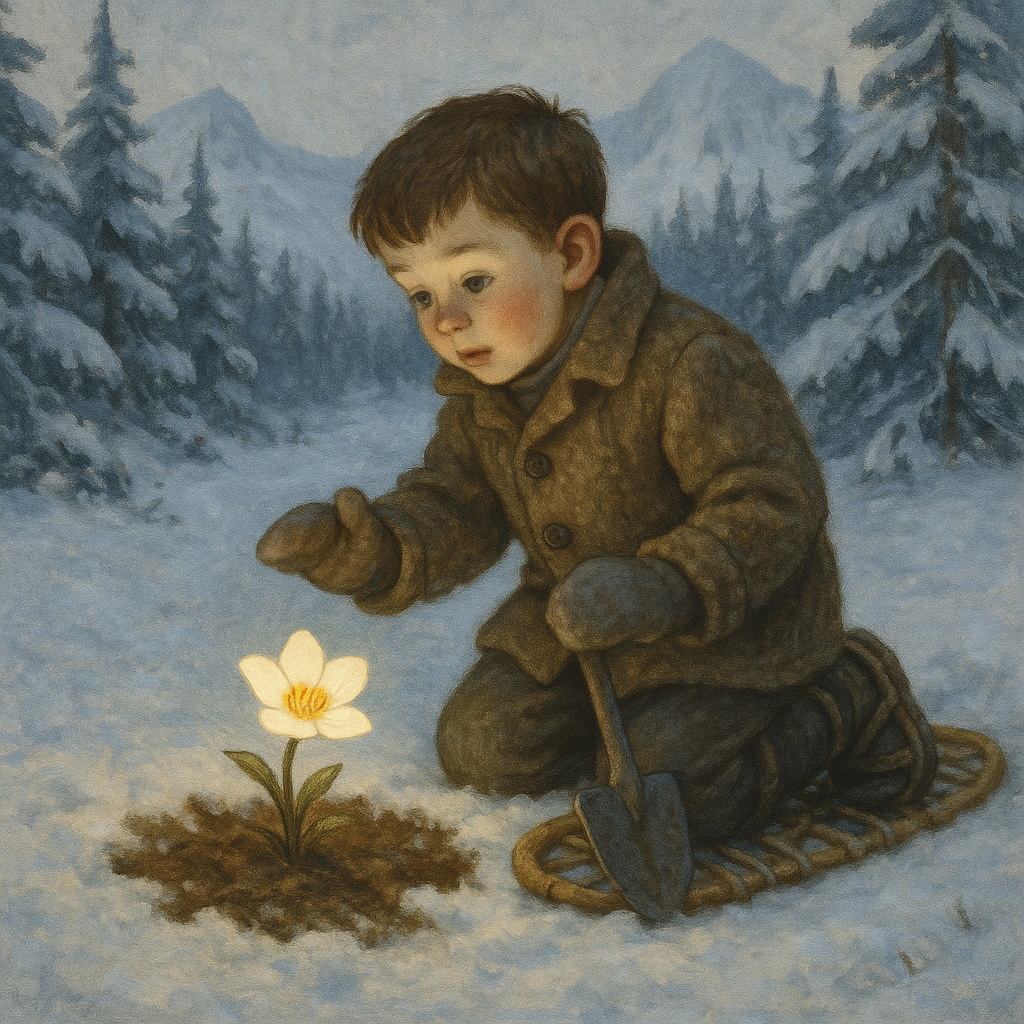
It was strange and beautiful beyond anything he had ever seen, whiter than the snow around it, its heart like gold, its perfume so sweet it seemed like a breath from the gardens of heaven. Max gazed at it with longing, and his first thought was to pick it and bring it home for them all to see. But his second thought was better: No — I must find the herb first and cure my mother. Then I can come back for this flower, and gladden her eyes.
So with one last look, he walked on, found the precious herb, tucked it safely in his pocket, and returned to where the flower had been.
It was gone.
Tears filled his eyes — and then the mountain itself opened wide, like a great door swinging back. A dazzling fairy figure appeared in the brightness beyond, and a silvery voice rang out:
“Enter, little Max. You put your duty first, and so you shall have your reward. The Wonder-flower cannot be taken with you — it blooms but once in a thousand years, and only the pure in heart may see it at all. But take of the gold and diamonds before you; love your mother as you always have; aim to be a good man; and keep your heart pure — and you will see the flower again, in the gardens of heaven, where a thousand years are but a single day.”
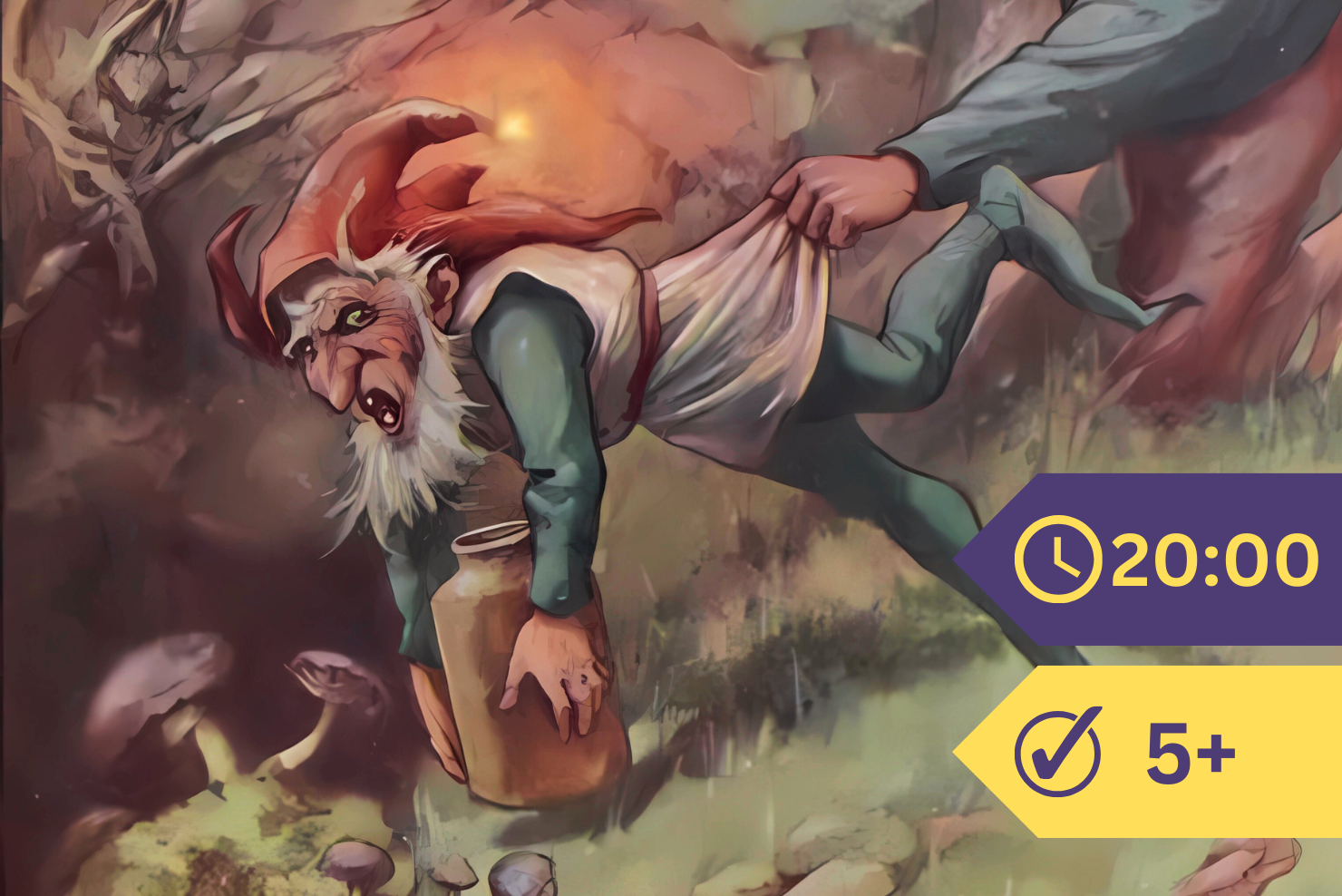
The fairy vanished. Before Max’s astonished eyes, a great marble hall glittered with diamonds and rubies and bright bars of gold. A little brown dwarf — the guardian of the treasure — pressed a sack into Max’s hands and helped him fill it, never saying a word. When it was full, the sack was so heavy Max could not imagine how he would carry it home. But the dwarf simply hoisted it over his own shoulder, beckoned Max to follow, and crept out through the door.
As they stepped outside, the mountain closed behind them and the snow lay over it as smoothly as before.
It might all have seemed a dream — except there was the dwarf, with his pointed hat and sharp little eyes like a squirrel’s, trotting silently down the slope. It seemed to Max barely an hour before they reached the foot of the mountain. There the dwarf set down the sack with a small bow, then turned and clambered back up without a word.
Max hurried home as fast as he could. He gave the herb to the nurse at once, then hid the sack under his bed to wait until his mother was well enough to hear good news.
The herb worked quickly. Within a few days she was sitting up, and Max sat beside her — his hand in hers, his little sisters gathered around — and told her everything.
She clasped her hands. “My dear child,” she said softly. “The dear God has been very good to you. The flower you saw was the Wonder-flower — it first blossomed when Christ was born, and none but an innocent child may ever see it. Keep its beauty always in your heart, and the treasure it brought you will be a true blessing. Let us thank God for his love to you — a poor little shepherd boy, to whom he has shown what even kings may not see.”
And so Max’s deepest wish was granted. With his treasure, he could at last go to school and learn all about the great world beyond his little Rhine valley. He grew up to be a learned and honoured man, always ready to help others — and for all his wisdom, he remained as unassuming as the shepherd boy he had once been.