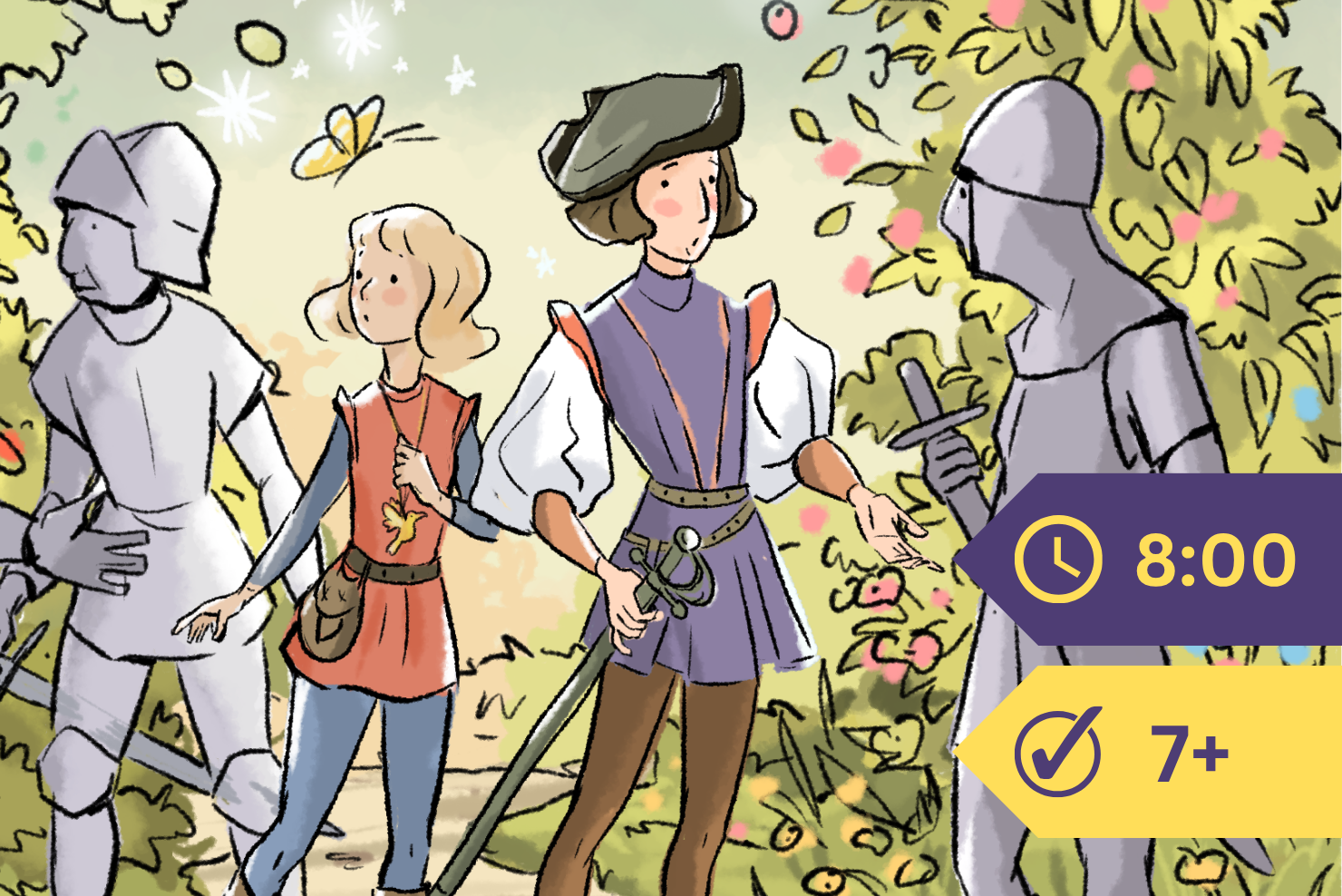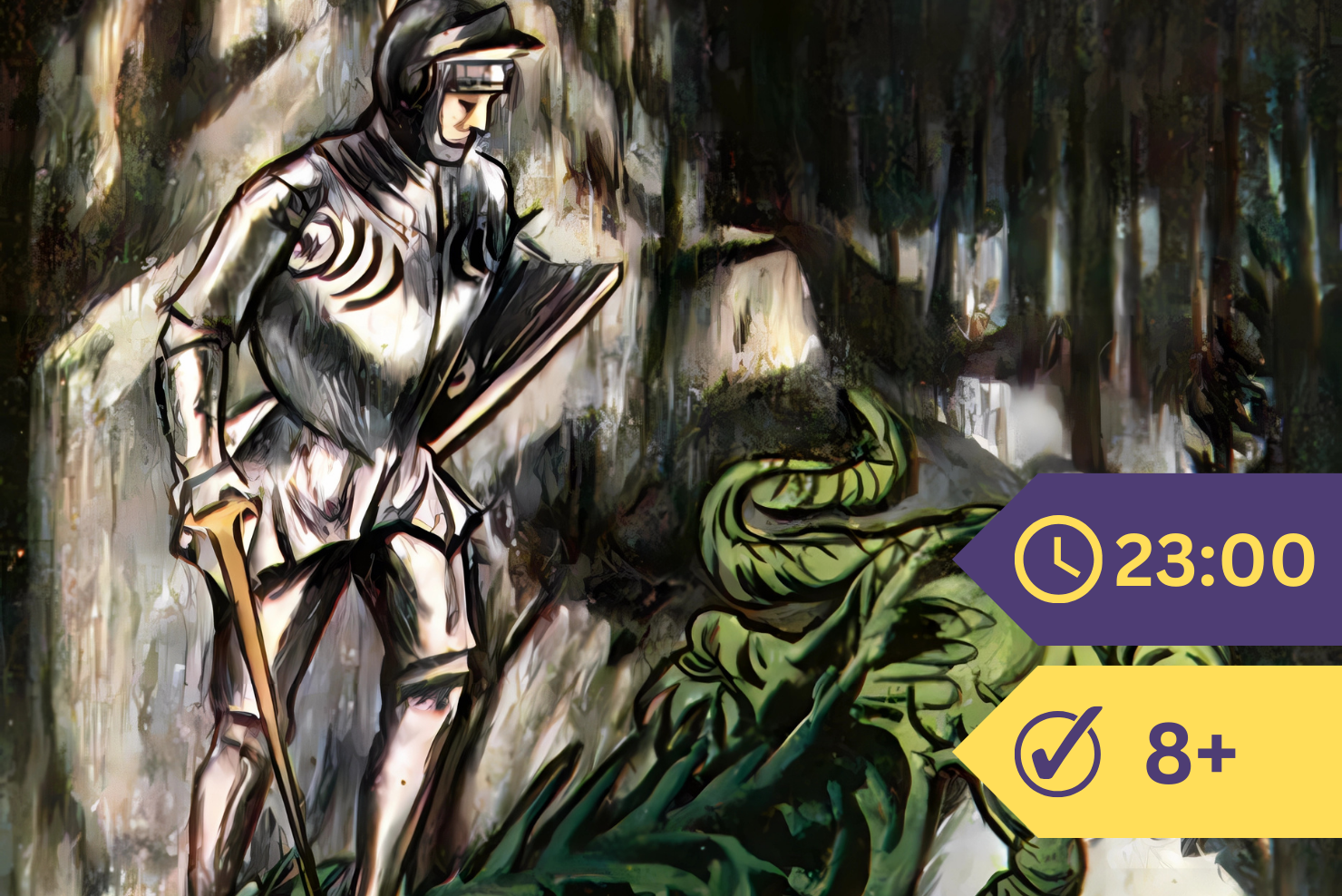
A king went off to war and told his only son, “Don’t marry until I’m back.” Years passed. The prince ruled in his father’s absence, and when he turned twenty-five he began to think it would be pleasant to have a wife. After ten years, he set out with a great retinue to look for a bride. He found himself, by chance, in his father’s camp, and the king, hearing his plan, was angry. “Go where you like, but I’ll give you no one to go with you.” Only one faithful servant refused to leave the prince.
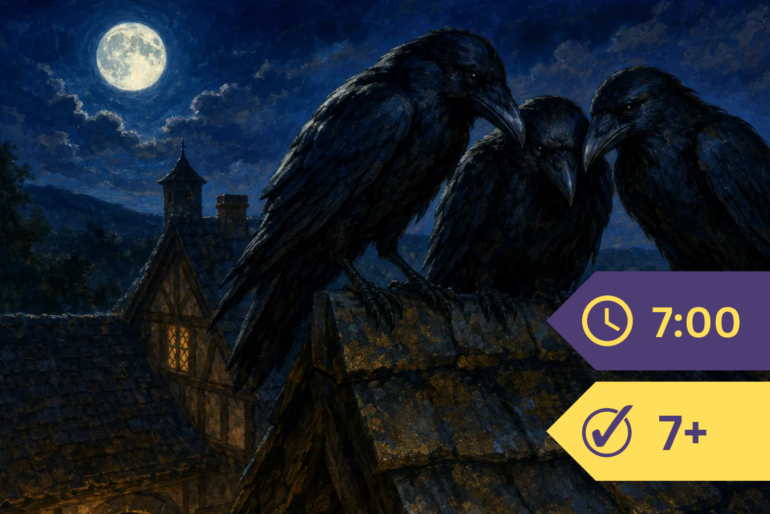
They came to Goldtown, where the king had a lovely daughter. The prince asked for her hand, and the wedding was celebrated for a month. On the journey home they stopped at an inn. Everyone slept except the servant, who kept watch. About midnight he heard three crows on the roof.
“A handsome couple,” said one. “A pity they’ll die tomorrow, when the bridge over the Gold Stream breaks.”

“And whoever overhears and tells will be turned to stone up to the knees,” said the second.
The crows flew off, and three pigeons settled. “Even if they cross the bridge, the king will send a carriage that looks brand new. A whirlwind will carry it into the clouds and drop it. Whoever tells this will be turned to stone up to the waist.”
Three eagles came next. “If they survive that, the king will send two splendid robes, and when they put them on, they’ll burn up. Whoever tells will turn to stone from head to foot.”
In the morning the servant said at breakfast, “Gracious prince, I had a dream. If you’ll do whatever I ask on the journey, we’ll get home safe. If you don’t, we’ll be lost. My dreams never lie.”
“Dreams are clouds,” laughed the prince. “But I’ll humour you.”
At the Gold Stream the servant said, “Let’s walk over the bridge. This carriage’s wheels are poor.” The prince thought it looked sound, but he’d given his word. They crossed safely. In the town they bought a new carriage, and soon met a messenger from the king with a splendid carriage, “to enter your own country in style.” The servant examined it. “It’s as bad as it is smart.” He smashed it. At the border came the robes. The servant begged until the prince let him destroy them.
The old king was furious. His son was alive, and the law said the crown now passed to the son. “Why did you destroy my gifts?” he asked, as if hurt.
“My servant asked to direct the journey, and I’d promised,” said the prince.
The king’s temper boiled over. He ordered the servant hanged.
On the gallows, with the rope ready, the servant asked to speak. “On our first night at the inn I kept watch.” He told what the crows had said, and as he spoke he turned to stone, to the knees. The prince cried, “Stop! You’ve proved yourself!” But the servant went on, and by the end of the story he was stone from head to foot.
The prince wept. The thought that the man had been lost through his own faithfulness was more than he could bear. He decided to search the whole world for a way to bring him back. His old nurse, who lived at the palace, said, “You must find Lucky Luck. If he can’t help you, no one on earth can.”
He walked for days. At a mill by a river, the miller asked where he was going. “Ask Lucky Luck why I’m so poor when I have a fine mill and plenty of grain.” At a little town, three girls over thirty took him in for the night. “Ask Lucky Luck why none of us has had a suitor, though we’re good and pretty and hard-working.” In a great forest he found a stream that stood still and spoke. “Ask Lucky Luck why I’m so clear and bright, and yet nothing lives in me.”
At last, in a valley, he reached a cottage with a rush-thatched roof. A kind old woman sat by the fire. “I’m Lucky Luck’s mother,” she said. “He’s digging in the vineyard. Take this spade and dig beside him in silence. At lunch, sit and eat with him. After dinner he’ll ask what you want, and you can tell him everything.”
He did exactly that. After dinner Lucky Luck said, “Since you came, you’ve not said a word. Who are you?”
The prince told him, and Lucky Luck said, “Your servant deserves to be saved. Go home. Your wife will have had a baby boy. Take three drops of blood from the baby’s little finger, rub them on your servant’s wrists with a blade of grass, and he will live.”
Then the prince asked the other four questions.
“The stream has no fish because nobody has ever drowned in it. But be careful: get as far up the bank as you can before you tell it, or you’ll be the first.”
“The three girls have no suitors because they sweep their rubbish out of the door into the face of the sun.”
“The miller is poor because he keeps everything for himself and gives nothing to those in need.”
The prince wrote it all down, thanked him, and went home. At the stream, he climbed the bank to the highest rock. “Lucky Luck says that nothing will live in you until someone drowns.” The stream roared up in a rage and threw spray over him. It rose three times to reach him and failed. Later, thieves trying to ford it with a stolen horse were swept away, and the stream has teemed with fish ever since.
At the mill, he told the miller to share. The miller became generous and in time grew rich. The three girls stopped sweeping into the sun, and each had a suitor within a week.
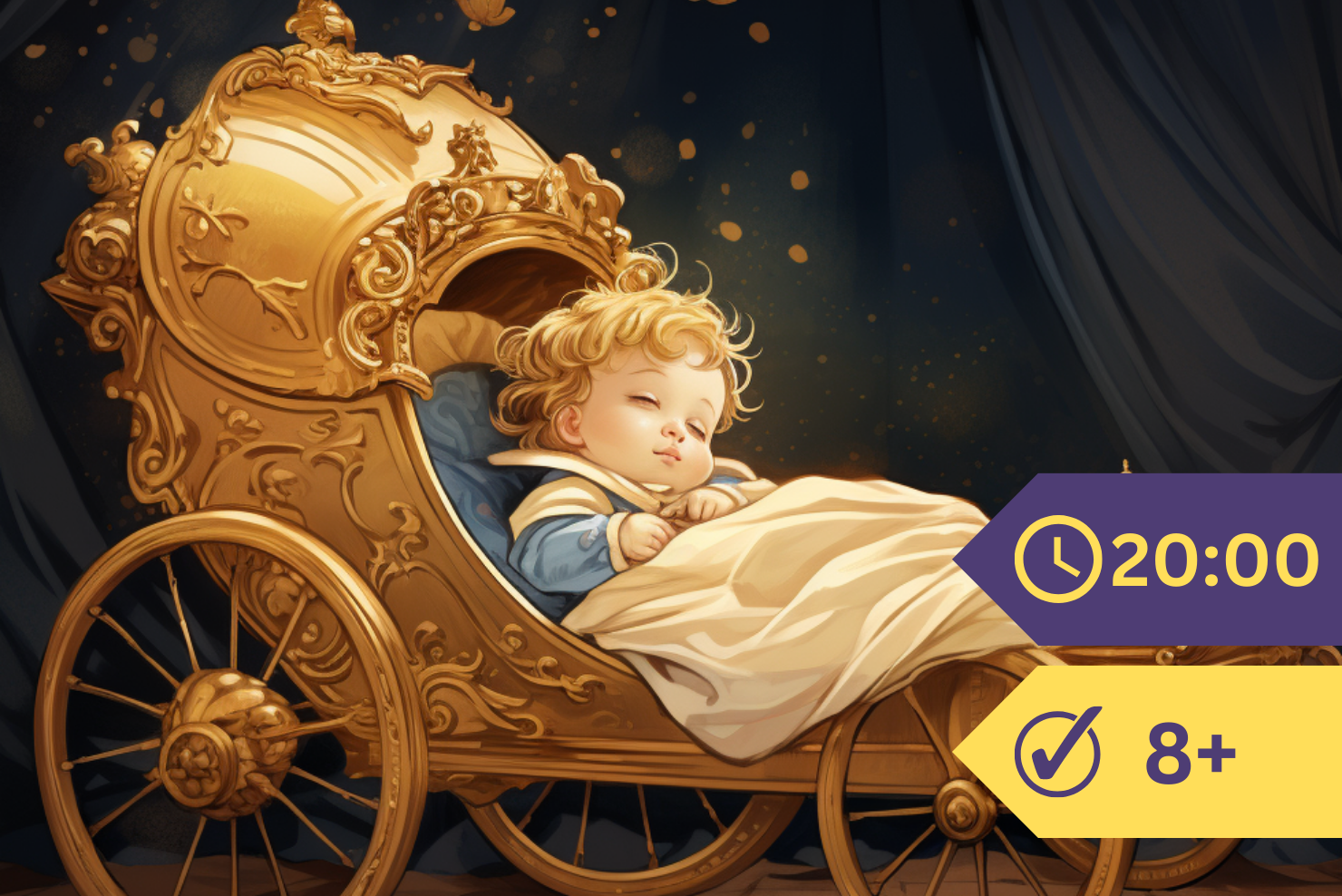
When the prince reached home, his wife had just had a baby boy. He pricked the baby’s finger for three drops, brushed them over the stone wrists, and the figure shuddered, split into seven pieces with a crack, and there stood his faithful servant, alive and well. The old king, seeing it, stormed out of the palace in a rage and was never seen in that country again.
The servant stayed with his prince for the rest of his life. And if neither of them is dead, he is there still.