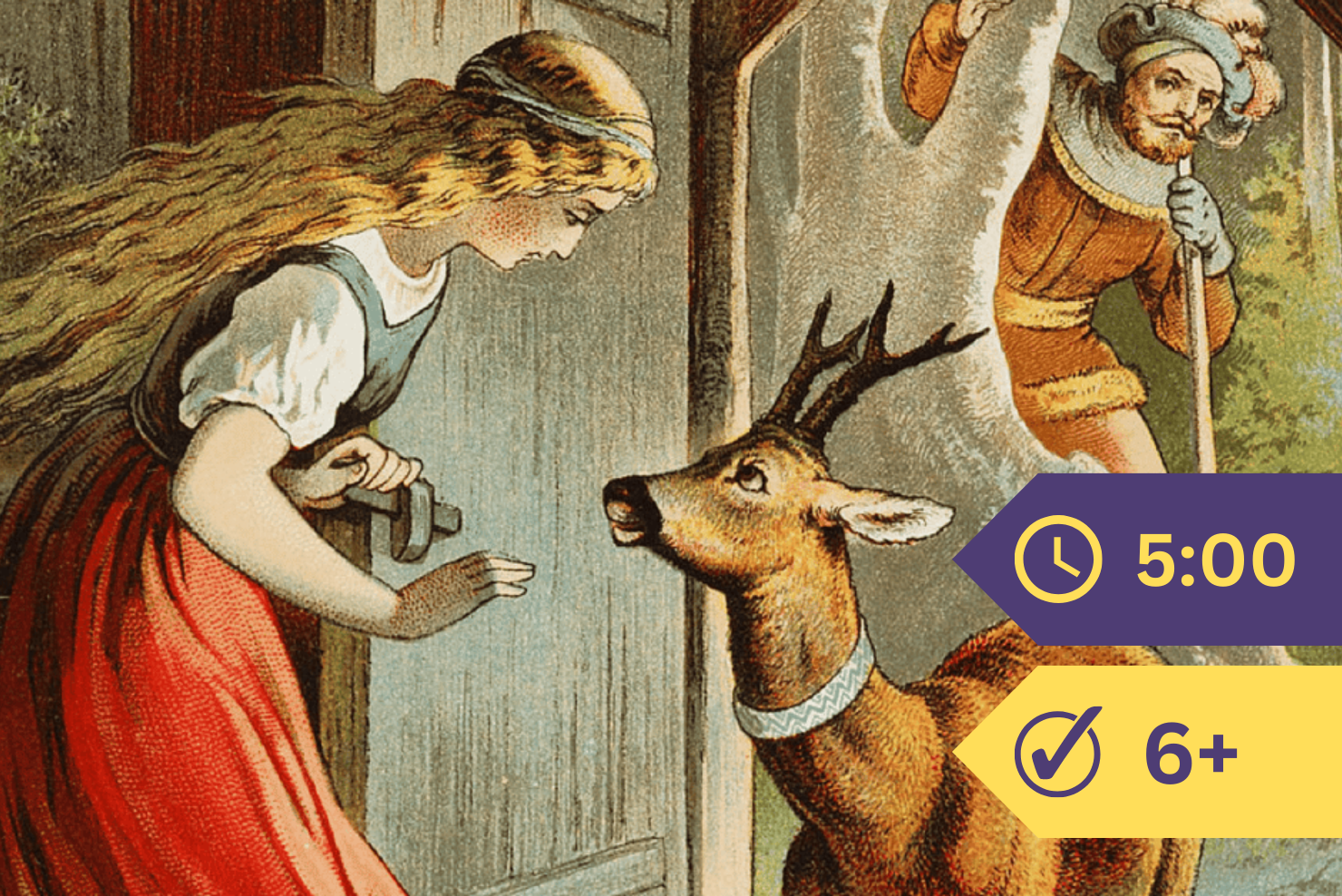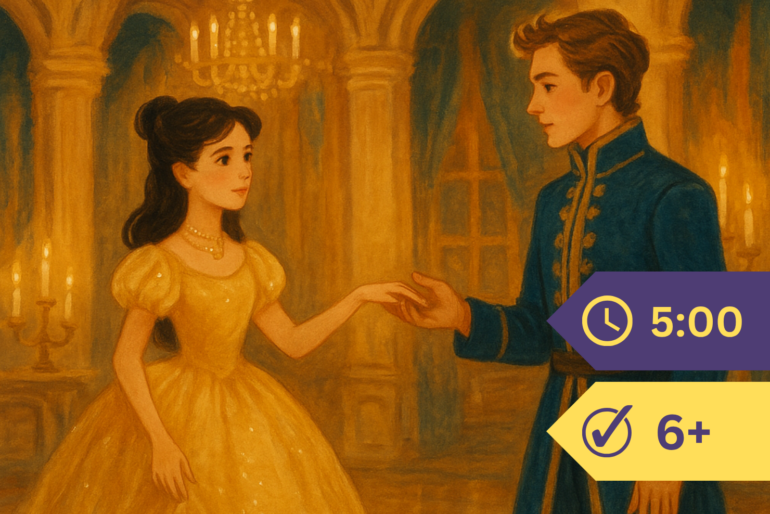
They say there was once a merchant who had three daughters. Whenever he set out for foreign lands to buy his wares, he would promise to bring each of them whatever gift she chose. The eldest asked for precious jewels, the second for rich shawls — but the youngest, who was always kept out of sight in the kitchen by her sisters and made to do the dirty work of the house, asked only for a little bird.
“A little bird! What use is a little bird to you?” her sisters scoffed. “Papa has better things to think about than minding birds on a long journey.”
“But you will bring me a little bird, won’t you, Papa?” the girl pleaded. “Because if you forget — the boat you sail home on will stand stock still, and move neither forward nor back.”
The merchant travelled far and bought many fine things, but he forgot all about the little bird. It was only when he boarded a boat to travel home along a great river, and the captain found the vessel would not budge by any means at all, that he remembered his daughter’s words. He went to the captain and confessed what he had done.
“Easily put right,” said the captain. “Close by here is a garden full of thousands upon thousands of birds. Slip in and take one — one will never be missed among so many.”
The merchant did as he was told. The captain found a cage, and the little bird was brought safely home and given to the youngest daughter.
That evening the elder sisters announced, as they always did: “We are going to the ball. You will stay here and sweep and mind the fire.”
Now, every bird in that garden was a fairy in disguise. So when the others had gone and the youngest went into her room and spoke to her little bird, she said:
Give me splendid raiment,
And I will give you my rags.
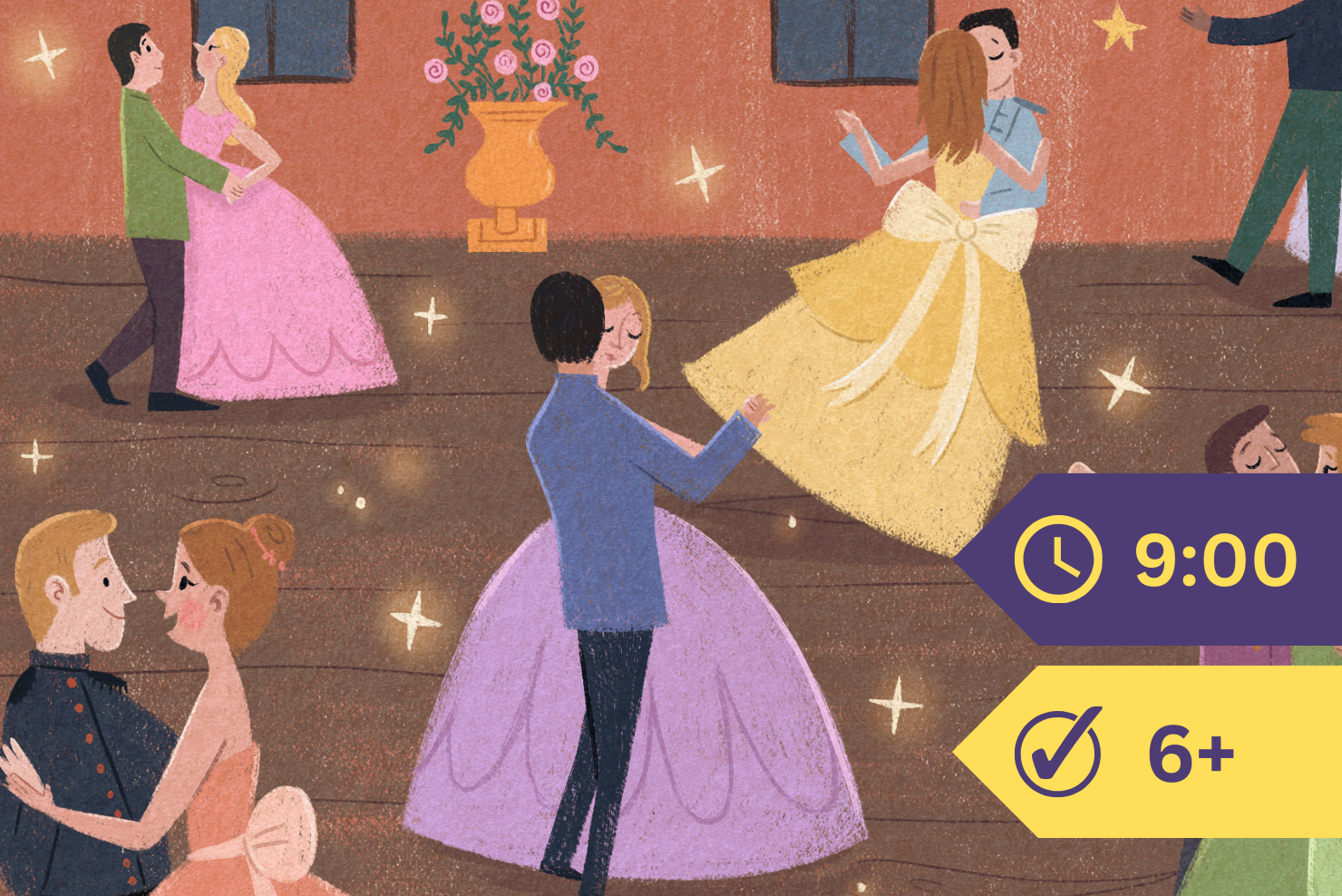
At once the bird gave her the most beautiful gown she had ever seen, with jewels at her throat and golden slippers on her feet, and outside the door waited a splendid carriage and prancing horses. With these the girl went to the ball at the king’s palace — and the moment the king laid eyes on her, he fell in love, and would dance with no one else all evening. Her sisters were furious at this unknown stranger who had stolen the king’s attention, but they had no idea it was their own sister.
The second night she did the same. The bird gave her a lovelier dress still, and the king did everything he could to discover who she was — but she would not say. When he pressed her for her name, she told him:
“They call me Cenorientola.”
“Cenorientola,” said the king. “What a pretty name — I’ve never heard it before.”
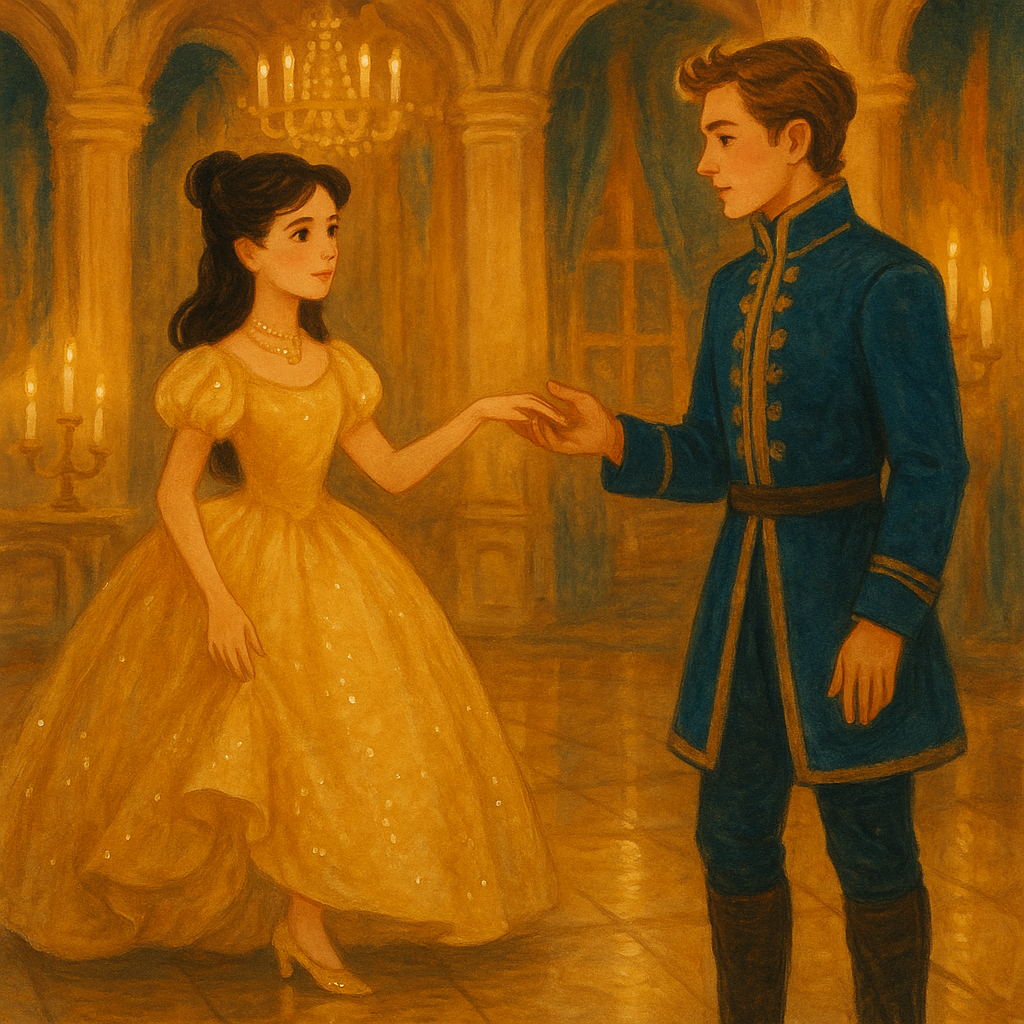
He had ordered his servants to follow her carriage and see where it went; but though they ran as fast as the wind, they could not keep pace with her horses.
On the third night the sisters left for the ball as usual and the girl went to her bird once more:
Give me splendid raiment,
And I will give you my rags.
The bird gave her the most splendid dress of all, and again the king showered her with attention. But this time he had warned his servants: “If you lose her tonight, I will have all your heads.” So they pressed so close on her heels as she fled that in her haste she lost one of her golden slippers. They snatched it up and brought it to the king.
The next day the king sent servants to every house in the city to find the maiden whose foot the slipper would fit. But house after house, it fitted no one. At last they came to the merchant’s home. They tried the slipper on the two elder daughters — it fitted neither.
“There must be another maiden in this house,” said the servant.
The sisters only shrugged. “Impossible.”
“It is not impossible. We have tried every young woman in the city, and since the slipper fits none of them, there must be one here we have not seen.”
At last the sisters admitted the truth. “We do have a younger sister, but she sits in the kitchen and does the work. We call her Cenorientola because she is always covered in smuts. She certainly never went to any ball — and it would only dirty the beautiful slipper to let her smutty feet near it.”
“Even so,” said the servant, “we must try.”
They fetched her — and the golden slipper fitted perfectly.
The servant reported everything to the king, and the moment he heard the name Cenorientola, the king said: “That is her. It is the very name she gave me.”
He sent a carriage to bring her at once. The little bird, meanwhile, had dressed her in a gown more beautiful than any she had worn before, with jewels that caught the light like stars, so that when they came for her she looked every inch a queen. The king married her, and though her sisters had treated her so badly all her life, she gave them each a fine estate — and so all of them were content.