A merchant who lived near the royal palace had three daughters, all pretty, and Maria, the youngest, the prettiest of all. When the king sent him on a long journey, the merchant didn’t want to leave them. Before he left, he gave each girl a pot of basil. “Let nobody into the house. When I come back the plants will tell me what happened.” “Nothing will happen,” said the girls.
The next day the king and two friends turned up at supper. Maria said at once, “Let’s fetch a bottle from the cellar. I’ll carry the key, the eldest will bring the light, and the middle one will bring the bottle.” “Don’t trouble,” said the king, “we aren’t thirsty.” “I’ll go anyway,” said Maria. In the hall she put out the light and slipped out of the house by the back door. At a neighbour’s she said, “I’ve quarrelled with my sister and I want a quiet bed,” and the old woman gave her one. The king went home annoyed.
When Maria went back, the basil plants of her sisters had withered because they’d disobeyed their father. The eldest sister longed for medlars from the king’s garden and begged Maria to climb down a rope for some. Maria, who was good-natured, did, and was making the rope fast when her sister called, “There are lovely lemons further on.” Maria turned, and found herself face to face with the gardener. “Thief!” “Don’t call me names,” said Maria, and gave him such a shove that he tumbled into a lemon bush. She climbed back up.
The next day the second sister craved bananas, and Maria, who had sworn never to go again, went. This time she met the king himself. “Here you are again. Now you’ll answer for your tricks.” He started toward the house, looking back every few steps to be sure she was following. When he glanced around, she had vanished without a trace. He was so enraged that he fell ill for months.
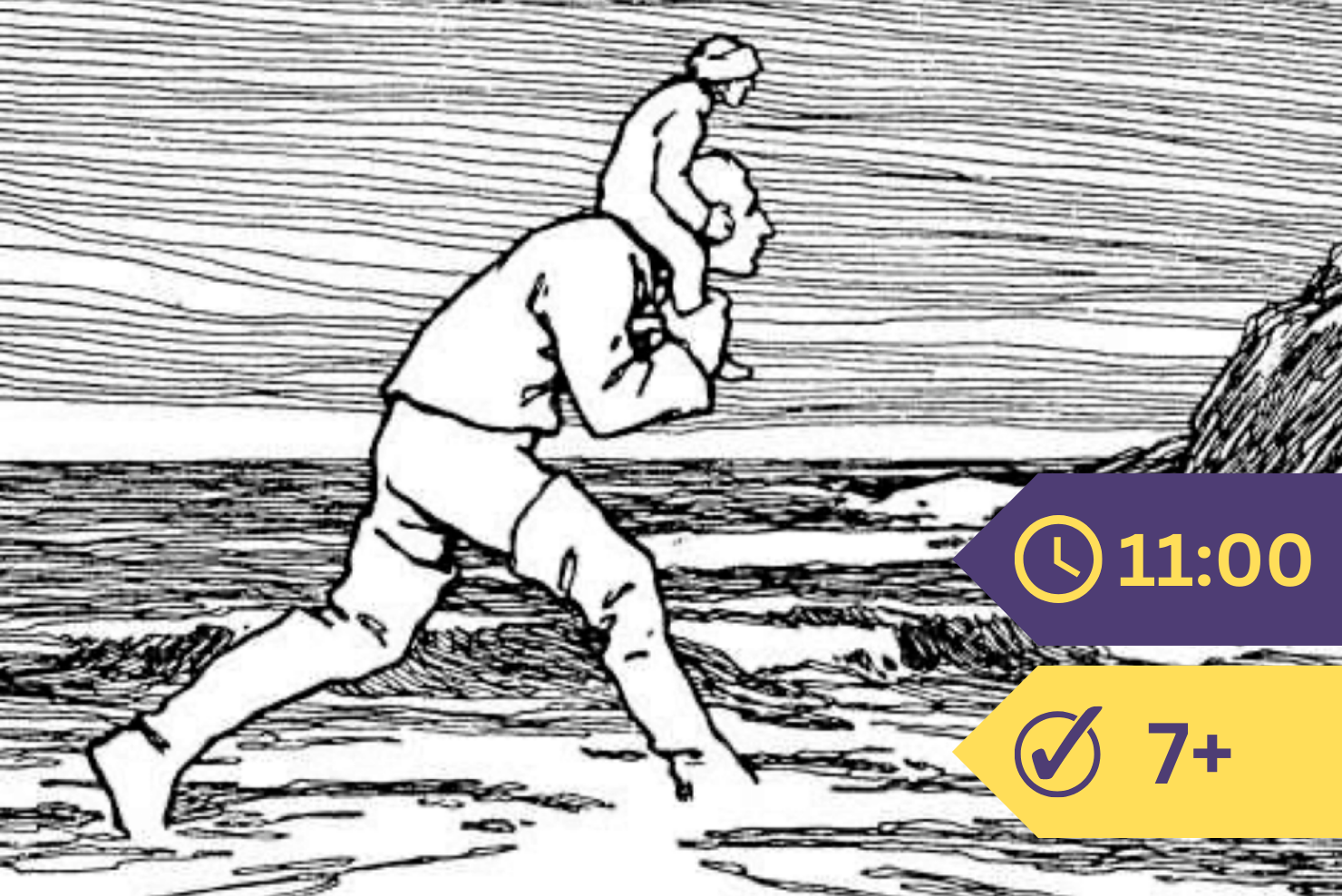
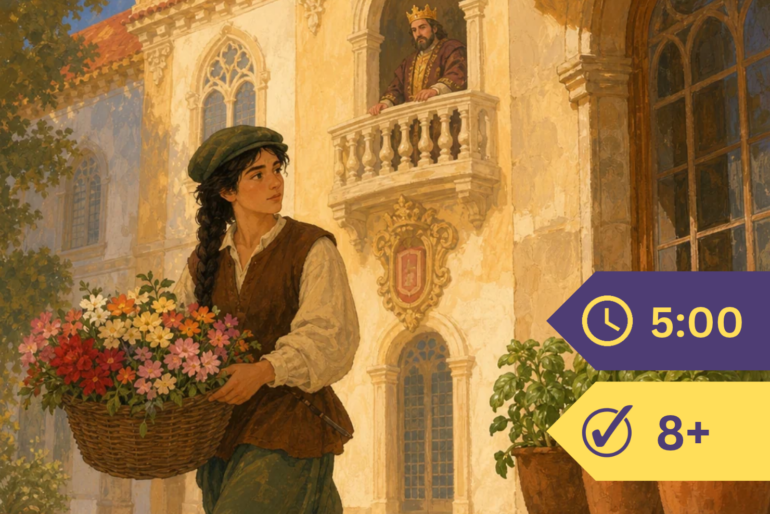
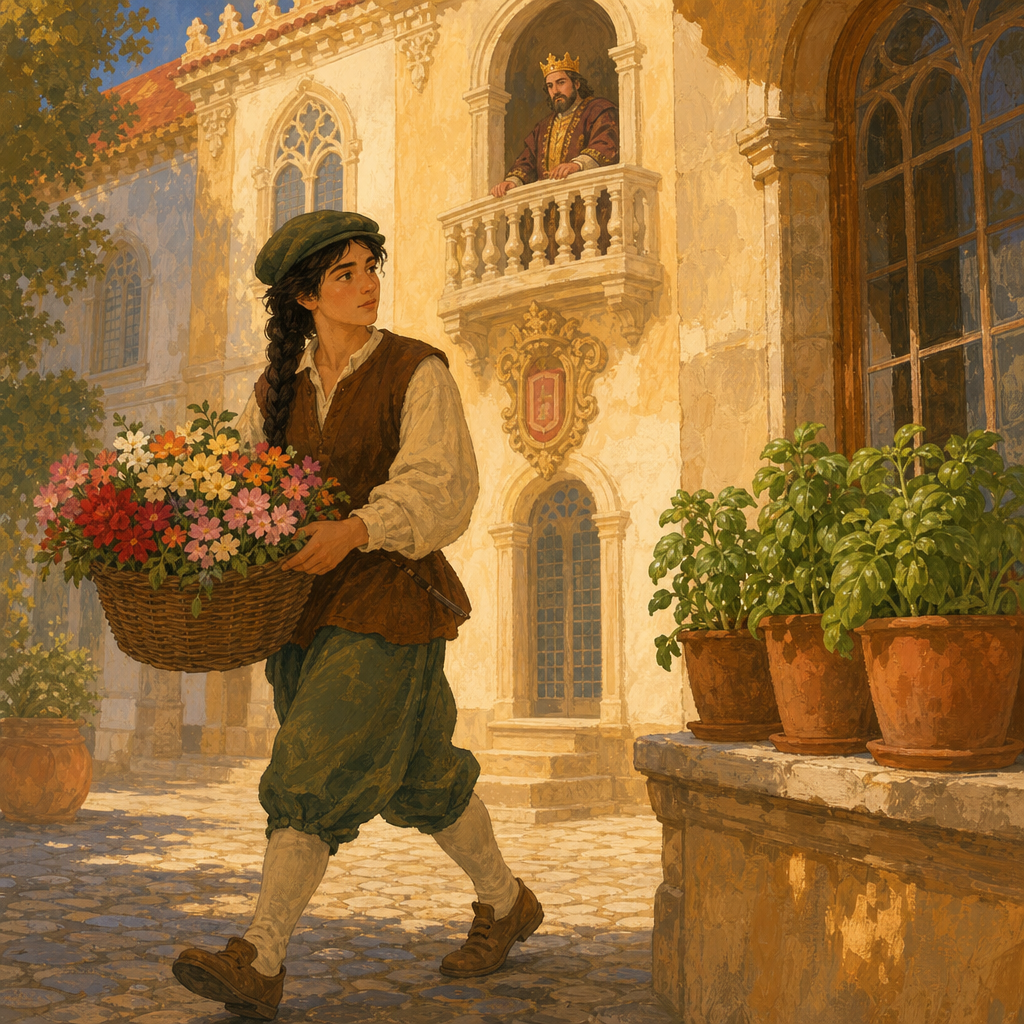
By now the two elder sisters had married the king’s friends. One day Maria slipped into her sister’s house and borrowed their two baby daughters, put them in a basket covered with flowers, and, dressed as a boy, carried it past the palace, calling, “Who’ll buy flowers for the king who’s lovesick?” The king had the basket brought to his bedside. When he lifted the lid, he saw two babies. He was furious at the joke, and was wondering how to punish Maria when he heard that the merchant had come home. He sent for him. “Bring me a coat made of stone by tomorrow, or you’ll be punished.”
The merchant came home in despair. Maria said, “Don’t worry, Father. Take this bit of chalk and tell the king you’ve come to measure him.” The old man didn’t understand, but Maria had helped him before. At the palace the king said, “That won’t do.” “I can’t make the coat you ask for,” said the merchant. “Then give me your daughter Maria.”
He told Maria. “Don’t be sad. Get a doll made that looks just like me, with a string on its head that I can pull for yes and no.”
The king waited in his palace, sure he finally had her. “If a gentleman comes with his daughter,” he told his pages, “put the young lady in my room and make sure she stays there.” Maria was shown in, with the doll under her cloak, and hid under the couch holding the string.
“Senhora Maria,” said the king when he came in, “I hope you are well.” The doll nodded. “Now we’ll settle our accounts.” He began at the start, the evening he came to supper, the lemons, the bananas, the basket of babies, and at each charge Maria pulled the string and the doll nodded. “Whoever mocks me deserves to be punished,” said the king, and he picked up a ribbon-trimmed ornamental sword that hung on the wall and cut off the doll’s head. It rolled across the floor, and as it did he found himself grieving. “Ah, Maria, so clever, so hard to catch, and now gone. I was a fool to go after her like this.”
He was sitting with his head in his hands when the real Maria came out from under the couch. “I’m here,” she said. “But you’ll have to ask me properly, and promise to leave my father and sisters alone.” The king laughed, and was so glad that he promised everything. A few days later they were married, and lived happily for many years.