The Swan and the Goose

Summary


"The Swan and the Goose" is a short fable by Aesop in which a rich man keeps two birds for very different purposes — one for the dinner table, the other for its beautiful song. When a cook ventures out in the dark to slaughter the goose, he seizes the wrong bird entirely. The swan, facing sudden death, does the only thing it can: it sings. That single, instinctive act changes everything, raising the tense question of whether a gift can truly save a life.


Read Online

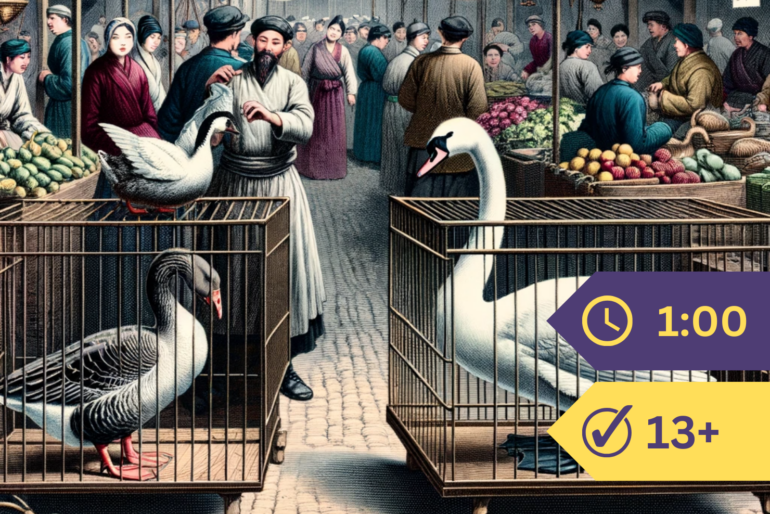
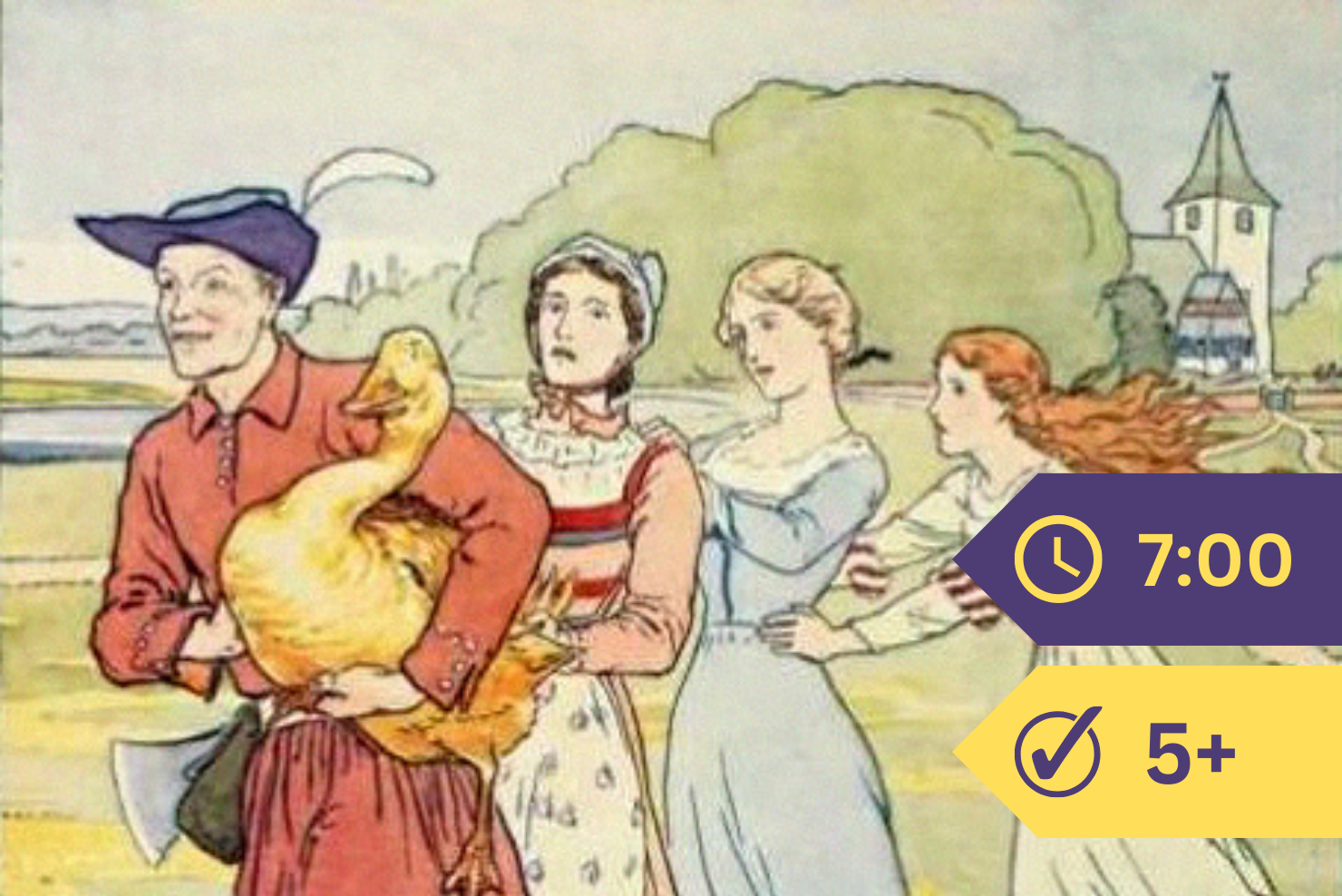
A certain rich man bought in the market a Goose and a Swan. He fed the one for his table and kept the other for the sake of its song. When the time came for killing the Goose, the cook went to get him at night, when it was dark, and he was not able to distinguish one bird from the other. By mistake he caught the Swan instead of the Goose. The Swan, threatened with death, burst forth into song and thus made himself known by his voice, and preserved his life by his melody.


Credits

Aesop was an ancient Greek storyteller, believed to have lived around 620–564 BCE, whose fables have shaped moral literature across cultures for over two millennia. "The Swan and the Goose" reflects one of his recurring themes — that a person's (or creature's) unique talent, expressed at the right moment, holds real and practical power.